
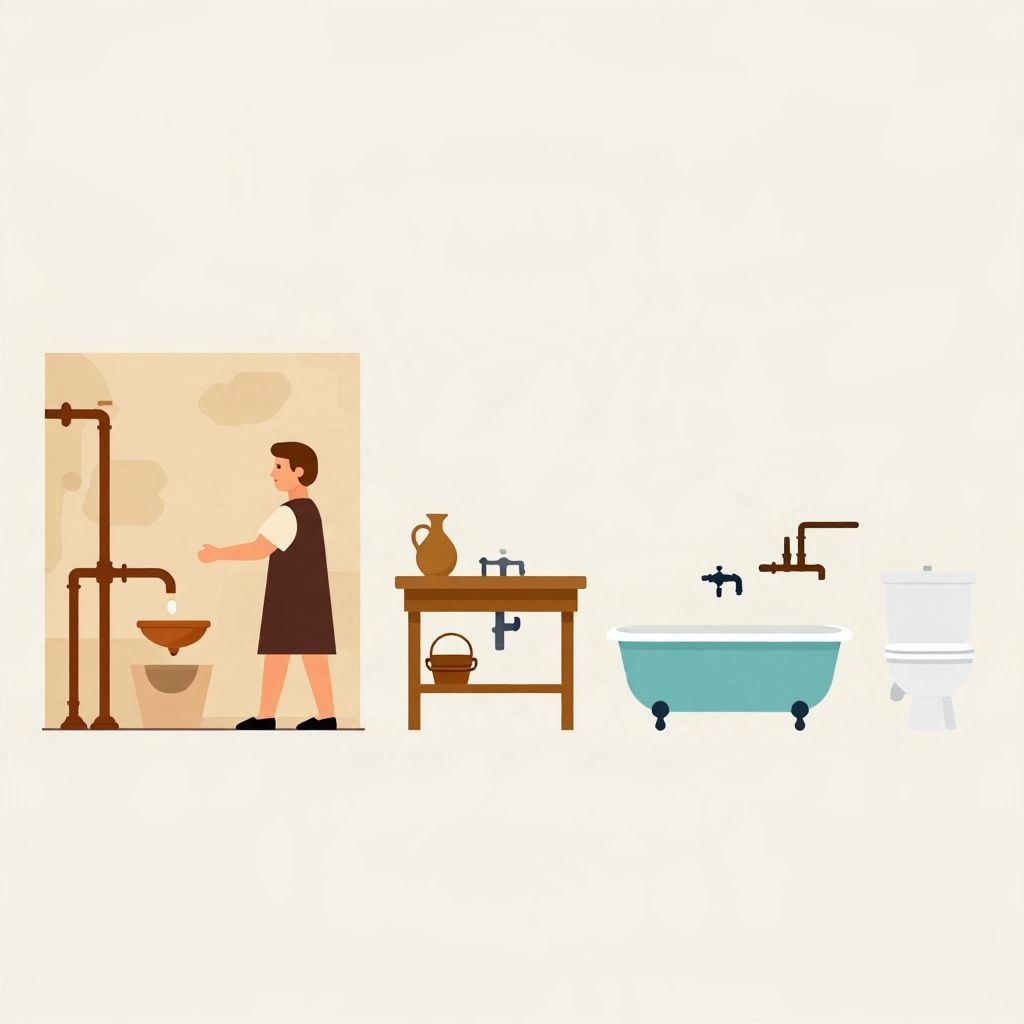
When was indoor plumbing invented? The short answer is that it was not invented in a single year. Indoor plumbing developed over thousands of years, with early versions appearing in ancient civilizations and modern household plumbing taking shape in the 19th century.
What most people mean by “indoor plumbing” is the system of pipes, drains, and fixtures that brings water into a building and carries waste away. That everyday convenience emerged gradually, through engineering advances, public health reforms, and the spread of urban water and sewer systems.
When Was Indoor Plumbing Invented?
Indoor plumbing has ancient roots, but the version familiar today was not widespread until the 1800s and early 1900s. Civilizations such as the Indus Valley, Minoan Crete, Rome, and later cities in Europe and North America built early water and drainage systems, yet modern indoor bathrooms and connected plumbing became common only after municipal waterworks, cast-iron pipes, and sanitary sewers expanded in the 19th century.
Ancient Origins of Indoor Plumbing
Long before modern houses had sinks and flush toilets, some ancient societies built remarkably sophisticated plumbing systems. These were not “indoor plumbing” in the modern suburban sense, but they did move water inside buildings and remove waste in organized ways.
Indus Valley Civilization
By around 2600–1900 BCE, cities of the Indus Valley Civilization, including Mohenjo-daro and Harappa, had covered drains, bathing areas, and house connections to drainage systems. Many homes had wells and bathing rooms, showing an early concern for water access and sanitation.
Ancient Crete and Rome
The Minoans on Crete, especially at Knossos, used clay pipes and drainage channels as early as the second millennium BCE. Later, the Romans expanded plumbing on a much larger scale with aqueducts, public baths, lead and terracotta pipes, and sewer systems such as the Cloaca Maxima in Rome. Wealthy Roman homes sometimes had water-fed features and private latrines, though most people still relied on public facilities.
Why Ancient Plumbing Did Not Become Modern Plumbing
These early systems were impressive, but they did not create widespread indoor plumbing in the modern sense. They depended on limited materials, local engineering, and often served elites or major urban centers. After the fall of the Roman Empire in western Europe, many large-scale water systems declined or were neglected, and much of daily sanitation returned to simpler methods.
The Long Gap: Medieval and Early Modern Houses
For many centuries, most homes in Europe and elsewhere had no indoor piped water. People carried water from wells, springs, or public fountains, and waste was disposed of in privies, cesspits, or streets. Castles and monasteries sometimes had more advanced arrangements, including garderobes and drains, but these were not common household systems.
Urban Growth Created New Pressure
As cities grew in the 1700s and 1800s, the old system became increasingly unsustainable. Dense populations, contaminated water sources, and repeated outbreaks of disease pushed governments and engineers to rethink sanitation. Indoor plumbing became part of a broader public health revolution, not just a matter of comfort.
The 19th Century: Modern Indoor Plumbing Takes Shape
The clearest answer to “when was indoor plumbing invented” is that modern indoor plumbing emerged in the 19th century. This was when water supply networks, sewage systems, improved pipes, and bathroom fixtures began to be installed in homes on a growing scale, especially in wealthy urban areas first and later in middle-class housing.
Key Technological Changes
- Water distribution systems expanded in cities, bringing pressurized water into buildings.
- Cast-iron and later copper piping made indoor water delivery more practical and durable.
- Flush toilets became more reliable and more widely adopted over time.
- Traps and venting helped reduce sewer gases and improve sanitation.
- Municipal sewers carried waste away from homes instead of into cesspits or open drains.
Important 19th-Century Milestones
Several developments mattered more than any single “invention.” The flush toilet had earlier prototypes, but it was improved in the 18th and 19th centuries and became more practical as water systems expanded. In Britain and the United States, the growth of piped municipal water and sewer networks during the 1800s made indoor bathrooms increasingly feasible.
By the mid-to-late 19th century, affluent city homes in places like London, Paris, New York, and other major urban centers increasingly featured indoor sinks, baths, and toilets. However, widespread adoption lagged behind invention. Many working-class homes still lacked indoor plumbing well into the early 20th century.
A Simple Timeline of Indoor Plumbing
Because indoor plumbing developed gradually, a timeline is the best way to understand it:
- c. 2600–1900 BCE: Indus Valley cities use drains, baths, and water management systems.
- c. 2000–1400 BCE: Minoan Crete develops clay pipes and drainage features in palatial buildings.
- c. 500 BCE–400 CE: The Romans build aqueducts, sewers, baths, and indoor water features for some homes.
- Middle Ages: Most households in Europe rely on wells, buckets, privies, and cesspits rather than indoor plumbing.
- 1700s: Early flush toilet designs and improved urban water systems begin to appear.
- 1800s: Modern indoor plumbing develops as cities build waterworks and sewer networks.
- Late 1800s to early 1900s: Indoor plumbing spreads more broadly in urban middle-class homes.
- 20th century: Indoor plumbing becomes standard in many industrialized countries.
Who Invented Indoor Plumbing?
There is no single inventor of indoor plumbing. It was a cumulative invention built by many people across centuries. Ancient engineers, Roman builders, early modern inventors, municipal planners, and sanitary reformers all contributed to the system we now take for granted.
Why No Single Name Fits
Indoor plumbing combines several technologies: water supply, waste removal, pipe materials, valves, traps, toilets, and sewer networks. A person can invent one component, but the full system depends on many linked improvements. That is why historians usually describe indoor plumbing as a development rather than a one-time invention.
How Indoor Plumbing Changed Daily Life
The spread of indoor plumbing transformed everyday life in practical and social ways. It reduced the labor of hauling water, made bathing and cleaning easier, and improved privacy and convenience. Just as important, it changed how cities managed disease and waste.
Public Health Consequences
Indoor plumbing alone did not eliminate disease, but combined with clean water systems and sewers it helped reduce exposure to contaminated water and human waste. In the 19th century, cholera and other waterborne diseases made sanitation a major public issue. The push for indoor plumbing was therefore tied to survival as much as comfort.
Social and Economic Effects
As plumbing became more common, it reshaped housing design. Bathrooms moved indoors, kitchens gained sinks, and building standards changed. The labor of servants and household workers also changed, since carrying water and emptying waste containers were no longer routine in many homes. Over time, indoor plumbing became a marker of modern urban life.
When Did Indoor Plumbing Become Common?
In industrialized countries, indoor plumbing became common gradually rather than all at once. Wealthy households often had it earlier, while rural areas and poorer neighborhoods lagged behind. In the United States and parts of Europe, broad access expanded in the late 19th and early 20th centuries, but universal coverage took much longer.
In other parts of the world, the timeline varied based on urbanization, infrastructure investment, and economic development. That means the answer to “when was indoor plumbing invented” depends partly on whether you mean the first appearance of indoor water systems, the modern plumbing network, or the point when most homes had it.
The Best Historical Answer
If you want one concise date range, the best answer is this: indoor plumbing has ancient precedents, but modern indoor plumbing was developed in the 19th century and became widespread in the late 1800s and early 1900s. Earlier civilizations built impressive water and drainage systems, yet the household plumbing most people recognize today is a product of industrial-era engineering and public health reform.
In other words, indoor plumbing was not invented all at once. It evolved from ancient drainage and bathing systems into the pressurized, sewer-connected household infrastructure that defines modern life. For more on the built environment that made this possible, see how architecture has changed over time and explore broader historical context at HistoryOrg.