
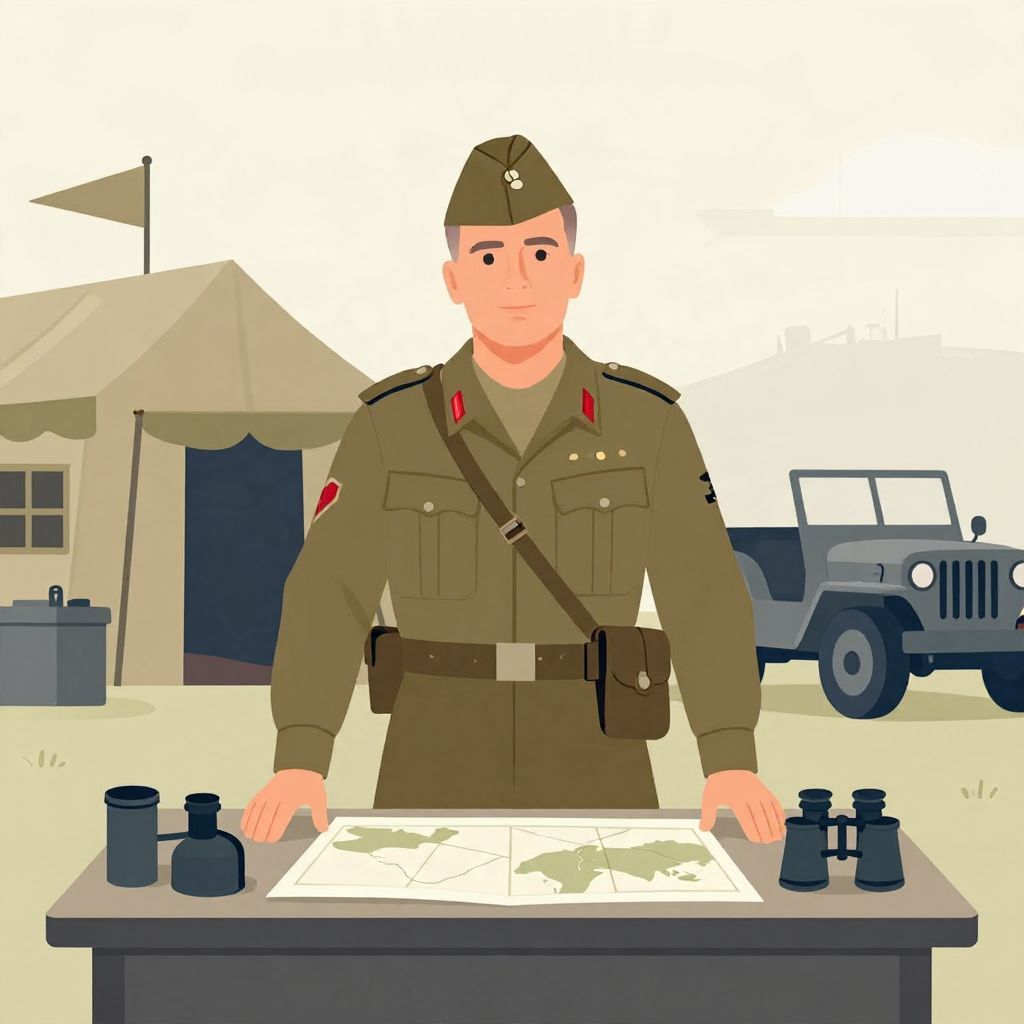
Before Dwight D. Eisenhower became the 34th president of the United States, he was best known as a five-star general. The war he is most closely associated with is World War II, when he served as Supreme Commander of the Allied Expeditionary Force in Europe.
He did not fight as a front-line combat soldier in that war, but he helped plan and direct the Allied strategy that led to victory over Nazi Germany. His military leadership during World War II made him one of the most prominent Americans of the 20th century.
Before He Was President, Eisenhower Was a General. What War Was He In?
Eisenhower’s defining military service was in World War II, especially the European theater. Appointed Supreme Commander of Allied forces in 1943, he oversaw major operations including the D-Day invasion of Normandy in 1944 and the final push into Germany. His wartime leadership helped shape his public image and paved the way to the presidency.
Who Was Dwight D. Eisenhower?
Dwight David Eisenhower was born in 1890 in Texas and grew up in Kansas. He graduated from West Point in 1915 and built a long Army career before World War II. For years, he worked in staff and planning roles rather than in famous battlefield command, which gave him broad experience in organization, logistics, and coalition warfare.
That background mattered. When the United States entered World War II after the attack on Pearl Harbor in December 1941, the Army needed leaders who could coordinate large multinational forces. Eisenhower proved especially effective at managing complex alliances, a skill that became central to the Allied war effort.
The War Eisenhower Is Most Known For: World War II
Eisenhower was in World War II, the global conflict fought from 1939 to 1945 between the Allied powers and the Axis powers. In Europe, the war pitted the United States, Britain, the Soviet Union, and other Allies against Nazi Germany and its partners. Eisenhower became one of the key American commanders in that struggle.
Why Eisenhower’s role mattered
By 1942, the Allies needed someone who could coordinate not just American troops, but also British, Canadian, Free French, and other forces. Eisenhower was chosen because he was calm, diplomatic, and able to work with strong personalities such as British Prime Minister Winston Churchill and General Bernard Montgomery. His job was as much political and organizational as it was military.
In 1943, he was named Supreme Commander of the Allied Expeditionary Force. That meant he was responsible for planning the cross-Channel invasion of France, managing competing priorities among Allied leaders, and keeping the coalition focused on defeating Germany first.
World War II Timeline: Eisenhower’s Rise as a Wartime Commander
Eisenhower’s wartime career moved quickly once the United States entered the conflict. His rise reflected the urgency of the war and the need for effective coalition leadership.
- December 7, 1941: Japan attacks Pearl Harbor; the United States enters World War II.
- 1942: Eisenhower becomes a major Allied planner and commander in the Mediterranean.
- November 1942: He oversees Operation Torch, the Allied invasion of North Africa.
- 1943: He is appointed Supreme Commander of the Allied Expeditionary Force.
- June 6, 1944: D-Day landings begin in Normandy under his overall command.
- May 1945: Germany surrenders in Europe, ending the war there.
Operation Torch and the Mediterranean campaign
Before D-Day, Eisenhower gained experience commanding the Allied invasion of North Africa in November 1942, known as Operation Torch. This campaign was important because it gave the Allies a foothold against Axis forces and helped build confidence in large-scale joint operations. It also showed Eisenhower’s ability to coordinate across national lines and military branches.
He later helped direct operations in Sicily and Italy. These campaigns were difficult and controversial, but they kept German forces under pressure while the Allies prepared for the decisive invasion of Western Europe.
D-Day and the Liberation of Western Europe
The most famous moment of Eisenhower’s wartime career came on June 6, 1944, when Allied forces landed on the beaches of Normandy, France. D-Day was the largest amphibious invasion in history and a turning point in World War II. Eisenhower had approved the operation after months of planning, weather delays, and strategic debate.
His role was not to lead troops ashore in person, but to make the invasion possible. He had to balance military risk, weather conditions, intelligence, deception plans, and the needs of multiple Allied armies. The success of D-Day opened the way for the liberation of France and the eventual defeat of Nazi Germany.
Why D-Day was so important
D-Day created a western front that forced Germany to fight on two major fronts at once, alongside the Soviet advance from the east. It also showed the power of Allied cooperation. Eisenhower’s leadership was widely praised because the operation required coordination on an enormous scale and because failure would likely have prolonged the war dramatically.
What Caused World War II?
Understanding Eisenhower’s wartime role also means understanding why World War II began. The war grew out of the unresolved tensions after World War I, the rise of aggressive dictatorships, and the failure of international efforts to stop expansionist regimes in time.
Main causes of the war
- The Treaty of Versailles: After World War I, Germany faced harsh terms that fueled anger and instability.
- The Great Depression: Economic crisis weakened democracies and helped extremist movements gain support.
- The rise of fascism and militarism: Adolf Hitler in Germany, Benito Mussolini in Italy, and militarist leaders in Japan pursued expansion.
- Appeasement: Britain and France often hesitated to confront aggression early, hoping to avoid another major war.
- Expansionist invasion policies: Germany invaded Poland in 1939, triggering war in Europe; Japan expanded across Asia and the Pacific.
Eisenhower did not cause these events, of course, but his career became central to the Allied response. He was one of the commanders who helped transform the United States from a late-entering power into a decisive military force.
How Eisenhower’s Wartime Leadership Shaped His Presidency
Eisenhower’s military reputation was one of the main reasons he later won the presidency in 1952. Voters saw him as a steady, unifying figure who had helped win the war. His wartime experience also influenced the way he governed, especially in his preference for calm management, coalition-building, and avoiding reckless conflict.
As president, Eisenhower emphasized stability during the Cold War. He did not lead the nation through World War II as president, but his experience in that war shaped his approach to leadership, diplomacy, and military restraint.
From general to president
After the war, Eisenhower served as Army Chief of Staff, then as president of Columbia University, and later as NATO’s first Supreme Allied Commander. These roles kept him in public view and reinforced his image as a capable international leader. By the time he ran for president, his wartime service was already part of American political memory.
Historical Impact of Eisenhower’s Service in World War II
Eisenhower’s impact on World War II was substantial because he helped hold together a fragile alliance. The Allies were not a single unified power; they were a coalition with different goals, military traditions, and political pressures. Eisenhower’s talent lay in keeping that coalition functioning long enough to win the war.
His leadership also demonstrated how modern war depended on logistics, planning, and diplomacy, not only battlefield heroics. In that sense, Eisenhower represented a new kind of military commander: one who managed vast systems rather than simply commanding troops in direct combat.
His wartime success helped make him a symbol of American competence and moderation in the postwar era. That reputation mattered in a world reshaped by the devastation of World War II and the emerging tensions of the Cold War.
So, What War Was Eisenhower In?
The direct answer is World War II. Eisenhower’s most important military service came in that conflict, where he served as a high-ranking Allied commander and later as Supreme Commander of the Allied Expeditionary Force in Europe. His leadership was central to the Allied victory, especially in North Africa and during the Normandy invasion.
He was not known for fighting in World War I or the Civil War, and his fame rests primarily on his role in the second world war. That wartime record is the reason history remembers him first as a general and then as a president.
If you want to explore the broader military context of Eisenhower’s era, you may also be interested in how many Americans died in World War II and, for an earlier American conflict, how many died in the Civil War. Eisenhower’s story belongs to the long history of how war shaped American leadership and politics.