
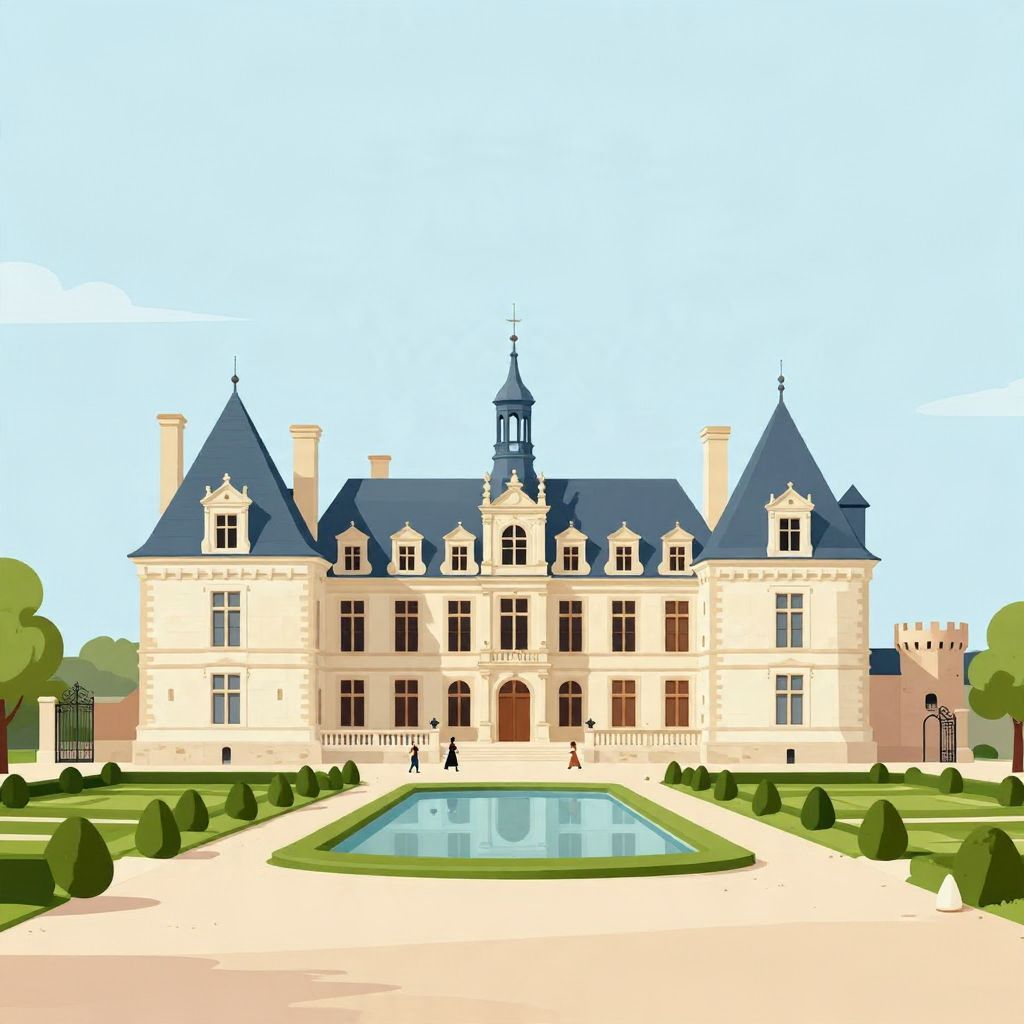
What is a chateau? In history, the word usually refers to a large French country house, estate residence, or castle-like manor, depending on the period and context. It can describe a fortified medieval stronghold, a noble residence, or a grand rural home built for comfort and display rather than defense.
The term is closely tied to French social and architectural history. Over time, chateaus shifted from military power centers to symbols of landownership, prestige, and refined living, especially among the French nobility and later the wealthy elite.
What Is a Chateau?
A chateau is a French term for a substantial country residence, often associated with nobility, landholding, or prestige. In English, it may mean a castle, manor house, or grand estate, but the exact sense depends on whether the building was originally defensive, administrative, or primarily residential.
The Meaning of “Chateau” in Historical Context
From fortress to residence
The word château comes from the Latin castellum, meaning a fortified place or small castle. In medieval France, many chateaus were indeed defensive structures, built to control territory, protect local populations, and display lordly authority. As warfare changed, many were rebuilt or replaced as elegant homes.
Why the word can be confusing
English speakers often use “chateau” loosely for any impressive French house, but historians distinguish between a medieval castle, a Renaissance palace, and an 18th- or 19th-century country estate. A chateau may be fortified in origin, but it does not always function as a military castle in the strict sense.
How Did Chateaus Begin?
Chateaus developed in medieval France as centers of power for kings, nobles, bishops, and military lords. From roughly the 10th century onward, local rulers built stone strongholds to defend land and assert control. These early chateaus were part home, part fortress, and part administrative headquarters.
Feudal society and the need for strongholds
After the breakup of Carolingian authority in the early Middle Ages, political power became more localized. Lords needed secure residences from which they could collect dues, oversee farms, and protect their followers. The chateau fit this feudal world: it was both a symbol of authority and a practical instrument of rule.
Typical medieval features
- Thick stone walls
- Towers and keeps for defense and status
- Moats or ditches in some locations
- Courtyards for work, storage, and daily life
- Chapels, halls, and service buildings
Not every chateau had all these elements, and many were far less grand than later romantic images suggest. Some were modest lordly residences, while others became major fortified centers.
How Chateaus Changed Over Time
Medieval chateaus
In the High Middle Ages, chateaus were closely linked to war, land control, and hereditary lordship. They helped enforce feudal relationships and often stood at strategic points such as river crossings, hilltops, or borders. Their architecture emphasized security as much as comfort.
Renaissance chateaus
By the 15th and 16th centuries, France was becoming more politically centralized, and artillery made many older fortifications less effective. At the same time, Renaissance taste encouraged symmetry, decoration, and comfort. Many French nobles rebuilt chateaus into elegant residences with large windows, formal gardens, and ornate interiors.
This is one reason the Loire Valley became famous for its chateaus. Buildings there often reflect the transition from medieval stronghold to Renaissance palace, combining older defensive forms with newer ideas of luxury and status.
Classic and modern estate chateaus
From the 17th century onward, many chateaus were less about defense and more about land management, leisure, and representation. The aristocratic country house became a stage for elite life. In later centuries, especially after the French Revolution, some chateaus were abandoned, sold, damaged, or repurposed, while others were preserved as heritage sites.
Chateau, Castle, Manor: What Is the Difference?
These terms overlap, but they are not identical. A castle is usually a fortified residence built for defense. A manor house is generally a rural elite residence tied to an estate, often with less emphasis on fortification. A chateau may be either, or something in between, depending on French usage and historical period.
In French usage
In France, château can refer to a wide range of stately buildings, from medieval castles to grand country houses. It is broader than the English word “castle.” For example, a vineyard estate may be called a château even if it was never fortified at all.
In English usage
English borrowed the term and often gave it a more romantic flavor. As a result, “chateau” in English can suggest elegance, old-world charm, or French aristocratic life, even when the original building was not a military fortress.
Why Were Chateaus Important in French History?
Centers of power
Chateaus were not just homes. They were local power centers where lords governed estates, collected rents, administered justice, and maintained military forces. In this sense, they reveal how authority worked in medieval and early modern France before modern state institutions became dominant.
Symbols of rank and identity
Architecture communicated status. A chateau announced wealth, lineage, and social rank through size, style, and location. Even when no longer militarily necessary, rebuilding a chateau in a grand style could express political ambition or cultural refinement.
Economic role
Many chateaus were at the heart of agricultural estates. They depended on peasant labor, managed surrounding land, and stored produce. Their history is therefore tied not only to nobles and kings, but also to rural economies and the lives of ordinary workers.
Famous Chateaus and What They Show
Chateau de Chambord
Built in the 16th century, Chambord is one of the best-known French chateaus. It reflects Renaissance ambition and royal prestige more than military necessity. Its dramatic design shows how the chateau had become a statement of power and taste.
Chateau de Chenonceau
Chenonceau is famous for its elegant setting and its association with powerful women of the French court. It illustrates how chateaus could function as elite residences shaped by politics, patronage, and personal influence as much as by architecture.
Chateaus of the Loire Valley
The Loire Valley contains many of the most celebrated chateaus in France. Their variety makes them especially useful for understanding the evolution of the form, from medieval defense to Renaissance luxury and later heritage preservation.
What Happened to Chateaus After the French Revolution?
The French Revolution transformed the social world that had produced many chateaus. Aristocratic privilege was attacked, noble property was confiscated in some cases, and many estate houses were damaged, sold, or abandoned. Some survived by adapting to new owners and new uses.
New meanings in the 19th century
In the 19th century, chateaus often became symbols of historical memory, national heritage, or romantic nostalgia. Wealthy industrialists and bourgeois families also built or restored chateaus, imitating aristocratic forms to express status in a changing society.
Preservation and tourism
Today, many chateaus are preserved as monuments, museums, hotels, or private homes. Their survival depends on conservation, tourism, and public interest in architectural history. They are valuable not only for their beauty, but also for what they reveal about power, class, and changing ideas of home.
So, What Is a Chateau Today?
Today, a chateau is best understood as a historically layered term for a French noble residence or estate building, sometimes fortified, often grand, and usually tied to landownership and status. Its meaning ranges from medieval stronghold to elegant country house, which is why context matters so much.
In short, the chateau began as a seat of feudal power and evolved into a symbol of aristocratic culture and architectural prestige. To explore how historic buildings survive and are protected over time, see what cultural preservation means in architecture.