
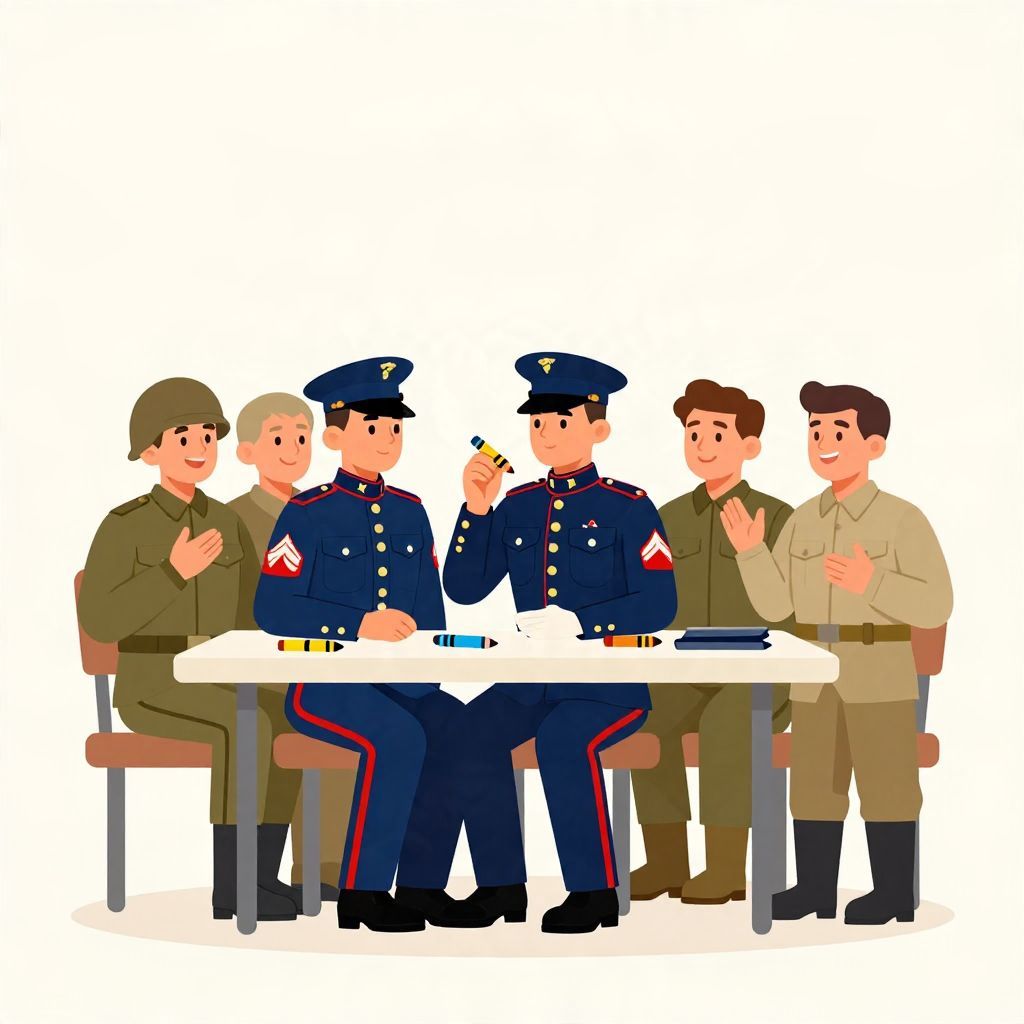
Do Marines eat crayons? The short historical answer is no: there is no evidence that U.S. Marines have ever literally eaten crayons as a tradition, ritual, or official practice. The phrase is a modern joke and insult, not a documented military custom.
What is historical is the way the meme grew out of long-standing stereotypes about Marines as tough, blunt, and sometimes mocked as unsophisticated. Over time, the joke spread online and became part of contemporary military humor.
Do Marines Eat Crayons?
No. There is no credible historical evidence that Marines eat crayons as part of Marine Corps culture. The idea is a modern internet meme and a teasing stereotype, not a real custom, policy, or tradition in the U.S. Marine Corps.
Where Did the Crayon Joke Come From?
The crayon joke is best understood as part of broader military banter. Marines have long been portrayed in popular culture as exceptionally aggressive, physically tough, and less concerned with refinement than with action. The crayon image turns that stereotype into a childish insult: crayons are colorful, simple, and associated with early childhood, so the joke suggests immaturity rather than intelligence.
That kind of humor did not arise from a single historical event. Instead, it developed gradually through barracks culture, inter-service rivalry, and later internet meme culture. By the early 21st century, the phrase had become widely recognizable in online spaces, especially in jokes made by non-Marines and by Marines themselves in a self-deprecating way.
Inter-service rivalry and military humor
All armed forces develop internal jokes and rivalries. In the U.S. military, branches often tease one another through stereotypes: soldiers, sailors, airmen, and Marines all have their own reputations. The crayon joke fits this pattern. It is less a statement about actual behavior than a comic shorthand used to provoke, bond, or signal group identity.
Why crayons?
Crayons work well as a meme because they are instantly recognizable, harmless, and absurdly childish. The joke is memorable precisely because it is so unlikely. In that sense, it functions like many other modern internet insults: it exaggerates a stereotype until it becomes funny.
What Is the Historical Evidence?
There is no documented Marine Corps tradition, training practice, or official lore showing Marines eating crayons. No reliable military history source treats it as a real custom. The claim belongs to folklore and internet humor, not to established historical fact.
That distinction matters. Historians separate evidence from legend by asking whether a claim appears in official records, memoirs, newspapers, photographs, training manuals, or other verifiable sources. In this case, the evidence points the other way: the phrase is modern, informal, and clearly satirical.
What historians can say with confidence
- The U.S. Marine Corps has a long public image of toughness and aggression.
- Marines have been the target of jokes from both civilians and other service members.
- The crayon-eating line is a recent meme, not an old military tradition.
- There is no serious evidence that Marines are expected or encouraged to eat crayons.
The Marine Corps Image Behind the Joke
To understand why the joke caught on, it helps to know how Marines have been portrayed historically. Since the 19th and 20th centuries, the Marine Corps has cultivated an image of elite discipline, combat readiness, and physical endurance. That image was reinforced by wars, recruiting campaigns, and popular media.
At the same time, elite organizations often attract mockery. The more a group emphasizes toughness, the more outsiders may respond with caricature. The crayon joke plays on the contrast between the Marines’ hard-edged public identity and the childishness of eating crayons.
From wartime reputation to pop-culture stereotype
Marine identity was shaped by major conflicts such as World War I, World War II, Korea, Vietnam, and later operations in the Middle East. These wars helped cement the Corps’ reputation for front-line combat and hardship. But public admiration often comes with simplified storytelling, and simplified storytelling invites parody.
By the late 20th century, Marines were already a familiar cultural symbol. Movies, television, recruiting ads, and jokes all helped create a recognizable “Marine type.” The crayon meme grew out of that broader cultural visibility.
How the Meme Spread in the Internet Age
The crayon joke became especially widespread online, where short, repeatable insults travel quickly. Internet humor rewards exaggeration, repetition, and easy visual imagery. A box of crayons is a perfect meme object: it is colorful, cheap, and absurdly out of place in any serious military context.
As the joke spread, it took on a life of its own. Some Marines adopted it ironically, turning the insult into a badge of identity. That is a common pattern in online culture: a group can reclaim a mockery and use it as a form of in-group humor.
Self-deprecating humor as identity
Military organizations often use self-deprecating jokes to build camaraderie. When Marines repeat the crayon joke themselves, they are not endorsing it as fact. They are participating in a shared culture of humor that signals toughness, familiarity, and resilience under criticism.
Why the Joke Persists
The joke endures because it is simple, visual, and adaptable. It can be used as a tease, a meme caption, a social media punchline, or a lighthearted jab in inter-service banter. It also persists because it requires no historical knowledge to understand.
Another reason is that jokes about military intelligence and discipline are common in many countries and eras. Armies have often been mocked in folk humor, especially when civilians view military life as rigid, masculine, or overly aggressive. The crayon meme is a modern American version of that older habit.
Folklore versus fact
Historically, many groups acquire legends that are funny but untrue. These stories can be harmless, but they become misleading when repeated as if they were evidence. The crayon joke belongs to this category. It is cultural folklore, not history.
What This Says About Modern Military Culture
Although the joke is not factual, it does reveal something real about modern military culture: service members live in a world of constant identity-making, humor, and rivalry. Jokes can reinforce belonging, ease stress, and create bonds across difficult experiences.
The crayon meme also shows how quickly internet culture can reshape older stereotypes. A vague idea about Marines being rough or unsophisticated became a highly specific image that spread far beyond the military itself. In that sense, the joke is a small but telling example of how folklore evolves in the digital age.
Humor and morale
Military humor often serves a practical purpose. It can reduce tension, help people cope with danger, and create a sense of shared experience. Even a silly meme can become part of that process. The crayon joke may be absurd, but it reflects a real social function: bonding through ridicule.
So, Do Marines Eat Crayons?
No—at least not in any historical or factual sense. The phrase is a meme, a stereotype, and a joke. It is not evidence of Marine Corps practice, doctrine, or tradition. Historically speaking, the claim belongs to the world of humor rather than the world of documented military history.
The lasting significance of the joke lies in what it reveals about modern culture: how stereotypes form, how online humor spreads, and how groups can turn mockery into identity. If you want to understand the history behind the phrase, the real story is not about crayons at all. It is about Marines, reputation, and the power of memes to turn a joke into a widely recognized cultural symbol.