
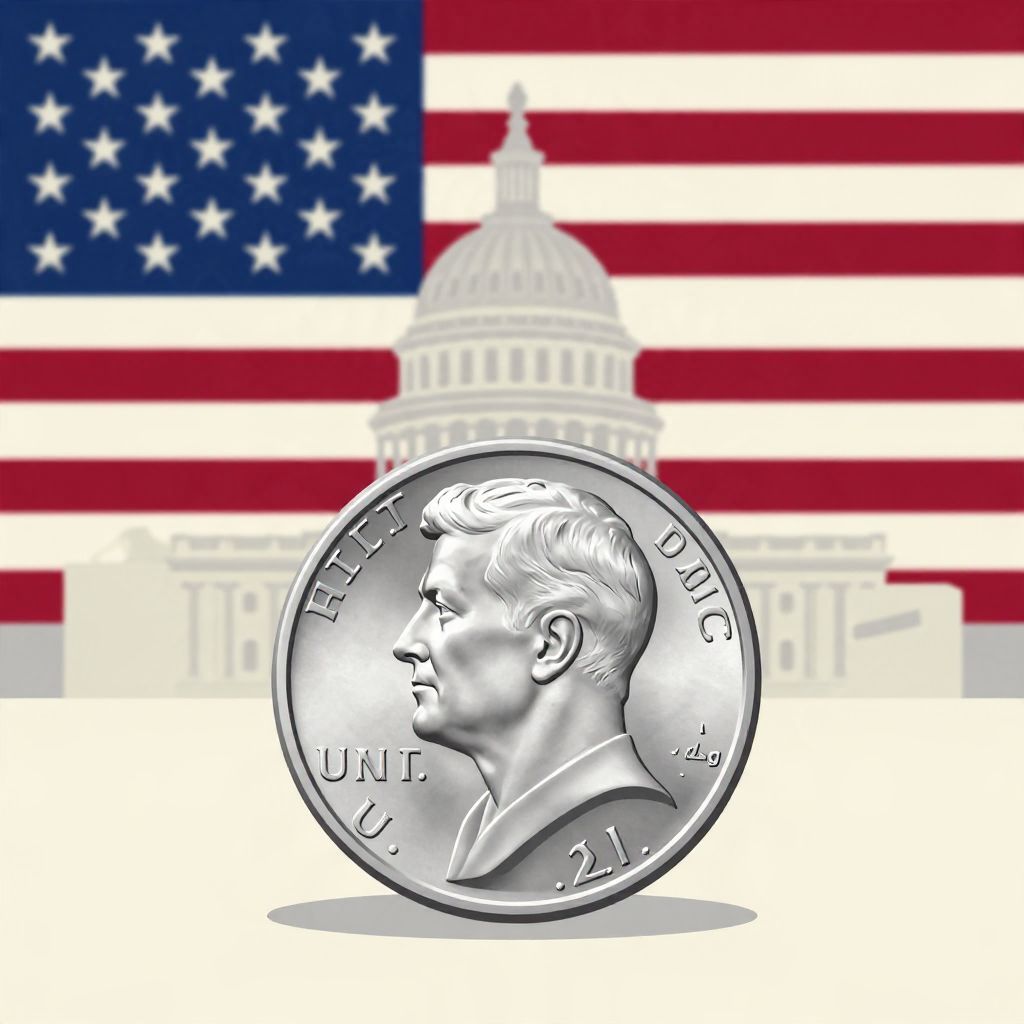
Who is on the half dollar? In the United States, the modern half dollar features President John F. Kennedy. His portrait has appeared on the coin since 1964, shortly after his assassination, making the half dollar one of the most recognizable memorial coins in American history.
The answer is simple, but the coin’s history is richer than the face on it. The half dollar has changed designs over time, reflecting shifts in American politics, memory, and monetary habits. Understanding who appears on it also means understanding why the coin was created, how it evolved, and why it is used less often today.
Who Is on the Half Dollar Today?
The current U.S. half dollar shows John F. Kennedy, the 35th president of the United States. His portrait was introduced in 1964 as a national tribute after his death in November 1963. The coin remains legal tender, though it is far less common in everyday commerce than smaller denominations.
Why John F. Kennedy Appears on the Half Dollar
Kennedy was chosen quickly and with broad public support because many Americans wanted a lasting memorial to the late president. The half dollar was selected in part because it was a large, prestigious coin that could carry a strong portrait and because its previous design, the Franklin half dollar, could be replaced without waiting for a long redesign process.
The 1964 redesign
The Kennedy half dollar was authorized in the immediate aftermath of the assassination. The new coin entered circulation in 1964, and its release became a national event. Demand was intense, and many people saved the coins rather than spending them, especially the early silver issues.
A commemorative meaning
Unlike many coins that change portraits for political or administrative reasons, the Kennedy half dollar was intended as a memorial. It was not simply a routine design update. The coin became part of the public mourning process, turning a daily object into a symbol of national loss and remembrance.
What Was on the Half Dollar Before Kennedy?
Before Kennedy, the half dollar featured Benjamin Franklin. The Franklin half dollar was issued from 1948 to 1963. Franklin was not a president, but he was one of the most admired founders in American history, and his image reflected mid-20th-century efforts to honor influential national figures beyond presidents.
Earlier half dollar designs
The half dollar has had a long design history. Before Franklin, the coin carried the image of Walking Liberty, one of the most celebrated artistic designs in U.S. coinage, used from 1916 to 1947. Earlier still, the coin featured other allegorical and historical designs, including the Barber half dollar and the Seated Liberty half dollar.
- 1964–present: John F. Kennedy
- 1948–1963: Benjamin Franklin
- 1916–1947: Walking Liberty design
- Earlier 19th-century issues: various Liberty-themed designs
What Is the Half Dollar, Historically?
The half dollar is a U.S. coin worth 50 cents, or one-half of a dollar. It has existed since the early years of the United States and was once a practical part of everyday commerce. In the 18th and 19th centuries, when cash transactions relied heavily on coins, half dollars circulated more widely than they do now.
Why the half dollar mattered
For much of American history, the half dollar served a useful role between the quarter and the dollar. It was large enough for substantial purchases but still practical for ordinary exchange. As the 20th century progressed, however, the coin became less essential, especially as paper money, vending systems, and electronic payments changed how people used cash.
How the Kennedy Half Dollar Changed Over Time
Although Kennedy has remained on the coin, the half dollar itself has not stayed exactly the same. Its metallic composition, circulation pattern, and collector appeal all changed over time, especially after the end of silver coinage in the 1960s.
Silver and the 1964 issue
The first Kennedy half dollars in 1964 were struck in 90% silver, which made them especially attractive to collectors and the public. Even after the coin’s composition changed, many people continued to save the earlier pieces because of their silver content and historical significance.
Reduced circulation after the 1960s
As the coin’s silver content was reduced and then eliminated from regular circulation issues, the half dollar became less common in daily use. Many businesses stopped ordering them in large numbers, and the coin gradually shifted from a circulating denomination to one often associated with collectors, banks, casinos, and special mint products.
Design details
The Kennedy half dollar has also seen subtle design revisions. The obverse, or front, has retained Kennedy’s portrait, while the reverse has changed from the original presidential seal-inspired design to later commemorative and modernized versions. These changes reflect the coin’s dual identity as both currency and historical memorial.
Why the Half Dollar Is Less Common Today
Many Americans know the coin by name but rarely encounter it in change. That is not because it disappeared; rather, it became less practical in a cash economy that increasingly favored smaller coins and digital payments. The half dollar’s size also made it less convenient for some uses, and its limited circulation reduced public familiarity over time.
Economic and cultural reasons
Several factors explain the half dollar’s decline in everyday use:
- Reduced demand: Stores and banks ordered fewer half dollars.
- Changing payment habits: Paper, cards, and electronic payments replaced coin-heavy transactions.
- Collector interest: Many half dollars were saved rather than spent.
- Coin composition changes: The end of silver circulation altered how people valued the coin.
As a result, the half dollar survived more as a symbolic and collectible coin than as an everyday medium of exchange.
Who Was John F. Kennedy?
John F. Kennedy, commonly known as JFK, was born in 1917 and served as president from 1961 until his assassination in 1963. His presidency was brief but highly visible, shaped by the Cold War, the early space race, civil rights tensions, and major public speeches that helped define his public image.
Why Kennedy became a national symbol
Kennedy’s appeal rested on more than policy. He represented youth, energy, and a sense of modern American optimism for many people. After his assassination, that image took on added emotional power. Placing him on the half dollar turned a routine object into a national memorial that still circulates today.
Historical context of the tribute
The decision to honor Kennedy on currency reflected a long tradition of using coins and medals to commemorate leaders. But the speed of the redesign was unusual. It showed how strongly the nation wanted to mark the event and how quickly public memory can become embedded in everyday objects.
Did Any Other Countries Put Kennedy on Coins?
Yes, Kennedy has appeared on commemorative coins and medals in the United States and abroad, but when people ask “who is on the half dollar,” they are usually referring to the American half dollar specifically. In the U.S. context, Kennedy remains the standard and enduring answer.
The Half Dollar as a Historical Artifact
The half dollar is more than a piece of money. It is a small historical record of changing American values. The portraits used on the coin tell a story about who the nation chose to honor: Liberty, founders, statesmen, and presidents. Kennedy’s image marks a moment when grief, politics, and public memory came together in a single design.
What the coin reveals
The half dollar shows how currency can function as a form of public history. A coin is handled, saved, spent, and remembered. For that reason, the Kennedy half dollar is both a practical object and a memorial to a specific moment in the 20th century.
Conclusion
The answer to “Who is on the half dollar?” is John F. Kennedy. His portrait has appeared on the U.S. half dollar since 1964, following his assassination and the public desire to honor him on a widely recognized coin. The half dollar’s changing designs also reflect broader shifts in American history, from everyday commerce to commemoration. For related reading, see what makes a 1964 Kennedy half dollar rare and what president is on the nickel.