
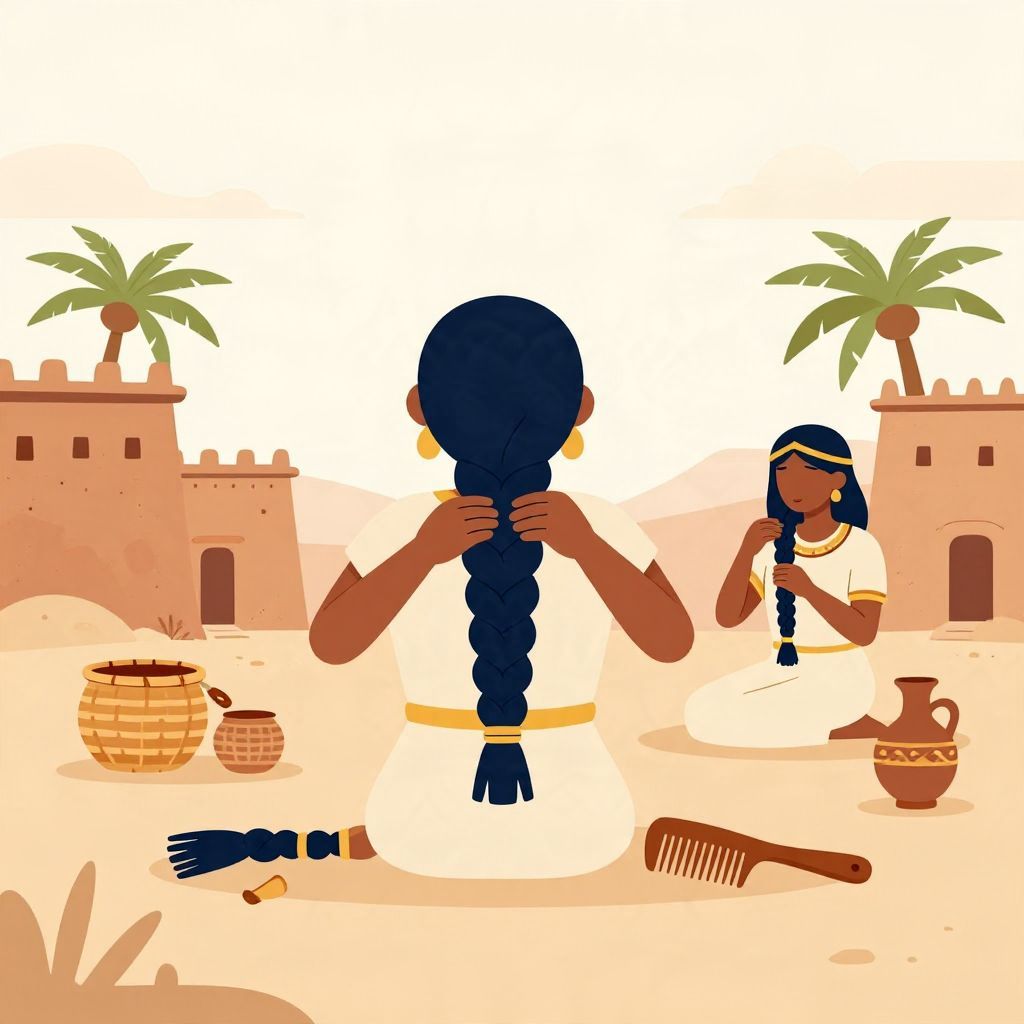
Where did braids originate? The short answer is that braiding is so ancient and widespread that it did not begin in one single place. Archaeological and artistic evidence shows braided hairstyles in multiple early societies, especially in Africa, Europe, and Asia, thousands of years ago.
Because hair braiding is practical, decorative, and adaptable, it likely emerged independently in different regions. The earliest clear evidence points to the deep prehistoric past, long before written records, when people used braids for protection, identity, status, and style.
Where Did Braids Originate?
Braids did not originate in just one country or civilization. The oldest known evidence comes from prehistoric and ancient societies across Africa and Eurasia, with especially strong early traditions in Africa. Scholars generally see braiding as a near-universal human practice that developed independently wherever people had long hair and the need to manage it.
The Earliest Evidence for Braids
Hair braiding is difficult to trace because hair rarely survives in the archaeological record. Historians rely on figurines, carvings, paintings, and preserved remains. The oldest known depictions of braided or plaited hairstyles date back tens of thousands of years, though exact interpretations can be uncertain. What is clear is that braiding is ancient, not modern.
Prehistoric figurines and early art
Some of the earliest possible evidence comes from Upper Paleolithic female figurines in Europe, such as the famous Venus figures, which may show braided hair or woven head coverings. Because these objects are stylized, scholars debate whether they represent actual braids, hats, or symbolic hairstyles. Even so, they suggest that complex hair styling existed very early in human history.
Ancient remains and preserved hair
In a few cases, preserved hair from ancient burials provides more direct evidence. Mummies and dry-climate remains from Egypt, Siberia, and other regions have shown carefully arranged plaits and braids. These finds confirm that braiding was not only artistic imagery but a real, lived practice in ancient societies.
Why Africa Is Central to Braiding History
Africa holds some of the strongest and most continuous historical traditions of braiding. Braids were used across many African cultures for centuries, and in some regions they were likely practiced far earlier than the written record. Because of the continent’s great cultural diversity, there was never one single “African braid style,” but rather many braided traditions with local meanings.
Ancient African hairstyles
Ancient Egyptian art frequently shows men and women with braided or plaited hair, wigs, and elaborate hair arrangements. While wigs were also important, braids clearly appear in tomb art and sculpture. In other parts of Africa, oral traditions and later historical records show that braiding served as a marker of age, marital status, ethnicity, wealth, and ceremonial role.
Social meaning beyond appearance
Braids were not merely decorative. In many African communities, hairstyle could communicate social identity at a glance. Certain braid patterns might indicate whether a person was unmarried, married, mourning, or preparing for a ritual. Braiding also created a shared social activity, often done in groups, strengthening family and community bonds.
Braids in Ancient Egypt, Greece, and Rome
In the ancient Mediterranean world, braids were common among elites and ordinary people alike. Egyptian art shows a wide range of braided styles over many centuries. In Greece and Rome, braids appeared in both daily wear and formal styling, especially among women, though men also wore plaited hair in some periods and regions.
Egyptian braid traditions
Ancient Egyptian hairstyles were highly varied. Some people wore natural hair in braids, while others used wigs made with braided sections. The desert climate helped preserve hair in burials, giving historians valuable evidence. Egyptian braiding was associated with grooming, status, and sometimes religious or funerary practice.
Classical Mediterranean styling
Greek and Roman art often depicts women with carefully arranged braids pinned up around the head. These styles could signal refinement and social rank. In the Roman world, elaborate braided hairstyles became especially fashionable among elite women, showing that braiding was not only practical but also a form of public display.
Braiding in Asia and the Steppe Worlds
Braids also have deep roots in Asia. In many ancient and medieval societies, hair was braided for convenience, protection, and cultural expression. Among nomadic and pastoral peoples of Central Asia, braiding was often practical for life on horseback and in harsh climates. Braids could also be tied to tribal identity and ceremonial dress.
Practical needs in nomadic life
In steppe societies, long hair could be braided tightly to keep it manageable during travel, riding, and work. Braids helped prevent tangling and damage from wind and dust. Over time, practical hair management often became culturally meaningful, with specific styles associated with age, gender, or group affiliation.
East Asian traditions
Hair styling in East Asia also included braiding, though the exact forms varied widely by period and region. Braids could be worn under hats, combined with buns, or incorporated into ceremonial dress. As with other regions, braiding was shaped by local customs, class, and changing fashion.
What Braids Were Used For in History
Braids survived across cultures because they solved several problems at once. They kept hair neat, reduced tangling, protected strands from damage, and could last longer than loose styles. At the same time, braids allowed people to express identity, beauty, belonging, and skill. Their usefulness helped them spread and endure.
Practical advantages
- They keep hair controlled during work, travel, and physical activity.
- They can protect hair from breakage and weather.
- They often require less daily maintenance than loose hair.
- They can be adjusted into many forms, from simple plaits to complex patterns.
Cultural and symbolic roles
In many societies, braids became visual language. They could show rank, age, religion, ethnicity, mourning, or celebration. In some cultures, the time and labor required to create certain braided styles made them a sign of status. In others, braiding was a communal practice passed from one generation to the next.
How Braids Spread Across the World
Because braids are easy to invent and useful in many environments, they likely arose independently in several places rather than spreading from one original source. Migration, trade, conquest, and cultural exchange then carried braid styles from one region to another. Over time, braiding became one of the most globally shared forms of hairstyling.
Independent invention versus cultural diffusion
Historians often distinguish between independent invention and diffusion. Independent invention means different communities created braids on their own because the idea is simple and practical. Diffusion means people learned braid styles from others through contact. For braids, both processes probably mattered. The style is old enough and widespread enough that a single origin is unlikely.
Trade, empire, and movement
As ancient and medieval trade networks expanded, so did hairstyles and grooming practices. Merchants, soldiers, enslaved people, migrants, and travelers carried techniques across borders. Braids could be adapted to new materials, climates, and social norms, which helped them endure across centuries and continents.
Braids in the Modern Historical Record
Modern history adds another layer to braiding’s story. In the Atlantic world, African braiding traditions survived the trauma of slavery and displacement, becoming a powerful expression of cultural memory and resistance. In the modern era, braids have also moved through fashion, politics, and identity movements, often carrying meanings far beyond style.
Resistance, heritage, and identity
For people of African descent, braids have often served as a visible link to ancestral heritage. At the same time, braiding has been contested in schools, workplaces, and public life, showing how a hairstyle can become politically charged. In many places today, braids are recognized both as fashion and as cultural expression.
Global fashion and adaptation
Today, braids appear in many forms around the world, from simple three-strand plaits to cornrows, box braids, fishtails, and intricate ceremonial styles. Some are ancient in origin, while others are modern variations. The global popularity of braids reflects their long history of practicality, beauty, and adaptability.
So, Where Did Braids Originate?
Braids originated in the deep prehistoric past, not in one single location. The strongest early evidence comes from Africa and Eurasia, especially ancient African societies where braiding developed into rich and enduring traditions. Because braids are easy to create and useful in many settings, they likely emerged independently in multiple regions of the world.
In historical terms, braids are best understood not as a single invention but as a shared human practice. Their long survival shows how everyday grooming can become culture, identity, and history. If you are interested in how foods and customs also develop across places and time, you may enjoy reading about where French fries originated and where sushi originated.