
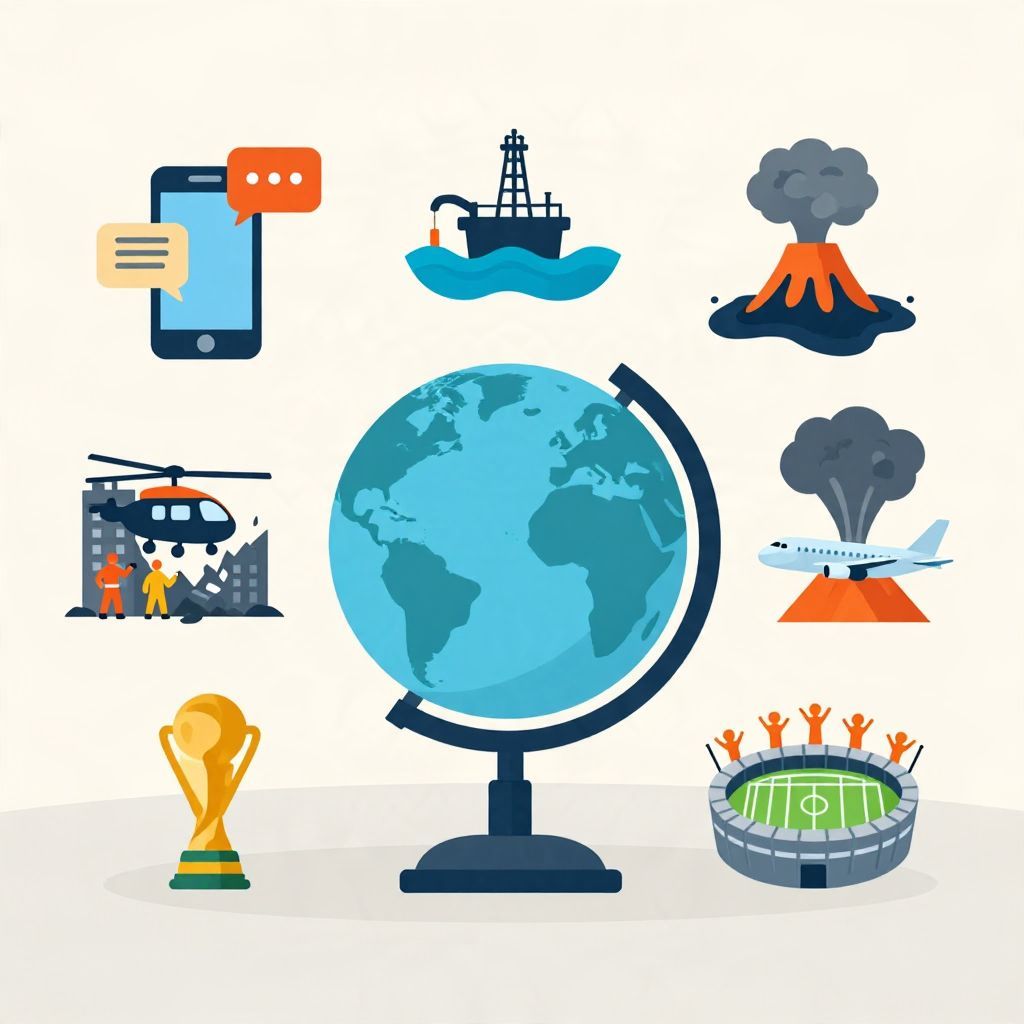
What happened in 2010? In historical terms, 2010 was a year of crisis, acceleration, and transition. It opened with a devastating earthquake in Haiti, moved through economic strain and political upheaval across several regions, and ended with major changes in technology, climate politics, and global attention.
It was also a year when social media, smartphones, and online news helped events spread faster than ever, shaping how people experienced history in real time. The result was a year that felt immediate then and still matters now.
What happened in 2010?
In 2010, the world saw major natural disasters, political unrest, economic recovery after the 2008 financial crisis, and rapid growth in digital culture. The year is often remembered for the Haiti earthquake, the Deepwater Horizon oil spill, WikiLeaks disclosures, and the rise of smartphones and social media as forces in everyday life.
A timeline of major events in 2010
2010 did not have one single defining event; instead, several crises and turning points unfolded across the year. Together, they showed how interconnected the modern world had become.
January to March: disaster and political tension
- January 12 — A catastrophic earthquake struck near Port-au-Prince, Haiti, killing hundreds of thousands of people by most estimates and leaving much of the capital in ruins.
- February — The Winter Olympics were held in Vancouver, a reminder that global sporting events still drew huge international attention even during a tense political and economic period.
- March — Political unrest continued in several countries, while governments were still dealing with the aftereffects of the global financial crisis.
April to June: environmental and economic shocks
- April 20 — The Deepwater Horizon drilling rig exploded in the Gulf of Mexico, causing a massive oil spill and one of the worst environmental disasters in U.S. history.
- May — The eurozone debt crisis intensified, especially around Greece, exposing weaknesses in the European financial system.
- June — The FIFA World Cup began in South Africa, the first held on the African continent, symbolizing both global sport and post-apartheid international visibility.
July to September: war, diplomacy, and public attention
- July — Fighting in Afghanistan remained intense, and the war continued to shape U.S. and NATO politics.
- August — The United Nations declared that the Millennium Development Goals had helped focus global policy, though progress remained uneven.
- September — Protests and debates over immigration, national identity, and government policy grew in several countries.
October to December: leaks, elections, and digital change
- October — WikiLeaks began releasing large sets of U.S. diplomatic cables, triggering global debate about secrecy, transparency, and national security.
- November — The United States held midterm elections, reflecting public frustration with the pace of economic recovery and government policy.
- December — Online activism expanded further, and the year closed with the sense that digital platforms were becoming central to politics and culture.
Why 2010 mattered historically
2010 mattered because it revealed several long-term historical trends at once. The year showed how vulnerable modern societies were to natural disasters, financial instability, and environmental damage. It also showed how quickly information could circulate through digital networks, changing politics and public debate.
The Haiti earthquake and global humanitarian response
The earthquake in Haiti was one of the defining tragedies of the year. Haiti was already one of the poorest countries in the Western Hemisphere, with weak infrastructure and limited emergency capacity. The disaster exposed those vulnerabilities on a massive scale.
The international response brought aid agencies, governments, militaries, and charities into action, but it also exposed the limits of disaster relief. Reconstruction was slow, coordination was difficult, and long-term recovery remained incomplete for years. Historically, the earthquake became a case study in both humanitarian mobilization and the challenges of rebuilding after catastrophe.
The Deepwater Horizon spill and environmental awareness
The Deepwater Horizon explosion pushed environmental risk into the center of public discussion. Oil from the damaged well spread through the Gulf of Mexico for months, harming marine life, coastal economies, and public trust in offshore drilling.
This disaster mattered beyond the immediate spill. It intensified debates about energy policy, corporate responsibility, and regulation. It also helped shape later environmental politics by showing how industrial accidents could have wide ecological and economic consequences.
WikiLeaks and the politics of transparency
When WikiLeaks released diplomatic cables in late 2010, governments around the world faced a new kind of challenge: the rapid, global distribution of classified information online. Supporters argued that the leaks exposed hidden power and encouraged accountability. Critics said they endangered diplomacy and security.
Historically, the episode marked a turning point in the relationship between states, the press, and digital platforms. It also foreshadowed later disputes over whistleblowing, cybersecurity, and the control of information in the internet age.
What was happening in the world in 2010?
Across the globe, 2010 was shaped by the aftershocks of the 2008 financial crisis and by political strains that had been building for years. Some countries were recovering unevenly, while others faced deep unrest or institutional change. The year did not produce a single global revolution, but it did accelerate pressures already in motion.
Economy and recovery after the financial crisis
Many governments in 2010 were still struggling with recession, unemployment, and debt. In the United States, the economy was recovering slowly. In Europe, the sovereign debt crisis raised fears about the stability of the euro. These problems influenced elections, public anger, and policy debates.
The broader historical significance lies in the fact that 2010 showed how long the effects of the 2008 crisis would last. Recovery was uneven, and many people experienced the decade not as a quick rebound but as a prolonged period of uncertainty.
Politics and protest
Several countries in 2010 experienced rising public frustration over corruption, inequality, and government legitimacy. In some places, these tensions were still below the surface; in others, they were already visible in demonstrations and political conflict.
Looking back, historians often see 2010 as part of the buildup to the major protest waves and political upheavals that followed in the early 2010s, including the Arab Spring. The year itself was not the full turning point, but it was a crucial prelude.
Technology and everyday life
2010 was also a landmark year for digital culture. Smartphones were becoming more common, social media platforms were expanding rapidly, and people were increasingly using mobile devices for news, communication, and entertainment. Apple launched the first iPad in 2010, helping establish the tablet as a mainstream consumer device.
This mattered because it changed how people interacted with information. News spread faster, public reactions became more immediate, and political events could be documented and shared by ordinary users. In that sense, 2010 was part of the transition to the always-connected world of the 2010s.
How historians understand 2010
Historians usually treat 2010 less as a single dramatic break and more as a year that concentrated several larger historical trends. It was a year of disaster response, economic strain, digital transformation, and rising political tension. Those forces did not begin in 2010, but they became especially visible then.
That is why 2010 is important in modern history: it helps explain the decade that followed. The humanitarian crisis in Haiti, the environmental damage of the oil spill, the expansion of digital transparency, and the continued weakness of the post-crisis economy all pointed toward a world becoming more connected, more fragile, and more politically volatile.
In short, what happened in 2010 was not one event but a cluster of turning points that reshaped the early 21st century. If you want to explore more modern historical context, you can also read more history articles or start with an introductory history page.