
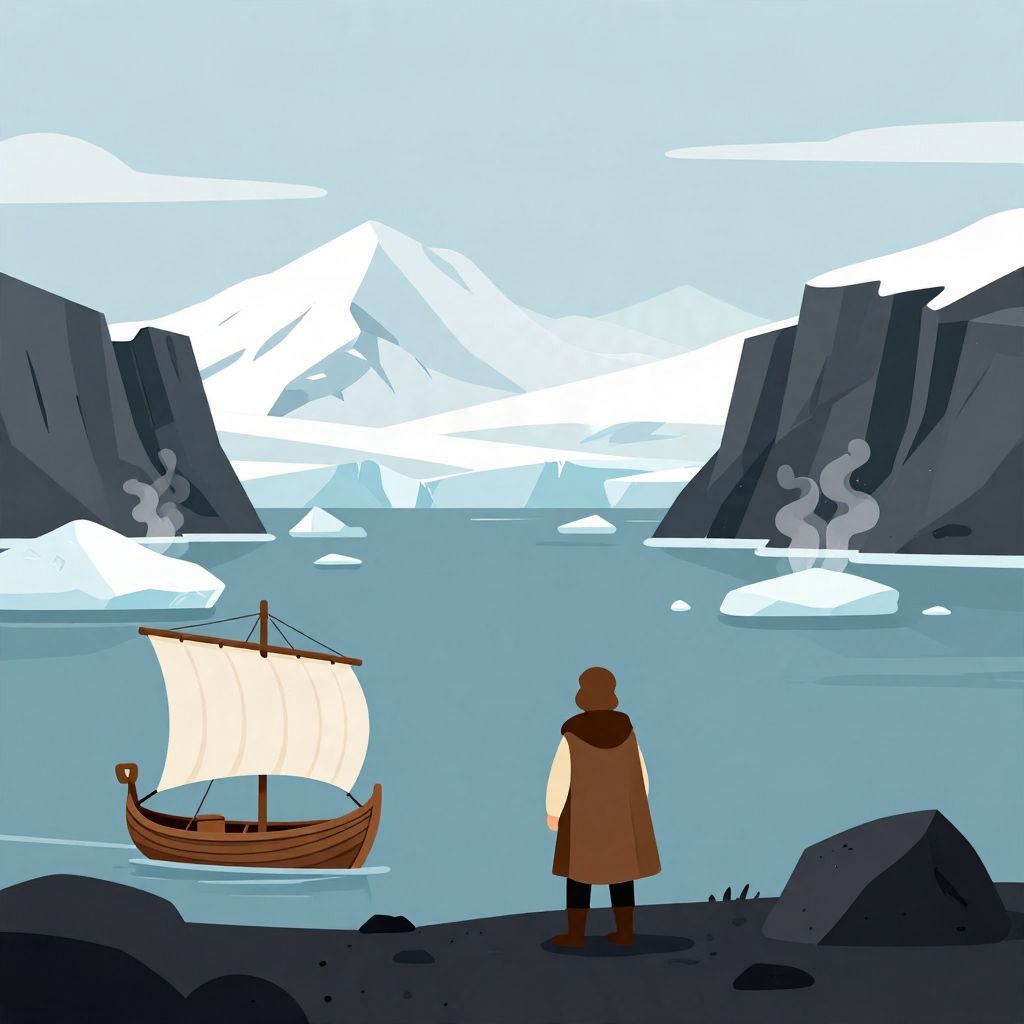
Why is Iceland called Iceland? The short answer is that the name comes from early Norse settlement and a strategic use of naming. Medieval sources say the island was named by Norse explorers after they encountered ice in its waters and along parts of its coast.
That explanation is partly true, but the full story is more interesting. Iceland was not simply named for being entirely icy, and the name also helped shape how outsiders imagined the island. Its history combines exploration, environment, and a memorable label that has lasted for more than a thousand years.
Why Is Iceland Called Iceland?
Iceland was named by early Norse settlers in the late 9th century, most famously by the explorer Hrafna-Flóki Vilgerðarson. According to medieval Icelandic sources, he saw ice in a fjord after a harsh winter and called the land Ísland, meaning “Ice Land.” The name reflected real conditions, though it did not mean the whole island was permanently frozen.
The Norse Settlement and the Origin of the Name
Who named Iceland?
The naming is traditionally linked to Hrafna-Flóki, a Norse settler and explorer active in the 9th century. The main narrative appears in medieval Icelandic literature, especially the Landnámabók (“Book of Settlements”), which was written down centuries after the events it describes. That means the story is valuable, but not a verbatim contemporary record.
What happened when he arrived?
Flóki and his companions are said to have reached the island after earlier Norse voyagers had already explored parts of the North Atlantic. He reportedly endured a difficult winter, and when spring came he saw ice floating in a fjord. That image became the basis for the name. In other words, the name likely grew out of a real experience of cold, sea ice, and a challenging climate.
Why would settlers choose such a name?
Names in the medieval North often described landscape features, practical conditions, or memorable events. A name like “Ice Land” would have been easy to remember and useful as a warning or description for other travelers. It also may have distinguished the island from nearby lands in a sea route where navigation depended on recognizable markers.
How Reliable Is the Traditional Story?
The traditional explanation is well known, but historians treat it carefully. The main written accounts come from Icelandic sagas and settlement histories composed in the 12th and 13th centuries, long after the first Norse arrivals. These texts preserve older traditions, but they also shaped the past into memorable stories. So the naming of Iceland is best understood as a historically plausible tradition rather than a fully documented event.
Was Iceland really covered in ice?
No. The island was never an ice sheet in the way Greenland is often imagined. Iceland has glaciers, volcanic terrain, and a cool North Atlantic climate, but much of the land is habitable and was settled successfully by Norse farmers. The name probably referred to visible sea ice, winter conditions, and the overall impression of a cold island rather than a literal description of the entire landscape.
Could the name have had another meaning?
Some scholars have suggested that the name may have been influenced by practical or political motives, not just weather. A harsh-sounding name could make the island seem less attractive to rivals or more distinctive in oral travel traditions. Still, the simplest explanation remains the strongest: the Norse called it Iceland because ice was a striking feature of their experience there.
Iceland Before the Norse Name
Was the island known earlier?
Before Norse settlement, the island may have been known to Irish monks or other North Atlantic voyagers, though evidence is limited. Medieval texts mention hermits or Christian ascetics, sometimes called papar, who may have lived there before the Norse arrived. If so, they do not appear to have left a surviving name that became widely used.
Why did the Norse name prevail?
The Norse settlement became permanent and politically significant. Once farming communities, local assemblies, and trade networks developed, the Norse language and naming system dominated the island’s written and spoken culture. As a result, Ísland became the standard name in the medieval period and remained so in later centuries.
What the Name Tells Us About Medieval Iceland
A name shaped by environment
Iceland’s name reflects how medieval people understood place: through direct experience. For seafarers crossing the North Atlantic, climate mattered as much as geography. Ice in the water could threaten ships, delay travel, and make a strong impression on newcomers. The island’s name therefore captures a real environmental challenge faced by early settlers.
A name shaped by storytelling
The story of the naming also shows how medieval Icelanders preserved identity. Settlement narratives were not just practical records; they were cultural memory. By linking the name to a specific explorer and a dramatic moment, later writers turned geography into a founding story. That helped explain where the community came from and how it understood itself.
Why Iceland’s Name Is Often Confused with Greenland
One reason the name “Iceland” attracts attention is that it seems to contrast with Greenland. Greenland was named by Erik the Red, according to medieval sources, and many people assume the name was chosen to entice settlers. That story is also partly traditional, but it is widely accepted that the name was meant to sound appealing. Iceland’s name, by contrast, seems to have been more descriptive than promotional.
Two names, two different strategies
- Iceland likely reflected a real encounter with ice and cold conditions.
- Greenland likely served as a more attractive settlement name.
- Together, they show how Norse explorers used naming both to describe and to persuade.
The Historical Meaning of “Ice Land”
What does the word mean in Old Norse?
The Old Norse form Ísland is straightforward: ís means “ice,” and land means “land.” The modern English name is therefore a direct translation of the older Scandinavian term. This is one reason the origin of the name is so transparent compared with many other European place names, which have been altered by centuries of language change.
Did the name affect Iceland’s image?
Yes. The name helped create a lasting association between the island and cold, remote conditions. Even though Iceland has fertile valleys, geothermal activity, and a complex landscape, the name foregrounded its harsher elements. Over time, that image became part of how the island was imagined in Europe and later around the world.
How the Name Survived Through the Centuries
Iceland remained under Norse cultural influence after settlement, then became part of the Norwegian and later Danish realms. Through all these political changes, the name endured. That continuity matters: it shows that the island’s identity was not erased by foreign rule. Instead, the original Norse name survived into the modern nation-state and remains one of the oldest continuously used country names in Europe.
From medieval settlement to modern nation
- Late 9th century: Norse settlers arrive and the island receives the name Ísland.
- 10th–13th centuries: Icelandic settlement culture is recorded in sagas and legal traditions.
- Later medieval period: The name continues under Norwegian and Danish political influence.
- Modern era: Iceland becomes the official English name for the independent state.
So, Why Is Iceland Called Iceland?
Iceland is called Iceland because early Norse settlers, especially in the tradition associated with Hrafna-Flóki, encountered ice and cold conditions and named the island accordingly. The name is historically grounded, though the exact moment of naming comes to us through later medieval sources rather than direct contemporary records. It is a simple name with a long and carefully preserved history.
In the end, Iceland’s name reflects both environment and memory: a North Atlantic island seen through the eyes of medieval sailors, then preserved by the storytellers who wrote its history. If you want to compare this kind of naming tradition with another place-name story, see why Switzerland is called “Sui” and the origin of Yukevalo Island.