
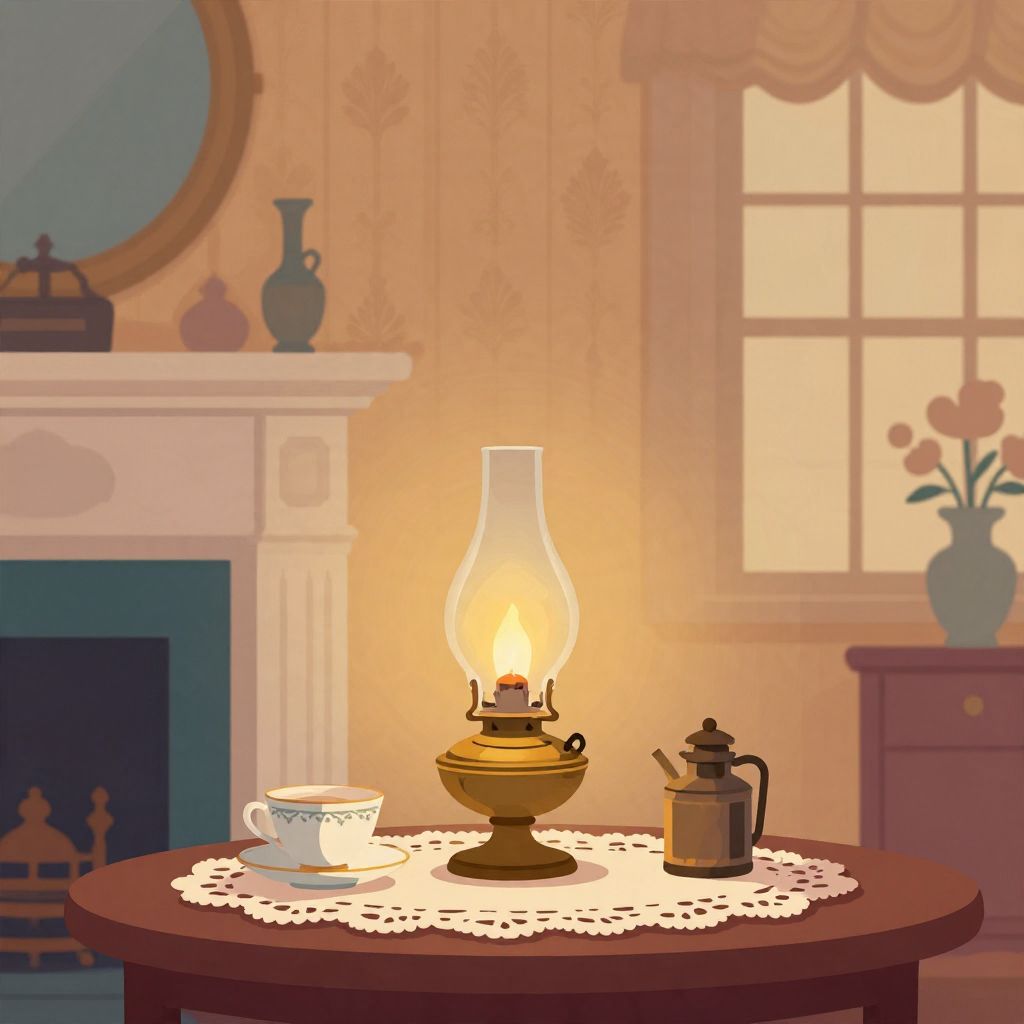
What is a fairy lamp? In historical terms, it is a small decorative household lamp designed to hold a candle or other modest light source, often enclosed in glass and made to glow softly rather than brightly. The name usually refers to late 19th-century Victorian examples, though similar small lamps existed earlier in different forms.
Fairy lamps became popular because they combined usefulness with ornament: they provided gentle light for bedrooms, parlors, and nurseries while fitting the Victorian taste for attractive domestic objects. Their history sits at the intersection of changing lighting technology, mass-produced glassware, and the era’s fascination with beauty in everyday life.
What Is a Fairy Lamp?
A fairy lamp is a small lamp, usually made of glass, that holds a candle or oil fuel in a covered or semi-covered vessel. Most surviving examples date from the Victorian era, especially the mid-to-late 1800s, when they were sold as charming decorative lights for the home. The term can also be used more loosely for any tiny ornamental lamp with a soft glow.
Origins and Meaning of the Term
The phrase “fairy lamp” reflects the romantic language of the 19th century, when manufacturers and consumers often used “fairy” to suggest delicacy, enchantment, and miniature scale. The name does not mean the object has medieval or mythical origins. Rather, it is a marketing and cultural term that fits the Victorian love of whimsy, domestic comfort, and decorative novelty.
Why “fairy”?
In the 1800s, “fairy” was widely used in advertising, literature, and product naming to evoke something small, light, graceful, or magical. Fairy lamps were not lamps for fairies in any literal sense. The name helped sell them as elegant, charming objects suited to refined interiors.
The Historical Development of Fairy Lamps
Fairy lamps emerged during a period of rapid change in household lighting. Before widespread electric light, homes relied on candles, oil lamps, and later gas lighting. Small enclosed lamps were useful because they were safer and cleaner than an open candle, while still being inexpensive and portable. Fairy lamps developed as a decorative answer to everyday lighting needs.
From practical light to decorative object
By the 19th century, industrial glassmaking and improved metalwork made it easier to produce attractive household items in quantity. Fairy lamps were often made of pressed glass or molded glass, which lowered costs and allowed for patterned surfaces, colored glass, and ornate shapes. They were both functional and ornamental, a hallmark of Victorian domestic design.
Victorian popularity
Fairy lamps became especially popular in the Victorian period, roughly from the 1850s through the 1890s. They were used in many homes, particularly in bedrooms and sitting rooms where a soft, reassuring light was desirable. Their appeal also came from their size: they were small enough to sit on mantels, tables, and shelves without dominating a room.
How Fairy Lamps Were Made and Used
Most fairy lamps consisted of a base or holder and a glass shade or chimney-like cover. Some designs enclosed a small candle cup inside a glass reservoir; others used oil or a tiny candle protected by a surrounding glass body. The glass helped shield the flame from drafts and reduced the risk of wax splatter or accidental contact.
Common materials and designs
- Glass: clear, colored, frosted, or patterned; often pressed in molds
- Metal fittings: brass, tin, or other simple hardware in some models
- Candle inserts: small holders sized for short candles
- Decorative motifs: flowers, stars, ribs, diamonds, and floral patterns
Where they were placed in the home
Fairy lamps were commonly used as bedside lights, nursery lamps, or accent lighting in parlors and hallways. They were valued for providing enough light to move safely at night without the harshness of a larger lamp. In an era before switches and bright electric bulbs, even a small flame could be important to domestic routine.
Fairy Lamps in the Context of Victorian Life
To understand fairy lamps, it helps to place them within Victorian ideas about the home. The 19th century saw the rise of the “comfortable” middle-class interior, where furnishings, lighting, and ornaments were chosen to express respectability and taste. Fairy lamps fit this world neatly: they were modest, pretty, practical, and affordable.
Safety and convenience
Open flames were a real concern in 19th-century households. A covered lamp was safer than an exposed candle, especially in rooms with children, curtains, or drafts. Fairy lamps did not eliminate fire risk, but they reduced some of the hazards associated with everyday lighting.
Mass production and consumer culture
Fairy lamps also reflect the growth of consumer goods in the industrial age. Factories could produce glassware in standardized forms, while retailers marketed household items as both useful and fashionable. As a result, a once-simple light source became a collectible decorative object.
Were Fairy Lamps Only Victorian?
Although the classic fairy lamp is strongly associated with the Victorian era, the basic idea of a small covered lamp is older. Similar forms existed in earlier periods, especially in oil lamps and candle lanterns designed to protect a flame. What makes the Victorian fairy lamp distinctive is its name, its decorative glass styling, and its place in mass domestic culture.
Related lighting forms
- Candle lanterns: older protective light containers used indoors and outdoors
- Oil lamps: common household lights before gas and electricity
- Night lights: small lamps used for low illumination at night
So, while fairy lamps were not the first small covered lamps in history, they became a recognizable type in the 19th century and are most often identified with that period.
Why Fairy Lamps Became Collectible
Today, fairy lamps are popular among collectors because they are visually appealing, varied in design, and closely tied to Victorian domestic history. Many survive because they were made of durable glass and kept as ornaments after their practical use declined. Their small size and decorative quality also make them attractive antiques.
What collectors look for
Collectors often pay attention to glass color, maker’s marks, pattern, condition, and whether all original parts are present. Some fairy lamps are common, while others are rare due to unusual shapes, limited production, or special decorative features. As with many antiques, value depends on condition, provenance, and desirability, not simply age.
Fairy Lamps and the Shift to Electric Light
The spread of electric lighting in the late 19th and early 20th centuries reduced the everyday need for candle-based lamps. As electric light became safer, brighter, and more convenient, fairy lamps gradually moved from practical household objects to decorative keepsakes and collectibles. Their historical significance, however, remained tied to the pre-electric home.
What they tell us about the past
Fairy lamps reveal how people lived with limited light, how they balanced safety and beauty, and how industrial production shaped domestic life. They are small objects, but they illuminate larger historical themes: technology, design, consumer culture, and the changing experience of the home.
In Summary: What Is a Fairy Lamp?
A fairy lamp is a small decorative lamp, usually of Victorian origin, designed to give off a soft, enclosed light from a candle or similar fuel. Its name comes from 19th-century ideas of delicacy and charm, not from folklore. As both a practical household item and a decorative object, it reflects the everyday history of lighting in the age before electricity.
For readers interested in related domestic-history topics, fairy lamps sit alongside the broader story of Victorian household objects, lighting technology, and the rise of decorative consumer goods.