
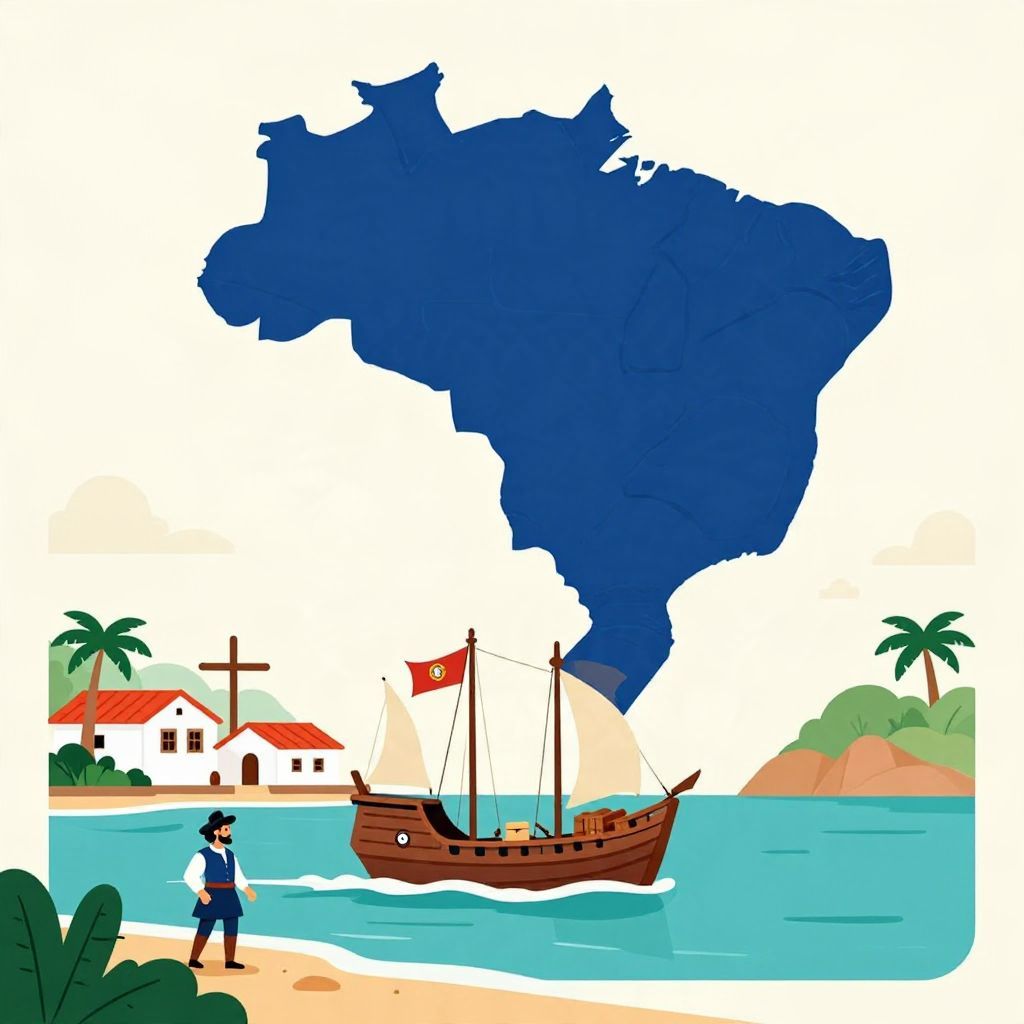
Brazil speaks Portuguese because it was colonized by Portugal beginning in the early 16th century, and Portuguese became the language of administration, religion, trade, and later national identity. Unlike most of Spanish America, Brazil developed under Portuguese rule after the Treaty of Tordesillas and remained tied to Portugal for more than three centuries.
That history did not erase Indigenous languages or the speech of enslaved Africans, but it did make Portuguese the dominant public language. Over time, Brazil’s version of Portuguese absorbed local influences and evolved into the language spoken by the vast majority of Brazilians today.
Why Does Brazil Speak Portuguese?
Brazil speaks Portuguese because Portugal claimed and governed the territory from the early 1500s until independence in 1822. Colonial institutions, missionary work, settlement patterns, and the power of the Portuguese crown made Portuguese the language of law, government, education, and social advancement, eventually spreading across a vast and diverse population.
How Portugal Came to Control Brazil
The story begins with European expansion in the late 15th and early 16th centuries. In 1494, Spain and Portugal signed the Treaty of Tordesillas, which divided much of the non-European world into spheres of influence. The line was imperfect and poorly understood, but it gave Portugal a legal claim to lands in eastern South America.
When Portuguese explorers reached the Brazilian coast in 1500, led by Pedro Álvares Cabral, they encountered many Indigenous peoples with their own languages, societies, and political systems. Brazil was not “empty” land waiting to be discovered; it was a populated region that was gradually absorbed into the Portuguese imperial world.
From Coastal Outpost to Colony
At first, Portugal showed limited interest in Brazil compared with its Asian trading empire. But as rival European powers appeared in the Atlantic and valuable resources became more important, Portugal moved to secure its claim. By the mid-1500s, the crown had established a more formal colonial administration, and Portuguese settlement expanded along the coast.
Colonization mattered linguistically because language follows power. The Portuguese crown, colonial officials, Catholic clergy, and settlers used Portuguese in official life. Over time, people who wanted access to land, commerce, legal protection, or church life had strong incentives to learn it.
The Colonial Era and the Spread of Portuguese
Portuguese became dominant in Brazil not because everyone spoke it at once, but because colonial institutions favored it over time. The language spread through towns, plantations, ports, and missions, while Indigenous and African languages remained important in daily life, especially outside centers of colonial power.
Missionaries and Language Policy
Jesuit missionaries played a major role in early colonial Brazil. In many regions, they initially used Indigenous languages, especially Tupí-related languages, to communicate and convert. This means Portuguese was not immediately universal. In fact, for a long period, a mixed linguistic environment existed in which Indigenous languages remained widely spoken.
Later, however, the Portuguese state pushed harder for linguistic unity. In the 18th century, especially under the reforms associated with the Marquis of Pombal, colonial authorities sought to strengthen Portuguese control and reduce the influence of missionary systems that used Indigenous languages. Portuguese increasingly became the expected language of public life.
Plantations, Slavery, and Everyday Speech
Brazil’s colonial economy depended heavily on enslaved labor, first in sugar production and later in mining and other sectors. Millions of Africans were forcibly brought to Brazil over the colonial period, and they spoke many different languages. In such conditions, Portuguese often became a practical common language, especially in urban areas and workplaces where people from different backgrounds had to communicate.
This did not mean African languages disappeared without a trace. They influenced Brazilian vocabulary, pronunciation, music, religion, and cultural practices. But the colonial hierarchy gave Portuguese the highest status, and over generations it became the main language of the colonial society that emerged.
Why Portuguese, Not Spanish?
Many people ask why Brazil speaks Portuguese when most of Latin America speaks Spanish. The simple answer is that the Iberian Peninsula was divided between two competing empires. Spain controlled most of the Americas, while Portugal received Brazil through early diplomatic agreements and later military and political consolidation. Brazil was the major Portuguese American colony, so Portuguese—not Spanish—became its national language.
Geography also mattered. Brazil’s Atlantic coastline made it easier to connect with Lisbon than with Spanish colonial centers. Portuguese settlement expanded in a continuous territory under one crown, while Spanish America was divided into multiple viceroyalties and colonies. That imperial structure helped keep Brazil linguistically distinct.
Borderlands and Overlap
The boundary between Portuguese and Spanish America was never perfectly fixed. In practice, frontier zones saw trade, conflict, migration, and occasional mixed communities. But the colonial line held enough to preserve a Portuguese-speaking Brazil. Even when borders shifted later, the language of administration and elite culture remained Portuguese.
How Brazil Became a Portuguese-Speaking Nation
Brazil’s independence in 1822 did not change its language. Instead, the new empire of Brazil kept Portuguese as the language of government, law, education, and national institutions. Independence changed political sovereignty, not the linguistic framework already built over three centuries of colonial rule.
Independence Without Linguistic Break
Unlike some postcolonial societies that adopted a new official language after independence, Brazil had already developed a large Portuguese-speaking population. The ruling elite, bureaucracy, and urban centers were all deeply tied to Portuguese. Keeping the language offered continuity and helped unify a huge territory with regional differences.
It also helped that Portuguese had become a marker of elite status and state power. A new national identity could be built around the language without needing to replace it. In that sense, Portuguese was both a colonial inheritance and a foundation for Brazilian nationhood.
Nation-Building and Standard Portuguese
During the 19th and 20th centuries, schools, print culture, and state institutions reinforced Portuguese as the language of citizenship. Standard written Portuguese spread through newspapers, literature, and education, while spoken Brazilian Portuguese developed its own rhythms, vocabulary, and grammar in everyday use.
Brazilian Portuguese is not identical to the Portuguese spoken in Portugal. The two are mutually intelligible to varying degrees, but they differ in pronunciation, expressions, and some grammatical habits. These differences reflect centuries of separate historical development, not a different origin.
What Happened to Indigenous and African Languages?
It is important not to tell Brazil’s language history as if Portuguese simply replaced everything else. The reality was more complex. Indigenous languages survived in many regions, especially in the Amazon and among communities that maintained cultural continuity. African languages also shaped Brazilian society, even when they were not preserved as dominant everyday languages across the country.
Lingua Geral and Multilingual Brazil
For a time, some parts of colonial Brazil used a broader communication language known as the língua geral, based largely on Tupí languages. This shows that Portuguese was not always the only major language in circulation. In frontier and missionary settings, multilingualism was common.
Over the long term, however, Portuguese gained the upper hand because the colonial and later national state backed it. Indigenous and African languages were often marginalized by law, social pressure, forced displacement, and the expansion of Portuguese-speaking settlements.
Lasting Influence on Brazilian Portuguese
Even though Portuguese became dominant, it changed in contact with other languages. Brazilian Portuguese includes many words of Indigenous origin, especially for plants, animals, foods, and places. It also contains linguistic and cultural influences from African languages brought by enslaved people. Brazil’s language is therefore Portuguese, but it is a Portuguese shaped by the history of Brazil itself.
Key Reasons Brazil Speaks Portuguese
The answer can be summarized in a few historical causes:
- Portuguese colonization began after Cabral’s arrival in 1500 and established lasting imperial control.
- Colonial administration used Portuguese in law, government, and trade.
- Missionary activity and later state policy promoted Portuguese over other languages.
- Slavery and migration created multilingual conditions in which Portuguese became a common bridge language.
- Independence in 1822 preserved Portuguese as the language of the new nation.
- Nation-building in the 19th century strengthened Portuguese through schools, print, and government.
Why This History Still Matters
Brazil’s language is a reminder that colonial borders and imperial choices can shape culture for centuries. Portuguese in Brazil is not just a leftover from empire; it is the result of long historical processes involving conquest, settlement, forced labor, religious institutions, and nation-building. The language became Brazilian through contact with Indigenous and African peoples, even as those communities were often pushed to the margins.
So, Brazil speaks Portuguese because Portugal colonized the region and built a durable colonial society there, and because independence preserved that linguistic inheritance rather than replacing it. If you want to place Brazil in the wider Atlantic world, you may also find it useful to read about why it is called Latin America and whether Portugal is in Spain.