
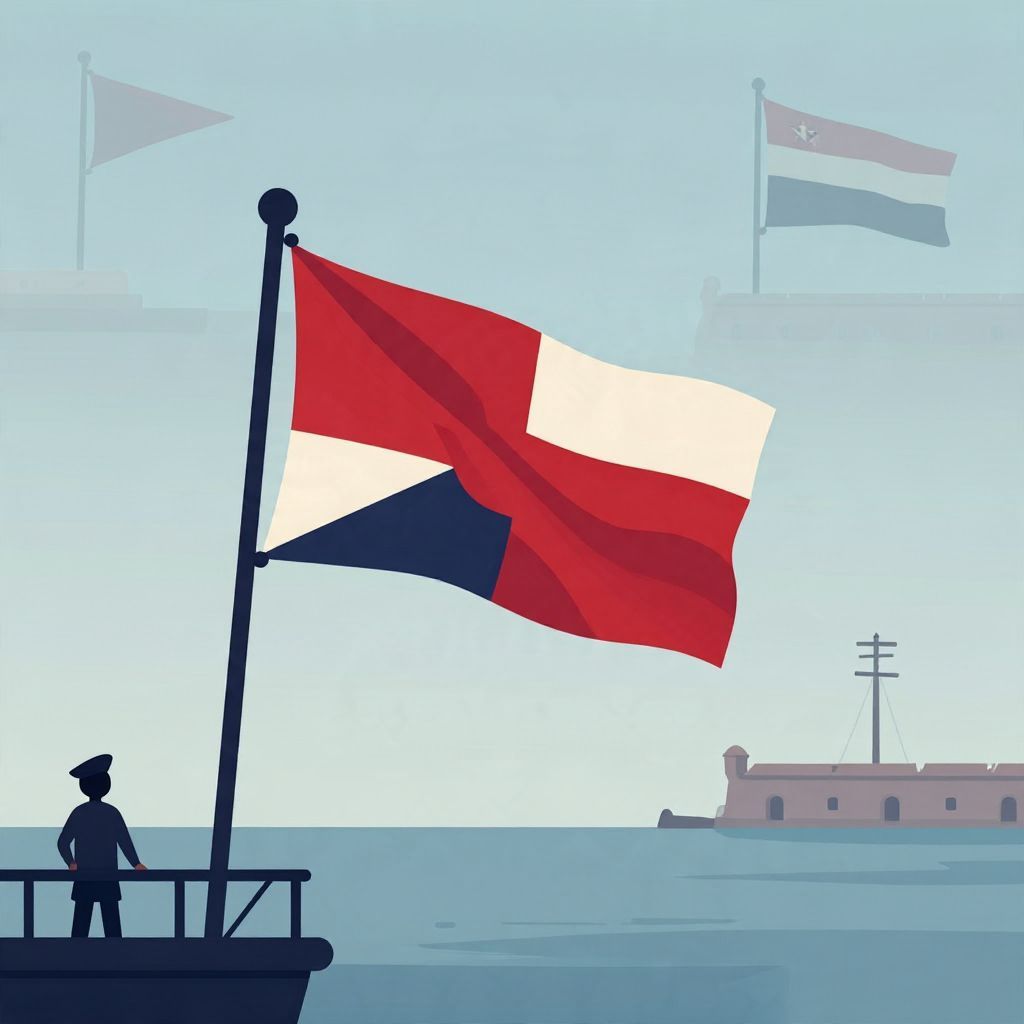
What does an upside down flag mean? Historically, it has usually signaled distress, danger, or a dire emergency. In many maritime and military traditions, flying a flag upside down was a recognized signal that immediate help was needed or that something was seriously wrong.
Over time, the meaning broadened. In modern politics and protest, an inverted flag can also be used as a symbolic act of dissent, though that usage is separate from the older distress signal and can be controversial.
What does an upside down flag mean?
An upside down flag traditionally means distress. In the oldest and most widely recognized usage, especially at sea, it was a signal that a ship or group was in grave danger and needed assistance. In modern times, people also use it as a protest symbol, but that meaning depends on context and is not the flag’s original historical purpose.
Origins of the upside down flag as a distress signal
The practice developed from practical needs long before modern communications. Sailors, soldiers, and travelers needed a simple visual code that could be understood from a distance. Since flags were already used to identify ships, units, and nations, turning one upside down became an easy way to mark emergency without inventing a new symbol.
Maritime roots
The strongest historical association is with seafaring. On ships, where survival could depend on being seen quickly, an inverted flag could indicate that the vessel was in serious trouble. This was especially useful before radio, when a visible signal might be the only way to summon help.
Because maritime signaling evolved over centuries and varied by navy, merchant fleet, and region, there is no single documented “first use” that historians can point to with certainty. Still, the broader principle is clear: inversion was a recognizable sign of abnormal danger.
Military and emergency signaling
On land, flags also served as signals in wartime and during emergencies. Armies used banners to communicate identity, movement, or alarm. An upside down flag could indicate capture, defeat, distress, or a situation so urgent that normal display rules were being intentionally broken.
In many cases, the exact meaning depended on the institution using it. A military unit, a ship, or a private citizen might all use inversion differently, but the underlying idea remained the same: the flag was being altered to communicate a serious problem.
How the meaning changed over time
By the 19th and 20th centuries, the upside down flag had taken on a more standardized association with distress in international practice, especially in maritime contexts. At the same time, flags became powerful national symbols, so inverting one also began to carry political and emotional meaning beyond emergency signaling.
From practical signal to symbolic act
As flags became more central to national identity, turning one upside down could be read not only as a call for help but also as a statement of disrespect, protest, or rejection. That shift did not replace the older meaning; instead, it layered a new one onto an older code.
This is why an upside down flag can be interpreted very differently depending on where and how it is displayed. On a ship in trouble, it may be a legitimate distress signal. At a political rally, it may be a deliberate act of protest. In a civic setting, it may be seen as offensive or inappropriate.
Historical significance of the upside down flag
The upside down flag matters historically because it shows how symbols evolve. A flag is not just cloth; it is a communication tool, a marker of authority, and a carrier of shared meaning. Inversion transforms that meaning instantly, which made it useful in emergencies and later in political expression.
A universal visual language
One reason the upside down flag endured is that it is simple and immediately noticeable. Even without words, most viewers can detect that something is wrong. That makes it part of a larger history of visual signaling, alongside smoke signals, semaphore, colored lights, and distress rockets.
Connection to freedom of expression
In democratic societies, the upside down flag has also become part of debates over free speech. People who use it as protest often intend to show alarm about government, war, or social crisis. Others see it as a misuse of a national emblem. Historically, that tension reflects the broader struggle over whether symbols belong to the state, the public, or both.
When is an upside down flag appropriate?
Historically, the most accepted use has been genuine distress. In that sense, the flag is appropriate when there is immediate danger and a recognized need for assistance. Outside of emergency conditions, the meaning becomes more political or symbolic and may not be universally understood.
Common contexts
- Emergency or distress: traditional maritime and signaling use.
- Political protest: symbolic expression of alarm or dissent.
- Accidental display: sometimes caused by mistake, especially when a flag is hung incorrectly.
That last point matters historically because not every inverted flag is intentional. In some cases, especially with unfamiliar flags or quick display, the inversion is simply an error rather than a statement.
Is an upside down flag disrespectful?
It can be, but not always. Historically, the meaning depends on intent and setting. In a military or maritime emergency, it is a practical signal rather than an insult. In a civic or ceremonial context, however, many people interpret it as disrespectful because it alters a national symbol in a visible and deliberate way.
This ambiguity is part of why the upside down flag has remained culturally powerful. It can communicate urgency, protest, grief, or contempt, depending on who uses it and why.
Timeline of the upside down flag’s historical development
- Early modern period: flags become more common as identity and signaling devices in war and at sea.
- 18th–19th centuries: inversion becomes associated with distress in maritime and military usage.
- 19th–20th centuries: the practice is increasingly understood as an emergency signal in international contexts.
- 20th century onward: the upside down flag also appears in protest movements and political symbolism.
- Today: it can mean distress, dissent, or mistake, depending on context.
Why the symbol still matters today
The upside down flag remains historically significant because it sits at the intersection of communication and identity. It is one of the clearest examples of how a small visual change can radically alter meaning. That makes it useful, but also controversial, because people do not always agree on what the signal is supposed to say.
In modern life, the symbol continues to appear in news coverage, protests, and public debate. Its endurance shows how older maritime and military practices can survive long after the original conditions that created them have changed.
Conclusion
Historically, an upside down flag means distress first and foremost, especially in maritime tradition, where it was used as a visible call for help. Over time, it also became a symbol of protest and political alarm. If you want to explore related flag traditions, see why flags are flown at half-mast and why the flag is half-mast today.