
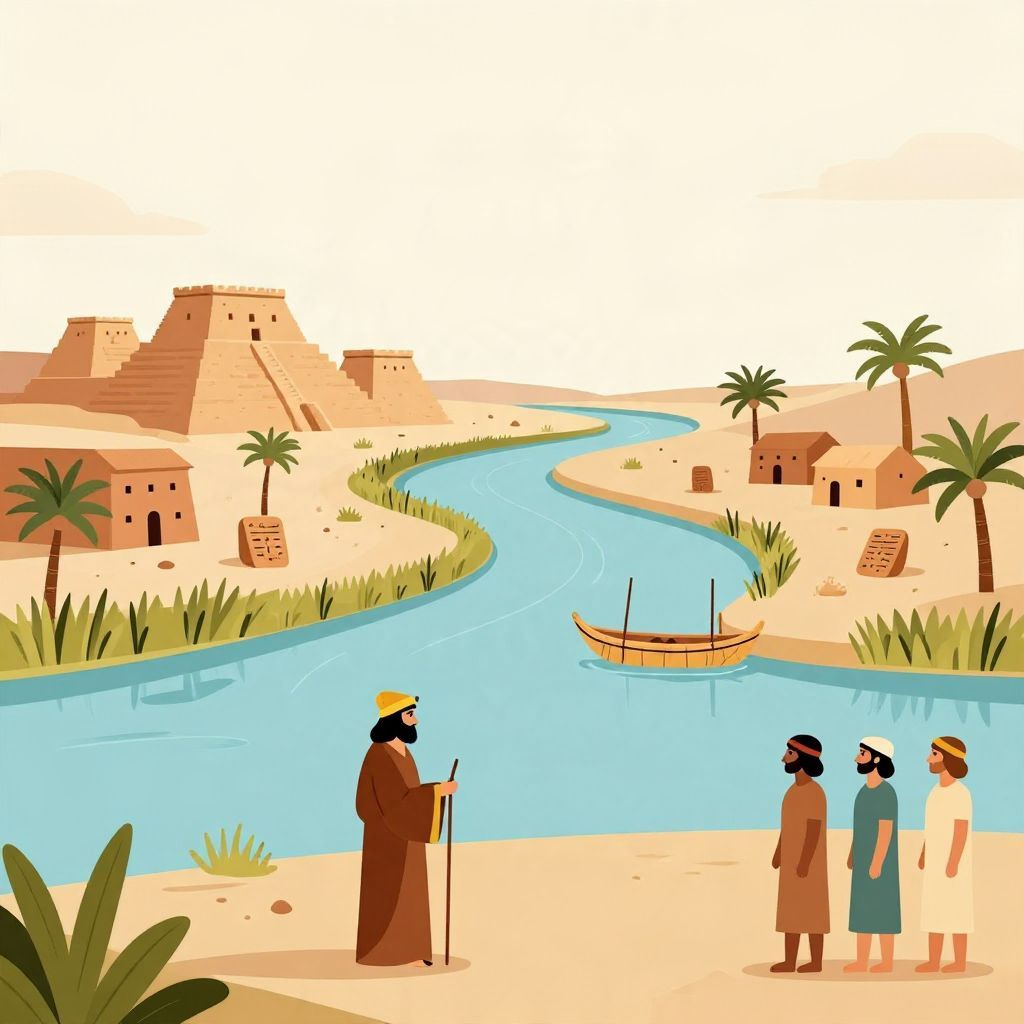
When was Mesopotamia? The short answer is that Mesopotamia was not a single kingdom or one-time event, but a long-lived historical region in the ancient Near East. Its story begins with the first farming communities in the region thousands of years ago and reaches its political peak in the early civilizations of Sumer, Akkad, Babylonia, and Assyria.
Because Mesopotamia spans so much time, historians usually date it by phases rather than one exact starting point. It is best understood as a place where some of the world’s earliest cities, writing systems, laws, and states developed between roughly 10,000 BCE and the first millennium BCE.
When Was Mesopotamia?
Mesopotamia refers to the ancient region between the Tigris and Euphrates rivers, in present-day Iraq and neighboring parts of Syria, Turkey, and Iran. Its earliest human settlement goes back to the Neolithic period, while its first urban civilizations emerged around 3500 BCE. As a major cultural and political center, Mesopotamia remained important until the Persian, Greek, and later Roman eras.
Mesopotamia in Historical Time: A Simple Timeline
There is no single “date” for Mesopotamia, but historians commonly divide its history into major stages. These stages help show how a farming landscape became one of the world’s first urban civilizations.
- c. 10,000–7000 BCE: Early farming communities appear in the Fertile Crescent, including parts of Mesopotamia.
- c. 7000–4000 BCE: Villages grow, irrigation begins in some areas, and complex societies develop.
- c. 3500–3000 BCE: The first cities emerge in southern Mesopotamia, especially in Sumer.
- c. 3200 BCE: Writing develops in cuneiform form.
- c. 2334–2154 BCE: The Akkadian Empire unites much of Mesopotamia under Sargon and his successors.
- c. 1894–539 BCE: Babylonian and Assyrian states dominate at different times.
- 539 BCE onward: Mesopotamia comes under Persian rule, then later Greek and Roman influence.
The Earliest Mesopotamia: From Farming Villages to Cities
The earliest history of Mesopotamia begins long before kings, palaces, or written records. Archaeological evidence shows that people were living in the region by the Neolithic period, when agriculture and settled village life spread across the Near East. This process began after the end of the last Ice Age, when climate changes made farming more sustainable in some areas.
Why the region mattered
Mesopotamia’s rivers made agriculture possible in a dry environment, but they also posed problems. Flooding could be unpredictable, and large-scale irrigation was needed to support crops. Over time, the need to manage water, labor, and land encouraged more organized communities. That pressure helped create the conditions for cities and governments.
From village life to urban society
By about 4000 BCE, settlements in southern Mesopotamia were growing larger and more complex. By around 3500 BCE, places such as Uruk had become true cities, with temples, administrators, artisans, and trade networks. This is one reason historians often call Mesopotamia the “cradle of civilization,” though that phrase is a modern shorthand rather than an ancient title.
When Did Mesopotamian Civilization Begin?
Mesopotamian civilization is usually said to begin around 3500 BCE, when urban life, specialized labor, and political organization became clearly visible in the archaeological record. The exact start is debated because civilization developed gradually, not overnight. Still, the period around 3500–3000 BCE marks a major turning point.
The Sumerian city-states
Southern Mesopotamia, often called Sumer, was home to some of the earliest city-states, including Ur, Uruk, Lagash, Kish, and Eridu. These were independent political units, each centered on a city and its surrounding farmland. They competed, traded, fought wars, and built monumental temples called ziggurats.
Writing and administration
One of Mesopotamia’s most important developments was writing. Around 3200 BCE, scribes in Uruk began using cuneiform, a wedge-shaped script pressed into clay tablets. At first, it was used mainly for accounting and administration. Later, it became a tool for literature, law, diplomacy, and religion. This is one of the clearest signs that Mesopotamia had entered recorded history.
Major Periods in Mesopotamian History
Mesopotamia’s history is long enough that it is best understood in phases. Each phase saw different peoples rise to power, but they often shared languages, religious ideas, and administrative traditions.
Sumerian period
The Sumerian period is generally associated with the earliest city-states of southern Mesopotamia, roughly from 3500 to 2334 BCE. Sumerians developed temple economies, irrigation systems, and some of the earliest known literature, including stories later preserved in the Epic of Gilgamesh.
Akkadian Empire
Around 2334 BCE, Sargon of Akkad created what is often considered the world’s first empire. The Akkadian Empire brought much of Mesopotamia under centralized rule. It did not last forever, but it showed that the region could be politically unified on a large scale.
Ur III and Old Babylonian periods
After the collapse of Akkadian power, Mesopotamia saw renewed local rule, including the Ur III dynasty around the 21st century BCE. Later, Babylon rose to prominence. The Old Babylonian period is especially famous for King Hammurabi, who ruled in the 18th century BCE and is associated with a major law code.
Assyrian and Neo-Babylonian empires
From the second millennium BCE onward, Assyria became one of the most powerful states in the ancient world. Its military strength and administrative system allowed it to dominate much of Mesopotamia and beyond. After Assyrian power declined in the late 7th century BCE, Babylon rose again under the Neo-Babylonian Empire, which is remembered for its wealth, monumental architecture, and political importance.
When Did Mesopotamia End?
Mesopotamia did not “end” at one precise moment. As a cultural and geographic region, it continued to exist long after its independent kingdoms fell. But as a dominant center of ancient power, its classical age faded after the Persian conquest in 539 BCE, when Cyrus the Great took Babylon. Later Hellenistic and Roman rule changed the political landscape further.
Persian, Greek, and Roman rule
Under the Achaemenid Persians, Mesopotamia became part of a larger imperial system. Alexander the Great later conquered the Persian Empire, and Mesopotamia passed into the Hellenistic world. In the centuries that followed, Parthian and Roman powers also competed for influence in the region. The old Mesopotamian city-states were no longer independent, but the region remained strategically important.
Cultural survival beyond political decline
Even after its political peak, Mesopotamian culture did not disappear all at once. Religious traditions, legal practices, urban life, and scholarly knowledge continued in different forms. Cuneiform writing survived for centuries after the rise of the Persian Empire, though it gradually fell out of use as Aramaic and other languages became more widespread.
Key Historical Facts About Mesopotamia
Several facts help explain why Mesopotamia matters so much in world history. These are not myths or legends, but well-supported historical patterns based on archaeology and ancient texts.
- It was one of the earliest centers of urban civilization. Cities emerged there by the fourth millennium BCE.
- It produced one of the first writing systems. Cuneiform began as a practical administrative tool.
- It developed early legal and political systems. Mesopotamian rulers used law codes, taxation, and bureaucracy.
- It was home to several major empires. Sumerian, Akkadian, Babylonian, and Assyrian powers all shaped the region.
- Its history spans thousands of years. From early farming villages to imperial rule, Mesopotamia changed repeatedly over time.
Why Historians Do Not Give One Exact Date
People often ask “when was Mesopotamia” as if it were a single event with a beginning and end. In reality, Mesopotamia was a region, not a one-time civilization. Its human history unfolded gradually. Farming communities appeared first, then villages, then cities, then states, and finally empires. Each stage developed over centuries.
That is why historians use approximate dates. Archaeology can show when certain technologies or settlement patterns first appear, but it cannot always identify a single founding moment. For Mesopotamia, the most useful answer is chronological: the region was inhabited from at least the Neolithic era, became urban around 3500 BCE, and remained historically important until the classical and late antique periods.
The Lasting Importance of Mesopotamia
Mesopotamia matters because many features of later civilization took shape there early: cities, written records, kingship, organized religion, long-distance trade, and state administration. Its innovations influenced neighboring regions and later empires across the ancient Near East. Even today, the study of Mesopotamia helps historians understand how complex societies first formed.
So, when was Mesopotamia? In the broadest sense, it began with early settlement in the Neolithic period, became a cradle of civilization around 3500 BCE, and remained a major historical region for millennia afterward. If you want to explore the wider setting, you may also find it helpful to read about the Fertile Crescent and what happened to Babylon.