
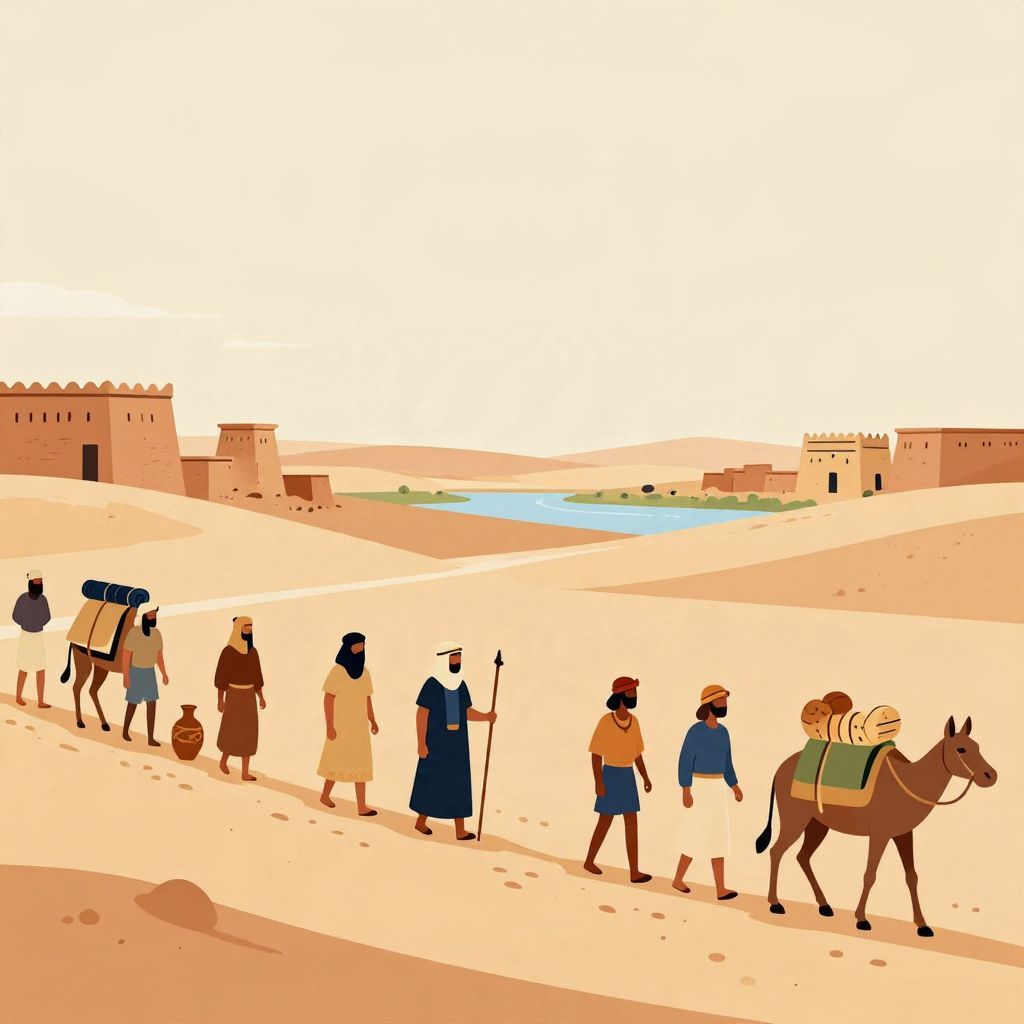
What does exodus mean? In its simplest sense, it means a mass departure or outflow of people from a place. Historically, the word is most famous for the biblical Exodus, the story of the Israelites leaving Egypt. But the term has also become a broader historical and cultural word for any large-scale migration, escape, or withdrawal.
To understand it properly, we need to look at both the word’s origins and the event that gave it lasting fame. The history of “exodus” sits at the intersection of language, religion, memory, and identity.
What Does Exodus Mean?
Exodus means a departure, especially a large or collective one. The word comes from the Greek exodos, meaning “a way out” or “departure.” In historical and religious usage, it most often refers to the Israelites’ escape from slavery in Egypt, a foundational story in Judaism and an influential narrative in Christianity and Islam.
The Origin of the Word “Exodus”
From Greek to English
The English word comes through Latin from the Greek exodos: ex meaning “out” and hodos meaning “road” or “way.” In ancient Greek, it could describe an exit, departure, or the act of going out. Over time, English adopted the term and gave it both a general meaning and a specialized religious meaning.
Why the biblical title matters
The Book of Exodus in the Hebrew Bible was named in the Greek translation of the scriptures, the Septuagint, produced in the Hellenistic period. The title reflects the central movement of the narrative: the departure from Egypt. In other words, the word itself highlights the story’s defining action rather than a single character or location.
The Biblical Exodus: What Is the Historical Story?
The biblical Exodus tells how the Israelites, led by Moses, left Egypt after a period of oppression, crossed the wilderness, and entered into a covenant with God. It is one of the most important origin stories in Jewish tradition. Historically, it is best understood as a sacred narrative shaped over time, not as a simple modern-style eyewitness report.
The main sequence of events
- The Israelites are said to have lived in Egypt and become enslaved.
- Moses confronts Pharaoh and demands release.
- A series of plagues afflicts Egypt.
- The Israelites depart, followed by the dramatic crossing of the sea.
- They travel through the wilderness and receive the law at Sinai.
This sequence is central to the religious meaning of “Exodus.” It is not only about leaving a place; it is about liberation, covenant, and the formation of a people.
When Did the Exodus Happen?
Historical dating is uncertain
There is no consensus among historians and archaeologists about a single date for the biblical Exodus, and many scholars doubt that the story can be matched to one exact historical event. Traditional interpretations have placed it in the second millennium BCE, often around the 13th century BCE, but the evidence is debated and indirect.
Why scholars disagree
The difficulty is that the biblical account combines memory, theology, national identity, and literary shaping. Archaeology has not produced clear proof of a mass departure from Egypt on the scale described in the Bible. Some scholars think the story may preserve memories of smaller movements of Semitic-speaking people out of Egypt, later expanded into a national epic. Others view it primarily as a foundational religious narrative rather than a literal record.
Historical Significance of the Exodus Story
A foundation for identity
Whatever its exact historical basis, the Exodus became one of the most influential stories in Jewish history. It explains why the Israelites understood themselves as a people chosen, redeemed, and bound by law. The annual Passover celebration continues to retell that escape from Egypt, keeping the memory alive across generations.
Law, freedom, and covenant
The Exodus story is not only about escape from oppression. It leads directly to the giving of the law and the creation of a covenant relationship. In this sense, freedom is paired with responsibility. The people are not simply freed from slavery; they are formed into a community with obligations, rituals, and moral duties.
Influence beyond Judaism
Christianity adopted the Exodus as a powerful symbol of salvation and deliverance. In later centuries, many political and social movements also used Exodus language to describe liberation from tyranny, exile, or injustice. The term became a general metaphor for mass departure and a moral symbol of freedom.
Exodus in Historical Language and Usage
General meaning in history
Outside the Bible, historians use “exodus” to describe large-scale population movements. For example, a city might experience an exodus after war, economic collapse, or persecution. In this broader sense, the word does not require a religious context; it simply emphasizes a significant outflow of people.
Examples of historical exoduses
- Refugee flight during wars and invasions.
- Urban departures caused by famine, plague, or economic decline.
- Religious migration when communities leave an area to escape persecution.
- Postcolonial movement when populations relocate after political change.
In each case, the word captures scale and urgency. It suggests not just movement, but a collective turning point in history.
How the Meaning Changed Over Time
From a specific story to a universal symbol
Originally, “Exodus” referred to a particular biblical departure. Over time, it came to symbolize any liberation journey. This shift is common in historical language: a specific event becomes a model for understanding similar experiences elsewhere. The biblical Exodus became a template for thinking about exile, rescue, nationhood, and freedom.
Why the story endured
The narrative endured because it addresses universal historical experiences: oppression, escape, uncertainty, and the search for a new home. Many societies have used the Exodus story to interpret their own struggles. Its power lies in its combination of suffering and hope, loss and renewal.
Exodus, Memory, and History
History versus tradition
For historians, it is important to distinguish between the historical question and the traditional meaning. The historical question asks what may actually have happened in the ancient Near East. The traditional meaning asks how communities remembered, retold, and used the story. Both matter, but they are not the same.
Why that distinction matters
Religious traditions often preserve truths of identity and meaning even when the exact historical details are uncertain. The Exodus story is a good example. It may not be recoverable as a fully documented event, but it is unquestionably one of the most important narratives in world history because of how it shaped belief, law, and collective memory.
Timeline of the Term and the Tradition
- Second millennium BCE — Possible historical background for memories later associated with the Exodus, though details remain uncertain.
- First millennium BCE — The Exodus story becomes embedded in Israelite religious tradition and scripture.
- Hellenistic period — Greek translations of the Hebrew Bible use Exodus as the title of the book.
- Later Jewish and Christian history — The story becomes central to ritual, theology, and moral reflection.
- Modern era — “Exodus” is widely used in general history to mean a large-scale departure or migration.
So, What Does Exodus Mean Historically?
Historically, exodus means a departure, especially a major collective one, but its deepest significance comes from the biblical story of the Israelites leaving Egypt. That story became a lasting symbol of liberation, identity, and covenant. Whether read as sacred memory, historical tradition, or political metaphor, Exodus remains one of the most influential ideas in the history of the ancient world.
For readers interested in the broader background of ancient history and biblical tradition, related topics on ancient civilizations and religious history can be explored at HistoryOrg.