
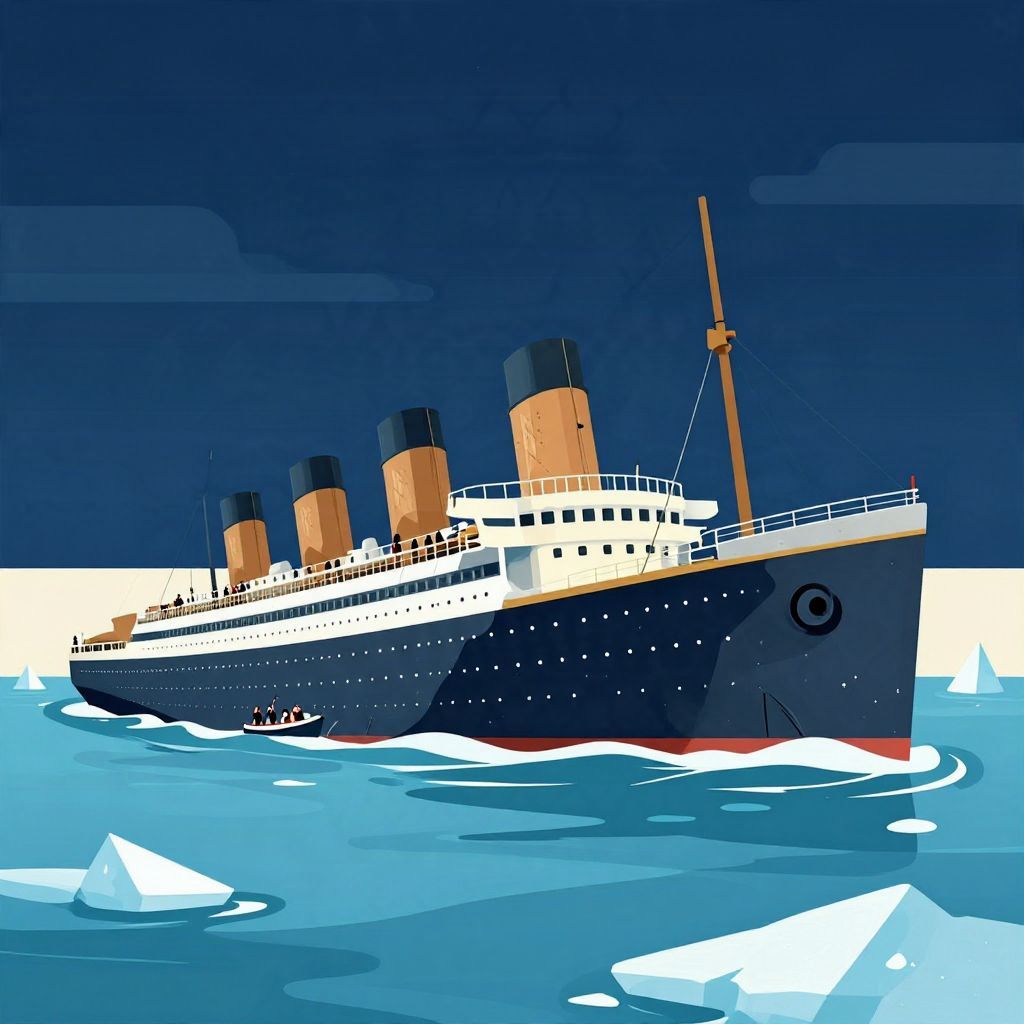
The question “How cold was the water when the Titanic sank?” gets to the heart of why the disaster was so deadly. The RMS Titanic struck an iceberg late on 14 April 1912 and sank in the early hours of 15 April, into North Atlantic water that was freezing cold by any normal human standard.
Survivors and investigators consistently described the sea as near-freezing. That temperature mattered because it turned a shipwreck into a rapid hypothermia disaster, making survival in the water extremely unlikely even for strong swimmers.
How cold was the water when the Titanic sank?
The water around Titanic was generally estimated at about 28°F to 31°F (-2°C to -1°C), depending on location and exact moment. Because seawater can stay liquid below 32°F, the North Atlantic near the iceberg field was cold enough to cause rapid loss of body heat, numbness, and unconsciousness within minutes.
What the timeline of the sinking tells us
Titanic collided with an iceberg at about 11:40 p.m. on 14 April 1912. The ship did not sink immediately; it slowly filled with water over the next two and a half hours. By the time the final plunge came shortly after 2:20 a.m. on 15 April, many passengers and crew had already been exposed to the freezing sea or were preparing to enter it.
Key moments in the night
- 11:40 p.m. — Titanic strikes the iceberg.
- Shortly after midnight — Lifeboats begin launching, but many seats remain empty.
- About 2:00 a.m. — The ship’s angle increases sharply as flooding worsens.
- 2:20 a.m. — Titanic breaks apart and sinks.
The long gap between collision and sinking did not make the water warmer or safer. Instead, it meant that the cold sea became a central factor in the death toll, especially for those who entered the water after the ship went under.
Why the North Atlantic was so cold in April
Titanic was sailing in the North Atlantic near the Grand Banks region, where cold currents and lingering spring ice made the sea hazardous. Even though the ship was already south of the Labrador coast, the route still crossed waters influenced by Arctic conditions. Icebergs were common in the season, and the sea surface remained close to freezing.
Sea temperature and seawater freezing point
Fresh water freezes at 32°F (0°C), but seawater freezes at a lower temperature because of its salt content. That is why Titanic’s wreck site could have water slightly below 32°F and still remain liquid. In practical terms, however, the difference barely mattered to the human body: it was still dangerously cold.
How cold water killed so quickly
The main danger was not just discomfort. In water near freezing, the body loses heat far faster than in air. Cold shock can cause gasping and loss of breath control, while prolonged exposure leads to rapid hypothermia and muscular failure. For many Titanic victims, the cold water itself became a direct cause of death within minutes.
What happened to the human body
- Immediate shock — Sudden immersion could trigger uncontrollable breathing and panic.
- Loss of coordination — Hands and legs became weak, making swimming or climbing into a lifeboat difficult.
- Hypothermia — Body temperature dropped quickly, leading to confusion and collapse.
- Unconsciousness — In near-freezing water, many people could not survive long enough to be rescued.
Historical accounts from the Titanic disaster suggest that survival times in the water were often measured in minutes, not hours. People who reached lifeboats or debris had a much better chance than those left swimming in open water.
How we know the water temperature
There was no single perfect thermometer reading for the exact spot where Titanic sank. Instead, historians rely on survivor testimony, maritime records, and later scientific reconstruction. The most reliable conclusion is that the water was close to freezing, with estimates usually placed around -2°C to -1°C. Small variations are expected because ocean temperature changes by location and depth.
Why exact precision is difficult
The sinking happened in darkness, in a moving ocean, and across a wide area. Temperatures could differ slightly between the surface, deeper water, and different parts of the wreck site. So while historians can state the water was extremely cold with confidence, giving one exact number would be more precise than the evidence allows.
Why the cold mattered historically
The Titanic disaster is often remembered for the iceberg collision, the lifeboat shortage, and the ship’s design failures. But the freezing water was equally important because it transformed a maritime emergency into a mass-casualty event. Many people who might have survived a sinking in warmer water died because the North Atlantic offered almost no margin for survival.
Aftermath and safety lessons
The tragedy helped drive major changes in maritime safety, including stronger lifeboat regulations, improved ice warnings, and the international push for continuous radio watch. The cold water itself could not be changed, but the disaster showed that ships had to be prepared for the environment in which they sailed.
The historical significance of a simple question
Asking how cold the water was when the Titanic sank is more than a detail. It explains why so many lives were lost so quickly and why the disaster remains such a powerful example of environmental danger at sea. The answer is stark: the water was near freezing, and that cold was lethal.
In the end, Titanic’s sinking was not only a story of collision and flooding but also of exposure to the North Atlantic’s freezing spring waters. For more historical context and related topics, you can explore the broader resources at HistoryOrg.