
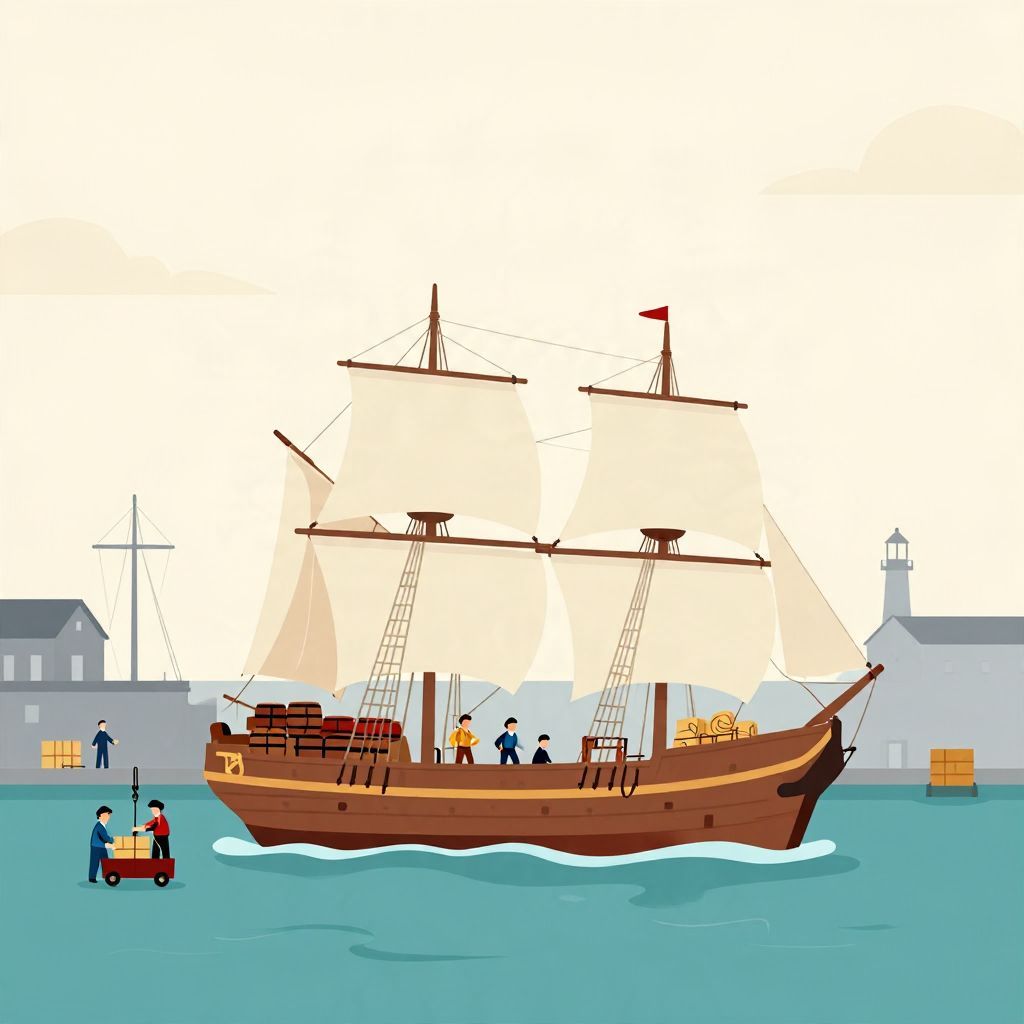
What is a merchant marine? The short answer is that it is a nation’s fleet of civilian ships and the people who operate them to carry goods, passengers, and supplies across the sea. Merchant marines are not navies: they are commercial shipping systems that have shaped trade, empire, migration, and war for centuries.
Because oceans connect continents, merchant shipping has often been as important to history as armies and kings. From ancient grain fleets to modern container ships, merchant marines have made long-distance exchange possible and have repeatedly become vital in times of crisis.
What Is a Merchant Marine?
A merchant marine is the collection of civilian vessels, crews, and shipping organizations that transport cargo and passengers for commerce. The term can refer to a country’s entire commercial fleet, the mariners who serve on it, or the broader maritime industry that supports sea trade.
Merchant marine vs. navy
The distinction is simple but important. A navy exists to fight wars and defend a state at sea. A merchant marine exists to move people and goods for trade. In practice, the two have often overlapped during wartime, when merchant ships carried troops, fuel, food, and weapons, and merchant sailors faced the dangers of enemy attack.
Why the term matters historically
The phrase “merchant marine” reflects the long history of organized sea commerce. “Merchant” points to trade; “marine” refers to the sea. Together, the term describes the maritime side of a commercial economy. In many countries, merchant shipping became a strategic asset because the flow of imports and exports could determine wealth, food supply, and military endurance.
The Origins of Merchant Shipping
Merchant marine history begins long before the modern term existed. Organized sea trade is ancient, with evidence from the Mediterranean, Red Sea, Indian Ocean, and South China Sea. As early as the third and second millennia BCE, ships were carrying timber, metals, textiles, wine, grain, and luxury goods between ports.
Ancient seaborne trade
In the ancient world, merchant sailors linked civilizations that could not easily communicate over land. Phoenician traders, Greek merchants, Roman grain fleets, and Indian Ocean traders all depended on specialized ships and experienced crews. These were not “merchant marines” in the modern bureaucratic sense, but they formed the historical foundation of commercial seafaring.
Rome is a useful example. The city depended heavily on imported grain from Egypt and North Africa. That meant maritime transport was not a luxury; it was a necessity. When sea lanes were disrupted, urban life and political stability could be threatened.
Medieval and early modern expansion
During the Middle Ages, commercial shipping expanded through the Mediterranean, the Baltic, and the Indian Ocean. Merchant fleets from Venice, Genoa, the Hanseatic League, and later Portugal, Spain, the Dutch Republic, and England helped turn sea trade into a global system. Ships became larger, routes longer, and state power increasingly tied to maritime commerce.
By the early modern period, merchant shipping was central to colonial expansion. European empires relied on merchant vessels to move settlers, enslaved people, soldiers, spices, sugar, silver, and manufactured goods. In this era, the line between commerce and coercion often blurred, because states protected trade routes and used commercial shipping to project power overseas.
How the Modern Merchant Marine Developed
The modern idea of a merchant marine emerged with industrialization, steam power, and national shipping laws in the 18th and 19th centuries. As trade grew more regular and global, governments began to treat commercial fleets as important national infrastructure, not just private business.
Steamships and industrial trade
Steam power transformed maritime commerce. Steamships were less dependent on wind and could keep more reliable schedules, making them ideal for mail, passengers, and high-value cargo. Railways, canals, and telegraph lines also helped create a more tightly connected world economy in the 19th century.
At the same time, shipbuilding changed. Iron and later steel hulls, better engines, and improved navigation made shipping faster and safer. Ports modernized to handle larger vessels and heavier cargo. Merchant mariners became part of a global labor force that included officers, engineers, dockworkers, and longshoremen.
National fleets and maritime law
Many states encouraged domestic shipping through subsidies, navigation laws, and training systems. Britain, for example, built a powerful merchant fleet that supported its imperial and commercial reach. The United States also developed a merchant marine tradition, especially in the 19th and 20th centuries, though its size and competitiveness fluctuated over time.
Maritime law became more important as well. Rules governing contracts, insurance, salvage, flags, crews, and port access helped standardize international trade. Merchant shipping was increasingly regulated because it was too important to leave entirely to private custom.
What Merchant Mariners Do
Merchant mariners are the civilian workers who operate merchant ships. Their jobs vary widely, but all are connected to the safe movement of cargo and passengers. Depending on the vessel, a crew may include deck officers, engineers, able seamen, cooks, electricians, and other specialists.
Common roles at sea
- Deck officers navigate the ship and oversee cargo operations.
- Engineers maintain propulsion systems, power, and machinery.
- Seamen and ratings handle lines, maintenance, watch duties, and deck work.
- Stewards and service staff support passenger or crew needs on some vessels.
Types of merchant vessels
Merchant marine fleets include many kinds of ships. Cargo vessels carry containers, bulk commodities, oil, chemicals, or refrigerated goods. Passenger ships include ferries and cruise liners. Specialized vessels may transport cars, livestock, or heavy equipment. The modern container ship, introduced in the mid-20th century, revolutionized global trade by making loading and unloading far more efficient.
Merchant Marines in War and Crisis
Although merchant mariners are civilians, they have often played crucial wartime roles. In major conflicts, merchant fleets have carried soldiers, munitions, fuel, food, and medical supplies. Because of that, merchant sailors have frequently faced the same dangers as combatants without being part of the navy.
World War I and World War II
During World War I, submarine warfare made merchant shipping a target. In World War II, the stakes became even higher. The Battle of the Atlantic was in large part a struggle to keep merchant convoys moving between North America and Europe. Merchant sailors endured torpedoes, mines, air attack, storms, and long periods at sea.
Many countries recognized that without merchant shipping, military victory would be impossible. The movement of food, oil, ammunition, and troops depended on commercial vessels. In this sense, the merchant marine became a hidden backbone of modern war.
Humanitarian and emergency roles
Merchant fleets have also been essential in peacetime emergencies. They have delivered relief after wars, natural disasters, and famines. During evacuations and refugee crises, civilian ships have sometimes carried people to safety. This practical role has reinforced the merchant marine’s importance beyond commerce alone.
Why Merchant Marines Became So Important
Merchant marines matter because sea transport is one of the most efficient ways to move large quantities of goods. For much of history, the cheapest and most reliable long-distance trade route was by water. That made merchant shipping central to economic growth, state power, and everyday life.
Economic significance
A strong merchant marine can lower transport costs, support exports, and keep imports flowing. It also creates jobs in shipbuilding, port management, insurance, logistics, and maritime training. Historically, countries with strong shipping networks often had greater access to markets and resources than those dependent on overland routes alone.
Strategic significance
Merchant shipping has always had strategic value because trade routes can be disrupted in war or crisis. Nations that rely heavily on imported fuel, food, or raw materials need secure shipping. This is why merchant marines have often been treated as part of national resilience, even though they are civilian in character.
The Merchant Marine in the Modern World
Today, the merchant marine remains central to globalization. Most of the world’s trade still moves by sea, even if consumers rarely see the ships that carry it. Containerization, giant tankers, and integrated port systems have made maritime commerce faster and more standardized than ever before.
Training, regulation, and labor
Modern merchant mariners work under international safety rules and national licensing systems. Training usually covers navigation, engineering, firefighting, emergency response, and maritime law. Labor conditions have improved in many places, but the work remains demanding, with long absences from home and exposure to weather, fatigue, and risk.
Flags of convenience and globalization
One important modern development is the use of “flags of convenience,” where shipowners register vessels in countries with lower taxes or lighter regulation. This has made shipping cheaper but has also raised questions about labor standards, safety, and national accountability. The merchant marine is therefore not only a historical institution but also a subject of ongoing economic and political debate.
What the Merchant Marine Means in History
The merchant marine is more than a fleet of ships. It is a long historical system that connects commerce, labor, technology, empire, and war. From ancient grain ships to modern container vessels, merchant mariners have made exchange possible across vast distances and have often carried the weight of national survival without receiving the same public recognition as soldiers or statesmen.
Understanding what a merchant marine is helps explain how the world has been connected over time. Sea trade built cities, sustained empires, fueled industrial economies, and supported wartime logistics. If you want to explore more maritime history, you can also look into broader topics on history and global trade.