
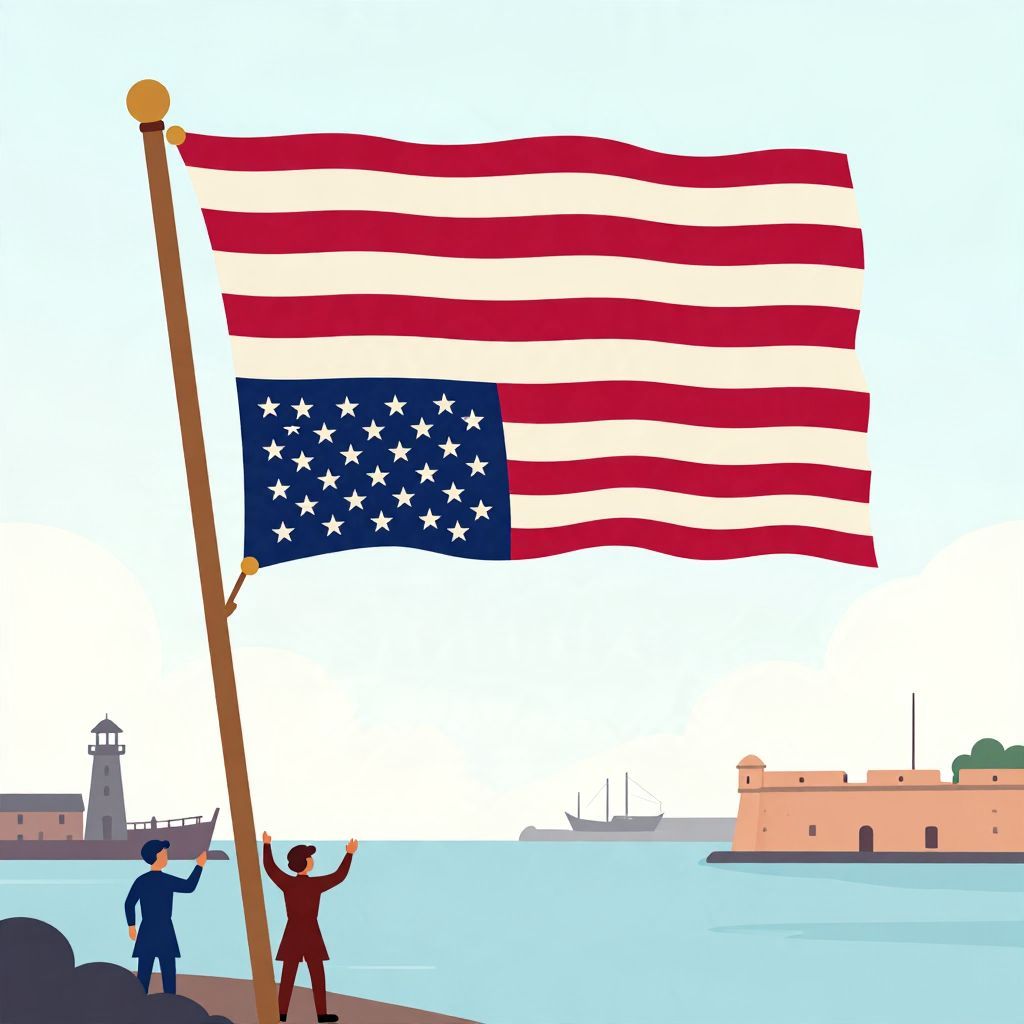
The upside down American flag is a recognized signal of distress, not a casual political statement in its original meaning. Historically, it has been used to show that people, a ship, or a place are in urgent danger and need help.
Over time, the symbol has also been adopted in protests and political demonstrations, which has made its meaning more complicated. To understand it clearly, it helps to trace its military and maritime origins, its legal status, and the way Americans have used it in modern public life.
What does an upside down American flag mean?
An upside down American flag traditionally means distress or grave danger. In American usage, it is a recognized signal that something is seriously wrong and help is needed. Although many people now use it as a protest symbol, its older and more established meaning comes from emergency signaling at sea and in military practice.
Origins of the upside down flag as a distress signal
Maritime signaling before it became political
The clearest historical roots of the upside down flag lie in maritime tradition. Ships have long used flags to communicate over distance, especially before radios and modern emergency systems existed. An inverted flag was an easy visual way to show that a vessel was in trouble and required assistance.
This practice was not unique to the United States. Many navies and merchant fleets used flag signals for distress, and the idea of inverting a national flag to indicate emergency became broadly understood in seafaring culture. In the American context, that meaning eventually carried over from ships to land-based use.
Military custom and the idea of emergency
By the 19th century, the upside down American flag had become associated with distress in military and civilian settings as well. Soldiers, sailors, and later civilians understood the image as a visual alarm. The flag’s inversion was powerful because it altered a national symbol in a way that immediately suggested disorder, danger, or crisis.
That symbolism mattered in an era when flags were among the most visible forms of public communication. Before electronic alerts, a flag could warn, summon, or signal without words. The upside down version stood out precisely because it was so unusual.
How the meaning changed over time
From emergency signal to protest symbol
In the 20th century, especially during periods of intense political conflict, the upside down American flag increasingly appeared in protest. People used it to express alarm about war, government actions, civil unrest, or perceived national crisis. In these settings, the symbol retained its older meaning of distress, but the “distress” was directed at the state of the nation itself.
This shift did not erase the original meaning. Instead, it expanded it. A protester flying the flag upside down may be saying, in effect, that the country is in trouble and that the situation is urgent. That is why the symbol can be read both as a political statement and as an emergency signal.
Why the symbol became controversial
The upside down flag became controversial because many people see the American flag as a sacred national emblem. Inverting it can feel disrespectful, even when the person using it intends to signal distress rather than insult the country. This tension has made the symbol especially charged during moments of political polarization.
As a result, the same image can be interpreted in very different ways depending on context. On a ship or in a rescue situation, it is usually understood as an emergency call. At a rally, on a porch, or in a public demonstration, it may be read as protest, anger, or dissent.
Historical timeline of the upside down American flag
Although the exact moment the upside down American flag first appeared in U.S. practice is difficult to pin down, its historical development can be summarized in broad stages:
- Early maritime era: Flags are used at sea to communicate danger and request aid.
- 19th century: Inverted flags become more familiar in American military and civilian distress signaling.
- 20th century: The symbol is increasingly used in political protest to suggest national crisis.
- 21st century: The image remains both a distress signal and a controversial political statement, depending on context.
This timeline shows that the symbol did not begin as a partisan gesture. Its oldest meaning was practical and urgent. The political meaning developed later, as Americans used familiar national symbols to express opposition or alarm.
What the U.S. Flag Code says
Legal and ceremonial guidance
The United States Flag Code states that the flag should never be displayed upside down except as a signal of dire distress in instances of extreme danger to life or property. This language is important because it preserves the older emergency meaning while discouraging casual or decorative inversion.
At the same time, the Flag Code is largely advisory rather than criminal in most everyday situations. That means the law does not treat every improper display the same way, but the code does establish the official ceremonial standard for respectful use of the flag.
Distress versus disrespect
The distinction between distress and disrespect is central to understanding the symbol. Historically, the upside down flag is not simply “wrong”; it is a deliberate reversal used to communicate alarm. But because the American flag carries strong patriotic meaning, many viewers still see inversion as offensive unless the emergency context is obvious.
This is why the same display can produce very different reactions. A person may mean “help” or “this is a crisis,” while observers may hear “anti-American” or “provocation.” Context matters more than the image alone.
Examples of modern use
Protests and political movements
In modern American history, the upside down flag has appeared in antiwar protests, civil rights demonstrations, and other political movements. In these cases, the symbol usually communicates that the nation is in deep trouble or that the government has failed in some serious way. It is a form of visual rhetoric: a compressed message of urgency and alarm.
Because it is so visually striking, the symbol can quickly draw attention. That is part of why activists have used it. It transforms a familiar patriotic emblem into a critique of national conditions without needing a long explanation.
Emergency and rescue situations
Outside politics, the upside down flag still functions as a distress signal in emergencies. If a building, campsite, or vessel displays the flag this way, the intended message is generally that immediate help is needed. In such cases, the symbol retains its oldest and most literal meaning.
This practical use is one reason the symbol remains historically significant. It is not only a protest image; it is also a surviving emergency convention from an earlier communications world.
Why the symbol matters historically
It shows how symbols change meaning
The upside down American flag is a good example of how historical symbols evolve. What begins as a functional signal can later become political shorthand. Over time, the meaning does not disappear; it accumulates. That is why the same image can carry layers of history at once.
Its endurance also shows how Americans have used national symbols to express both loyalty and dissent. The flag is not only a sign of unity; it can also become a language for crisis, protest, and competing ideas about the nation’s future.
It reflects the tension between patriotism and criticism
The controversy around the upside down flag reveals a long-standing American tension: how can citizens criticize their country while still claiming to care about it? For some, the inverted flag is a warning that the nation is in danger. For others, it crosses into disrespect. That debate is itself part of the symbol’s historical significance.
In this sense, the upside down flag is not just about distress. It is also about the politics of national identity, and about who gets to define what respectful dissent looks like.
How to interpret it correctly
To understand an upside down American flag, look first at context:
- Emergency setting: usually means distress or danger.
- Political rally or protest: usually means the nation is in crisis, or the speaker is deeply opposed to current conditions.
- Casual display without clear purpose: may be read as disrespectful because the distress meaning is not obvious.
In other words, the symbol does not have one fixed emotional meaning. It depends on where it appears, who is using it, and what situation surrounds it.
Final takeaway
The upside down American flag historically means distress, especially grave danger requiring help. Its origins lie in maritime and military signaling, but in modern America it has also become a potent protest symbol. To interpret it accurately, you have to consider both its long emergency tradition and the political context in which it is displayed. For related history topics, see what an upside down flag means and what a black American flag means.