
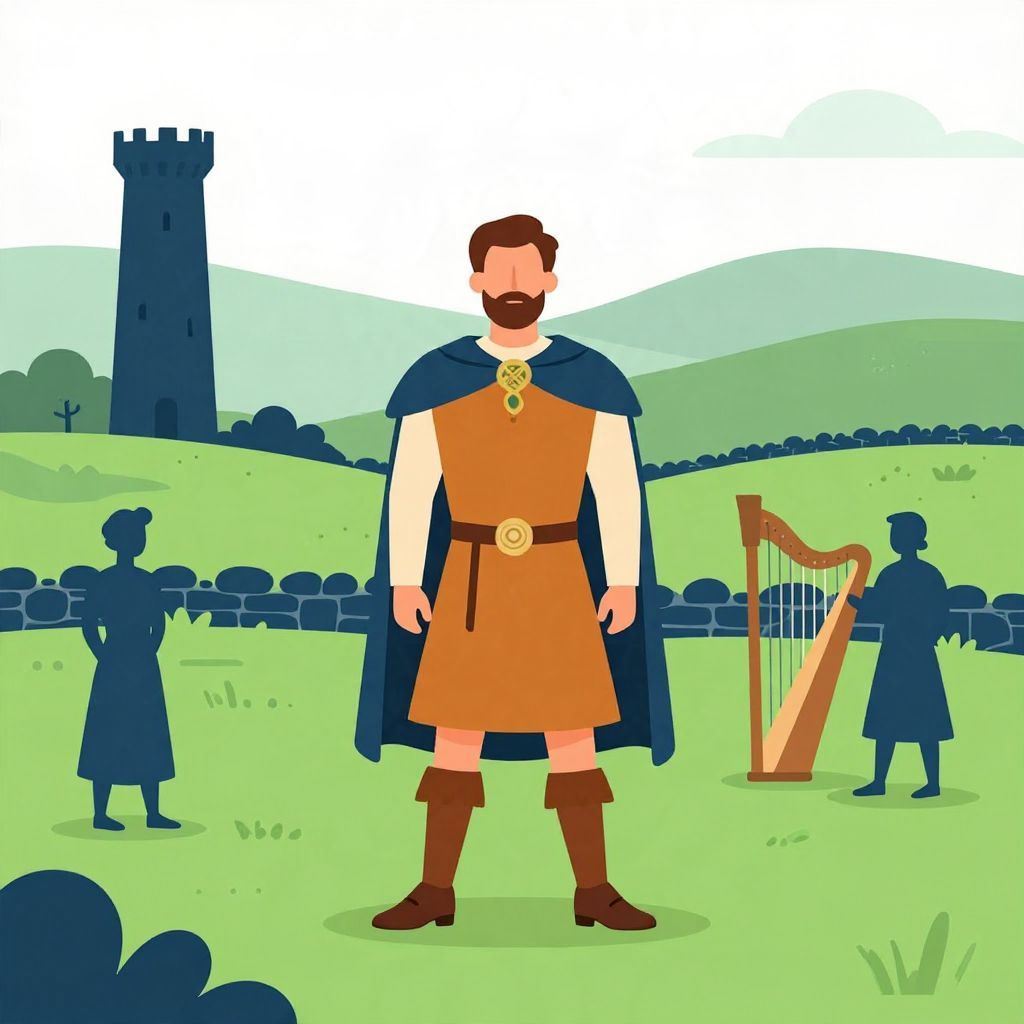
Do Irish wear kilts? The short historical answer is yes, some Irish people do wear kilts, but kilts are not the traditional everyday national dress of Ireland in the same way they are often imagined for Scotland. In Irish history, the kilt is a later cultural adoption, not an ancient Gaelic garment worn universally across Ireland.
The story is more complicated than a simple yes or no. Irish kilts emerged mainly in the 19th and 20th centuries, shaped by nationalism, revival movements, and the broader Celtic cultural imagination. To understand them, it helps to separate older Irish clothing traditions from the modern kilt as a symbol of identity.
Do Irish Wear Kilts?
Yes, Irish people do wear kilts, especially for ceremonial, cultural, and family occasions. However, the Irish kilt is a relatively modern tradition, not a medieval or ancient Irish national garment. It became associated with Irish identity largely in the 19th century, influenced by romantic nationalism and the example of Scottish Highland dress.
What Did Irish People Wear Before Kilts?
Before the modern kilt appeared, Irish dress was different from Scottish Highland dress and changed over time with climate, class, occupation, and outside influence. Medieval and early modern Irish clothing included tunics, mantles, cloaks, shirts, and trousers, depending on period and social status. There is no strong evidence that the kilt was the standard historic dress of Ireland.
Early Irish clothing traditions
In early medieval Ireland, clothing was practical and layered. Men and women wore woolen garments, linen shirts, and cloaks. The brat, a cloak or mantle, was especially important in Irish dress and appears in literary and legal references. This kind of clothing fit the island’s climate and social customs far better than the later tailored kilt.
The leine and other garments
One of the best-known historic Irish garments is the leine, a long shirt or tunic worn by men and sometimes women. In later centuries, some Irish elites and warriors wore long shirts, saffron-dyed garments, and cloaks, but these were not kilts in the modern sense. They were part of a broader Gaelic clothing tradition that differed from the pleated wool kilt associated with Scotland.
Where Did the Irish Kilt Come From?
The Irish kilt is largely a modern invention of tradition. It developed during the 19th century, when many Irish nationalists and cultural revivalists looked for visible symbols of Irishness. The kilt offered a striking, Gaelic-looking garment that could be adapted for Irish use, even though it was more closely linked in popular imagination to Scotland.
Nationalism and cultural revival
During the 1800s, Ireland experienced a powerful revival of interest in language, folklore, music, and historical identity. This was the age of romantic nationalism, when dress, symbols, and ceremonies mattered a great deal. Wearing a kilt could signal pride in Irish heritage, especially among men involved in nationalist, cultural, or ceremonial groups.
Influence from Scotland
Scottish Highland dress had already become strongly associated with ethnic identity, clan memory, and ceremonial display. Irish cultural leaders borrowed and adapted that visual language. The result was not a direct survival from ancient Ireland, but a new Irish style inspired in part by a neighboring Celtic tradition.
Is the Irish Kilt the Same as the Scottish Kilt?
No. Irish and Scottish kilts may look similar at first glance, but they developed differently and often carry different meanings. The Scottish kilt has a longer historical association with Highland dress, while the Irish kilt is usually a later cultural symbol. Irish tartans are also typically tied to counties, families, or organizations rather than ancient clan systems in the same way as Scottish tartans.
Tartan and identity
Many people assume tartan patterns are ancient and fixed, but that is only partly true. Tartan weaving existed earlier, yet the modern system of named tartans became more formalized in the 18th and 19th centuries. In Ireland, tartans became a way to express regional, familial, or organizational identity, especially in diaspora communities and ceremonial contexts.
Colors and symbolism
Irish kilts are often green, though not always. Green became a powerful national color in modern Irish politics and culture, but not all Irish kilts are green, and not all green garments are kilts. Some Irish groups use tartans with county colors, military associations, or family references. The symbolism is modern and flexible rather than ancient and fixed.
When Did Irish Men Start Wearing Kilts?
Irish men began wearing kilts in noticeable numbers during the 19th century, especially in nationalist and cultural settings. By the late 1800s and early 1900s, the kilt had become a recognized ceremonial garment among some Irish organizations, pipe bands, and heritage groups. It never replaced ordinary clothing, but it did gain an important symbolic role.
Military and ceremonial use
Irish regiments within the British Army, as well as later Irish nationalist and cultural groups, sometimes adopted kilted dress for parade or formal occasions. Pipe bands, dance groups, and heritage organizations also helped popularize the garment. In these settings, the kilt functioned less as daily wear and more as a visible marker of identity and tradition.
The Gaelic revival
The Gaelic Revival of the late 19th and early 20th centuries encouraged interest in Irish language, sport, music, and historical culture. Clothing was part of that wider movement. The kilt fit the revival’s desire for a distinctively Irish visual style, even though the garment itself was not a direct continuation of ancient Irish everyday dress.
Did Ancient Irish Wear Kilts?
There is no solid evidence that ancient or medieval Irish people wore kilts in the modern Scottish sense. Some older sources and later romantic images can make Irish dress look kilt-like, especially when men are shown in belted garments, tunics, or draped cloth. But historians generally distinguish those garments from the pleated kilt that developed much later.
Why the confusion exists
Confusion often comes from later artwork, nationalist imagery, and the broad use of the word “kilt” for any skirt-like male garment. Some illustrations of Gaelic warriors or chieftains show belted tunics or long shirts that can resemble kilts at a glance. That resemblance does not prove a direct historical continuity.
Folklore versus evidence
Popular tradition sometimes claims that the kilt is an ancient Irish garment suppressed by foreign rule. This is not supported by the strongest historical evidence. What is supported is that Irish identity has long been expressed through distinctive clothing, but the modern kilt is best understood as a later symbolic adaptation rather than a surviving ancient standard.
What Role Does the Kilt Play in Irish Culture Today?
Today, the kilt remains a meaningful part of some Irish cultural expression, especially at weddings, formal events, parades, dances, and heritage celebrations. It is not required, universal, or the main symbol of Irish dress, but it is widely accepted as a legitimate way to express Irish ancestry or pride.
Weddings and family occasions
Many Irish and Irish-descended men wear kilts at weddings or special ceremonies, sometimes paired with jackets, sporrans, or sashes. For some families, the choice reflects ancestry; for others, it is simply a festive and dignified outfit. The meaning is personal as well as cultural.
Irish diaspora and identity
Outside Ireland, especially in the United States, Canada, Australia, and Britain, the Irish kilt can be a strong symbol of heritage. Diaspora communities often preserve or reinvent traditions in ways that are more visible than in everyday life in Ireland itself. The kilt fits that pattern well because it is ceremonial, recognizable, and adaptable.
So, Is Wearing a Kilt “Irish”?
Yes, it can be Irish, but in a modern and symbolic sense rather than an ancient one. The kilt is part of contemporary Irish cultural expression, not the original national costume of Ireland. Its Irish meaning comes from history, revival, and identity politics, not from an unbroken medieval tradition.
How historians would summarize it
- Irish people do wear kilts, especially for ceremonial and cultural occasions.
- The Irish kilt is mostly a 19th-century and later tradition.
- It was influenced by Scottish Highland dress and romantic nationalism.
- Ancient Ireland had its own clothing traditions, but not the modern kilt.
- Today, the kilt is a legitimate expression of Irish heritage for many people.
Conclusion
The historical answer to “Do Irish wear kilts?” is that they do, but the garment is not an ancient Irish staple. It is a later cultural symbol shaped by nationalism, revival, and the broader Gaelic world. If you want to explore related history, you may also enjoy reading about what makes Scotland distinct as a country and the historical question of Scotland’s national identity.