
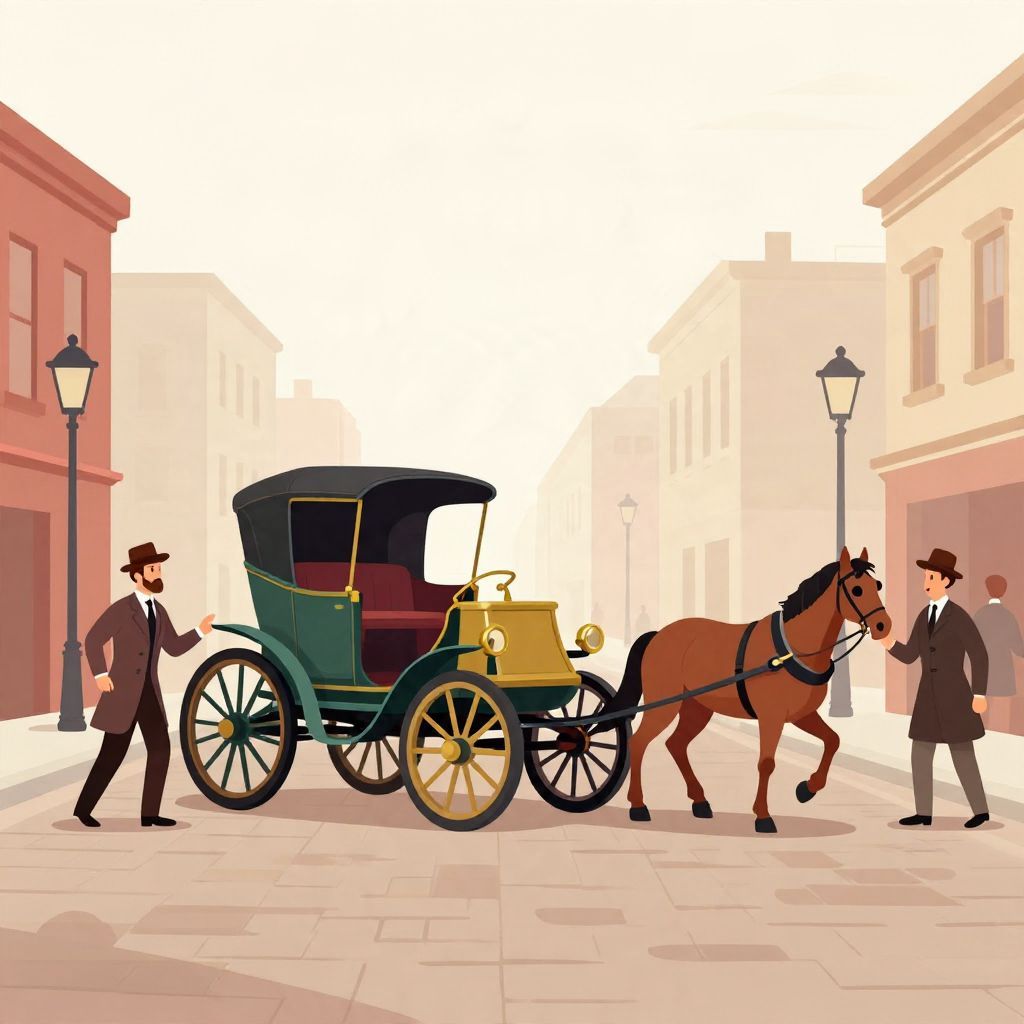
When was the first car accident? The short answer is that it depends on what counts as a “car” and what counts as an “accident.” If you mean the earliest documented crash involving an automobile, one of the best-known candidates is an 1891 collision in Ohio. If you mean the first fatal automobile accident, many historians point to 1869 in Ireland, involving a steam-powered vehicle.
Because early automobiles were experimental machines, the first car accidents appeared almost as soon as people began driving them. The story of the “first” accident is really a timeline of invention, public roads, and the growing risks of motor travel.
When Was the First Car Accident?
The first car accident is usually placed in the late 19th century, but there is no single universally accepted answer. A frequently cited early automobile crash occurred in 1891 in Ohio, United States. If the definition includes steam road vehicles, an even earlier fatal accident happened in 1869 in County Meath, Ireland, when a steam carriage overturned and killed its passenger.
The uncertainty comes from definition. “Car” can mean a gasoline-powered automobile, a steam carriage, or any self-propelled road vehicle. Historians therefore distinguish between the first documented accident, the first fatal accident, and the first crash involving a modern motor car.
The Earliest Known Car Accidents: A Short Timeline
Automobile history began with invention, not mass use, so early accidents were rare but highly visible. The timeline below shows how the first incidents emerged as vehicles moved from workshop experiments to public roads.
- 1869 — A steam-powered road vehicle accident in Ireland is often cited as the first fatal automobile-related crash.
- 1886 — Karl Benz patents and tests one of the first practical gasoline automobiles in Germany.
- 1891 — An early documented automobile collision is reported in Ohio, often described as the first car accident in the United States.
- 1890s — As automobiles spread in Europe and America, crashes become more common and begin to attract public attention.
1869: The earliest fatal accident often linked to automobiles
One of the earliest and most cited motor-vehicle deaths occurred in 1869, when Irish scientist and engineer Mary Ward died after falling from a steam-powered vehicle in County Meath. The vehicle was not a gasoline car, but it was a self-propelled road machine and is often treated as an early automobile accident in the broader historical sense.
This incident matters because it shows that the risks of motorized road travel existed before the modern automobile was fully developed. It also reminds us that the “first car accident” depends on whether we are talking about technology, legal categories, or popular memory.
1891: An early documented automobile collision in Ohio
Another commonly cited candidate for the first car accident is an 1891 collision in Ohio. Accounts describe an early automobile striking an object or otherwise crashing during the very first years of American motor travel. This is often presented as the first automobile accident in the United States, though the exact details vary in retellings.
What makes this event important is not just the crash itself, but what it represents: the moment when automobiles began to leave the realm of novelty and enter everyday life. Once cars were on public roads, accidents became part of the story of modern transportation.
What Counted as a “Car” in the 19th Century?
To understand the first car accident, it helps to know that early “cars” were not all alike. Inventors experimented with steam, electricity, and gasoline before the internal combustion engine became dominant. Some vehicles were more like experimental road engines than the passenger cars we picture today.
That is why historians are careful with language. A steam carriage from the 1860s, a Benz Patent-Motorwagen from the 1880s, and a mass-produced Ford Model T from the early 1900s all belong to the history of the automobile, but they do not represent the same stage of development.
Steam vehicles
Steam road vehicles appeared before gasoline cars and could travel under their own power. They were heavy, noisy, and difficult to control by modern standards, which made early accidents more likely. However, they were also rare, so incidents were unusual and often local in significance.
Gasoline automobiles
The gasoline-powered automobile, especially after Karl Benz’s work in the 1880s, is closer to what most people mean by “car.” Once these vehicles began appearing on roads, collisions became more recognizable as automobile accidents rather than mechanical mishaps.
Why Early Car Accidents Happened So Quickly
It may seem surprising that the first car accident happened almost as soon as cars existed, but that pattern is typical for new technology. The earliest drivers were testing machines that had limited brakes, unstable steering, weak tires, and little road infrastructure to support them.
Roads were designed for horses, carts, and pedestrians, not motor vehicles. There were no traffic lights, no standardized road signs, and few legal rules for speed or right of way. In that environment, even a slow vehicle could cause a serious crash.
Common causes of early accidents
- Poor braking systems
- Unreliable steering and suspension
- Rough, uneven roads
- Little experience among drivers
- Few traffic rules or enforcement systems
- Mechanical failures in experimental vehicles
How the First Accidents Changed Public Attitudes
Early car accidents helped shape how people viewed automobiles. To supporters, cars represented progress, speed, and freedom. To critics, they were dangerous machines that frightened horses, endangered pedestrians, and disrupted familiar street life.
As accidents increased, governments and cities began responding with new laws. Speed limits, driver licensing, registration systems, and traffic regulations developed gradually in the late 19th and early 20th centuries. In that sense, the first car accidents were part of the process that forced societies to regulate motor travel.
From novelty to regulation
At first, automobiles were rare enough that they seemed like curiosities. But once they became more common, accidents made it clear that roads needed new rules. The history of the car accident is therefore also the history of modern traffic law.
Was There a Single “First” Car Accident?
Probably not in the strictest sense. The phrase “first car accident” is a useful shorthand, but it hides several different possibilities. One historian might mean the first documented crash of a gasoline automobile. Another might mean the first fatal motor-vehicle accident of any kind. A third might mean the first accident involving a car in a specific country.
Because early records were incomplete and terminology was inconsistent, the “first” accident is best understood as a range of early incidents rather than one universally agreed event.
Best-supported answer
If you want the most careful historical answer, say this: the first car accidents occurred in the mid-to-late 19th century, with an early fatal incident in 1869 and a well-known documented automobile crash in 1891. The exact “first” depends on how narrowly you define a car.
Historical Significance of the First Car Accidents
The first car accidents were small events compared with the major traffic crises of the 20th century, but they were historically important. They marked the beginning of a new relationship between technology, public space, and personal safety.
Before automobiles, most road danger came from horses, carts, weather, and road conditions. Cars introduced a faster, more powerful machine into shared public space. That change transformed not only transportation, but also law, city planning, insurance, and everyday behavior.
Long-term consequences
- New traffic laws and licensing systems
- Improved road design and signage
- Safety features in vehicle design
- Public debates about speed and responsibility
- The rise of automobile insurance and accident reporting
So, When Was the First Car Accident?
The best historical answer is that the first car accident occurred in the 19th century, with important early candidates in 1869 and 1891. If you mean the first fatal accident involving a motorized road vehicle, 1869 is often cited. If you mean an early documented automobile crash, 1891 is a strong candidate.
In other words, the first car accident was not a single moment that everyone agreed on. It was the earliest sign that automobiles, once invented, would bring both mobility and danger. For more historical context on the era when cars began changing everyday life, you may also want to explore HistoryOrg and related coverage of 1945 historical events.