
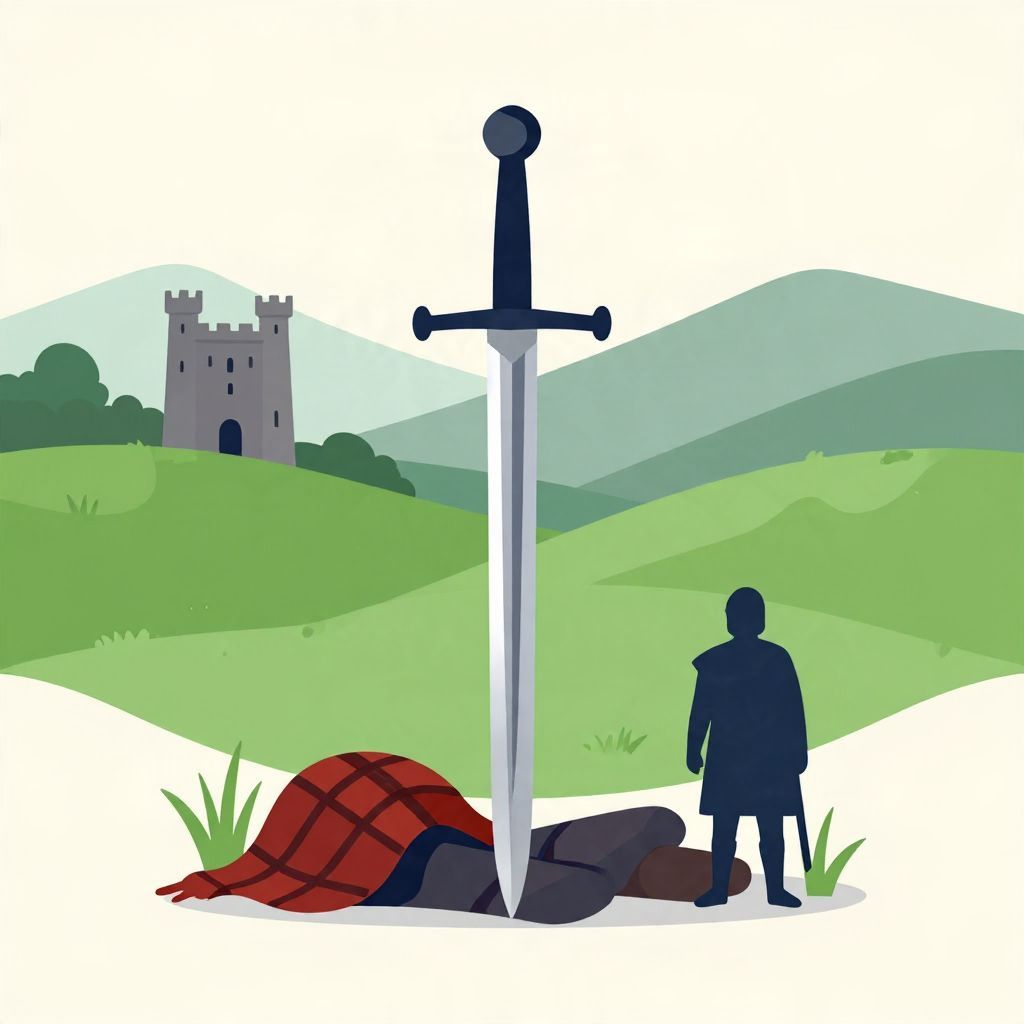
When people ask, “What is a claymore?” they usually mean one of two very different things: the large two-handed Scottish sword of the late medieval and early modern period, or the modern Claymore mine. The sword is the older historical answer, and it became a powerful symbol of Highland warfare, clan identity, and Scottish military tradition.
The word itself has a complicated history. It comes from Scottish Gaelic and has been used in different ways over time, which is why the term can be confusing today. To understand the claymore properly, it helps to look at its origins, how the weapon changed, and why its meaning became so strongly tied to Scotland.
What is a claymore?
A claymore is most commonly understood as a large Scottish sword, especially the two-handed sword used in the Highlands from the late Middle Ages into the 17th century. The term is also sometimes applied to the basket-hilted broadsword, though that usage is later and less precise. In historical terms, “claymore” is best treated as a Scottish sword tradition rather than a single fixed design.
The meaning and origins of the word “claymore”
From Gaelic roots to English usage
The word “claymore” comes from Scottish Gaelic claidheamh mór, meaning “great sword.” That basic meaning is straightforward, but the historical usage is not. In early modern Scotland and later English writing, the word was used loosely for different large swords, which is why modern readers often encounter conflicting definitions.
Why the name causes confusion
In popular culture, “claymore” often refers to the iconic two-handed Highland sword with a long blade and distinctive forward-sloping crossguard. However, some historians and museums also use the term for the later basket-hilted broadsword carried by Highland soldiers. The overlap reflects changing language, not a single weapon type with one unbroken design.
The claymore as a Highland sword
The classic claymore was a large two-handed sword associated with Highland warriors in the late medieval and early modern periods, roughly from the 15th to the 17th centuries. It was built for reach, power, and cutting force, and it suited the close but often mobile fighting styles of clan warfare and battlefield combat in Scotland.
Physical features of the two-handed claymore
- Large blade: typically long and broad, designed for powerful cuts.
- Two-handed grip: the long hilt allowed both hands to control the weapon.
- Forward-sloping quillons: the crossguard often angled downward toward the blade.
- Simple pommel: usually functional rather than decorative in early examples.
These features made the sword effective in the hands of a trained fighter, especially in an era when armor, terrain, and formations could vary widely. It was not a universal weapon for every Scottish soldier, but it became strongly associated with Highland fighting culture.
How it was used in combat
The claymore was not a fencing sword in the modern sporting sense. It was a battlefield weapon meant for slashing and thrusting at close range. Its size gave a skilled user reach and force, but it also demanded strength and training. In battle, it could be intimidating as much as practical, especially in a charge or melee.
Claymore history in medieval and early modern Scotland
Highland warfare and clan society
The claymore developed in a Scotland shaped by regional lordships, clan alliances, and intermittent warfare. In the Highlands, where political power was often local and military service personal, weapons were both practical tools and markers of status. A large sword could signal a warrior’s rank, wealth, and readiness for conflict.
Influence from wider European swordmaking
Scottish weapons did not develop in isolation. The claymore belonged to a broader European world of longswords and greatswords. Scottish smiths and fighters adapted ideas from continental sword forms while shaping them to local needs. The result was a distinctly Scottish weapon, but one that still reflected wider medieval military trends.
From the battlefield to the symbol of Scotland
By the 16th and 17th centuries, firearms and changing military tactics were transforming warfare across Europe. Large swords remained useful in some contexts, but they no longer dominated battle as they once had. Even so, the claymore endured in memory and imagery, becoming a romantic symbol of Highland tradition long after its military peak.
Was the claymore always the two-handed sword?
No. This is one of the most important historical clarifications. The word “claymore” has been used for more than one sword type, and modern usage often blurs the distinction. The two-handed Highland sword is the classic historical image, but the term was also applied to the later basket-hilted broadsword, especially in 18th-century and later English-language writing.
The basket-hilted broadsword connection
The basket-hilted broadsword was a shorter, one-handed sword with a protective metal guard around the grip. It became common in Britain in the 17th and 18th centuries, including among Highland regiments. Because Scottish soldiers carried these swords, “claymore” was sometimes used as a broad label for them, even though that is not the most precise historical term.
Why historians prefer careful wording
Historians usually distinguish between the two-handed Highland claymore and the basket-hilted broadsword to avoid confusion. This matters because the weapons had different shapes, fighting styles, and historical periods. Using the right term helps preserve the real development of Scottish arms rather than flattening it into one romantic image.
Claymore in war and legend
Association with famous Highland fighters
The claymore is often linked in popular memory with Highland warriors, clan battles, and Jacobite uprisings. That association is partly historical and partly cultural. Highland soldiers did use swords, and the image of the claymore became a shorthand for martial Scotland, especially in later centuries when writers and artists celebrated Highland identity.
Myth, romance, and national memory
Like many famous weapons, the claymore gained a life beyond the battlefield. Nineteenth-century antiquarianism, literature, and tourism helped turn it into an emblem of Scottish heritage. This does not mean the sword is fictional; rather, its symbolic power grew as its practical military role declined.
What the claymore did not do
Popular culture sometimes exaggerates the claymore’s role. It was not the only Scottish weapon, not the exclusive weapon of Highlanders, and not used in every period of Scottish history. Spears, axes, bows, daggers, and later firearms all mattered. The claymore was important, but it was one part of a larger martial world.
How the claymore compares with other swords
Claymore versus longsword
European longswords were broadly similar in some respects to the two-handed claymore, especially in size and two-handed use. The difference lies partly in regional style and terminology. The claymore is specifically tied to Scotland and to a distinctive visual form, especially the forward-sloping crossguard seen in many surviving examples and depictions.
Claymore versus broadsword
The later Scottish broadsword was shorter and usually one-handed, with a basket hilt for hand protection. It was more practical for cavalry, officers, and later infantry use. The claymore, by contrast, evokes the earlier age of larger hand-and-a-half or two-handed swords and the more rugged image of Highland warfare.
The claymore in modern culture
Today, the claymore appears in museums, reenactments, films, games, and Scottish heritage displays. It has become a visual symbol of bravery, independence, and Highland identity. That modern fame can be useful, but it also encourages oversimplification. The real history of the claymore is more interesting because it shows how language, warfare, and national memory changed over time.
Why the claymore still matters
The claymore matters because it reveals how a weapon can become both a tool of war and a cultural emblem. Its history reflects the military practices of medieval Scotland, the evolution of sword design, and the later creation of a romantic Scottish past. In that sense, the claymore is as much about memory as metallurgy.
So, what is a claymore in historical terms?
Historically, a claymore is a “great sword” of Scotland, most famously the large two-handed Highland sword of the late medieval and early modern period. The term also later came to be used for the Scottish basket-hilted broadsword, which is why definitions vary. The safest answer is that the claymore is a Scottish sword tradition, not just one exact blade.
Understanding the claymore means separating fact from later legend. It was a real weapon with a real place in Scottish history, but its meaning changed over time. If you are interested in related topics, you might next explore the history of Scotland’s military past or the development of medieval weapons.