
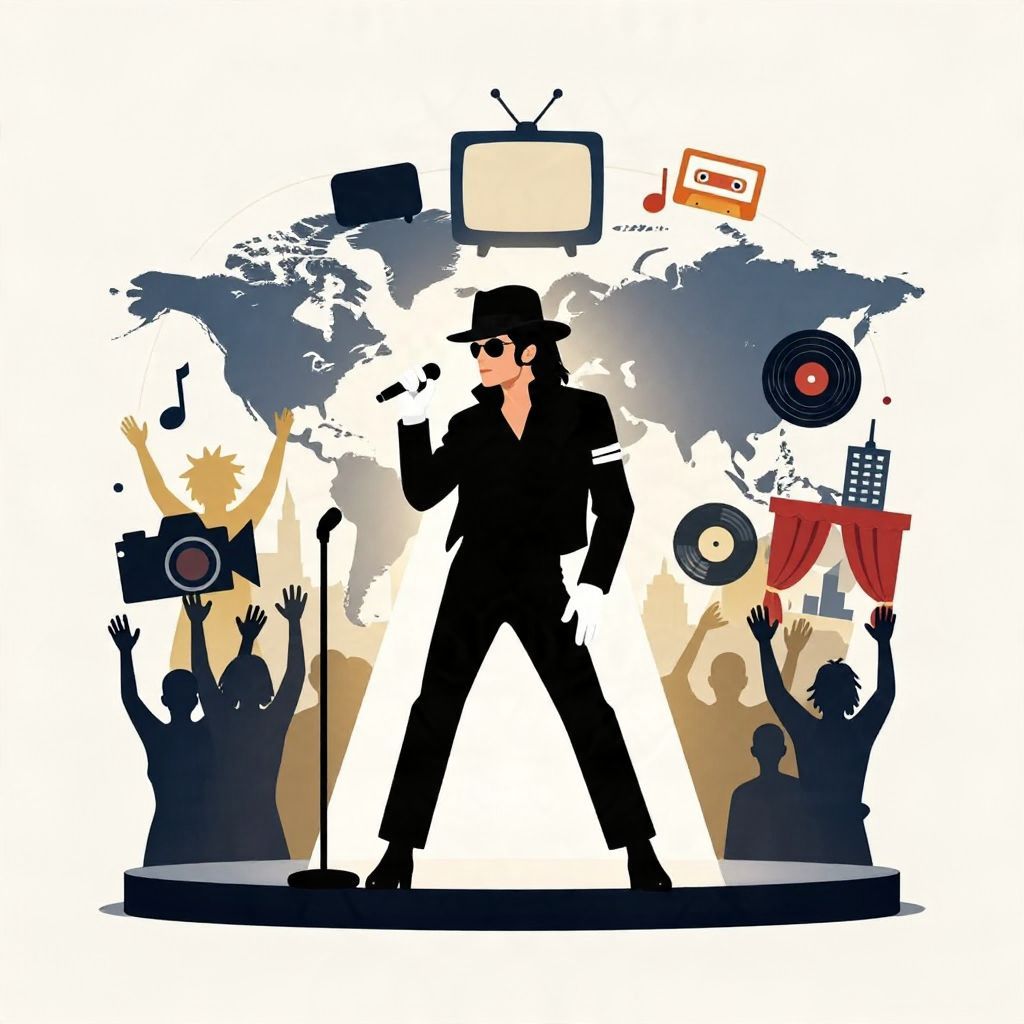
How famous was Michael Jackson? In historical terms, he was one of the most famous entertainers of the late 20th century and one of the most recognizable people in the world. His fame crossed music, television, fashion, dance, and global celebrity culture, making him a rare figure whose name was known far beyond pop music audiences.
To understand his fame, it helps to trace how he rose from child stardom to international superstardom, and why his influence remained so large for decades. Michael Jackson was not just a successful singer; he became a worldwide cultural symbol whose career changed the scale of modern popular fame.
How famous was Michael Jackson?
Michael Jackson was extraordinarily famous—arguably the most famous pop star of his era and one of the best-known public figures in modern history. By the 1980s, he was a global superstar whose music videos, performances, and image reached audiences across continents. His fame was unusual not only for its size, but for its breadth: children, adults, fans, and non-fans alike knew who he was.
From child star to global celebrity
Jackson’s fame did not begin with Thriller. It started in the late 1960s as part of the Jackson 5, the Motown group fronted by the young Michael Jackson. As a child performer, he was already famous in the United States, especially after hits like “I Want You Back” and “ABC.” His early success gave him a rare advantage: by the time he launched his solo career, he was already a household name.
The 1970s: building a solo identity
During the 1970s, Jackson moved from child star to solo artist. Albums such as Off the Wall (1979) showed that he could succeed beyond the family group. This period mattered historically because it established him as more than a novelty act. He became a serious pop singer with broad appeal, setting the stage for a level of fame that few entertainers ever reach.
The peak of his fame in the 1980s
Jackson’s fame reached its highest point in the 1980s, especially after the release of Thriller in 1982. The album became one of the best-selling records of all time and turned him into a worldwide phenomenon. Its success was amplified by the rise of MTV, where Jackson’s music videos became major cultural events rather than simple promotional tools.
Why Thriller mattered so much
Thriller was important not just because it sold enormously well, but because it changed how pop music worked in the visual age. The “Thriller” video, with its cinematic style and choreography, helped make the music video a central part of popular culture. Jackson became famous not only for songs, but for a visual persona that audiences around the world could instantly identify.
Signs of worldwide recognition
- His songs dominated radio and television across multiple countries.
- His dance moves, especially the moonwalk, became globally imitated.
- His fashion choices—single glove, military-style jackets, fedora, and red leather outfits—became instantly recognizable.
- He was covered constantly in newspapers, magazines, and television news, even outside entertainment sections.
How his fame compared with other celebrities
Jackson’s fame was unusual because it extended beyond the normal boundaries of pop stardom. Many musicians are famous within their genre or generation, but Jackson was known across age groups, languages, and national borders. In many places, he was as recognizable as major political leaders, sports icons, or film stars. That does not mean everyone admired him, but very few people were unaware of him.
A global, not just American, figure
His fame was especially significant because it was international. By the 1980s and 1990s, Jackson was a true global celebrity, with enormous followings in Europe, Asia, Africa, Latin America, and the Middle East. This mattered historically because mass media was making fame more international, and Jackson became one of the clearest examples of that new world celebrity system.
Timeline of Michael Jackson’s rise to fame
Jackson’s celebrity developed over decades, not overnight. A simple timeline shows how his fame expanded step by step:
- 1960s: Becomes famous as a child performer with the Jackson 5.
- 1970s: Establishes himself as a solo artist with growing recognition.
- 1982: Releases Thriller, which transforms him into a global superstar.
- Mid-1980s: Becomes one of the most visible entertainers in the world.
- 1990s: Remains internationally famous despite changing musical trends and increasing tabloid attention.
- 2000s: His fame persists, though it is shaped more by controversy and nostalgia than by new chart dominance.
- 2009: His death triggers worldwide mourning and renewed attention to his legacy.
Why was Michael Jackson so famous?
Jackson’s fame came from a combination of talent, timing, and media change. He had extraordinary vocal ability, stage presence, and dance skills. He also rose just as television music videos and global entertainment markets were expanding. In other words, he was not only a gifted performer; he was the right artist at the right moment in the history of mass media.
Talent and performance
Jackson’s performances were highly theatrical and carefully crafted. He combined singing, choreography, costume, and spectacle in a way that made his appearances feel like major events. His concerts and videos were not background entertainment; they were cultural moments. This helped make him memorable even to people who did not regularly follow pop music.
Media and image
His fame was also shaped by how closely the media followed him. As his popularity grew, so did public interest in his appearance, personal life, and behavior. This attention helped keep him in the public eye, but it also meant his fame became complicated. He was admired, scrutinized, imitated, and criticized on a scale that few entertainers have experienced.
The historical significance of his fame
Michael Jackson’s fame matters historically because it shows how modern celebrity works. In earlier centuries, fame was often local or national, and even major public figures were not instantly known across the world. Jackson belonged to a new era in which television, global record sales, and satellite media could turn a performer into a worldwide symbol.
He helped define modern pop stardom
Jackson helped establish the idea that a pop star could be more than a singer. He became a brand, a visual icon, and a global reference point. Later artists—from Madonna to Beyoncé to contemporary K-pop stars—have worked in a world shaped in part by the standards he helped create.
He influenced music, dance, and fashion
His fame was reinforced by influence. People copied his dance style, clothing, and stage presentation. Schools, clubs, award shows, and amateur performers around the world echoed his movements. That level of imitation is one of the clearest signs of historical fame: a person becomes not only known, but widely reproduced in culture.
Fame, controversy, and lasting memory
Jackson’s fame was never simple. From the late 1980s onward, public attention increasingly included controversy, speculation, and legal disputes. These developments affected how he was viewed, but they did not erase his celebrity. In fact, they often intensified it. He remained one of the most discussed public figures in the world, even when the conversation was no longer only about music.
Why his fame endured
Even after his peak commercial years, Jackson stayed famous because his earlier achievements remained deeply embedded in popular memory. His songs continued to be played, his videos remained iconic, and his image stayed recognizable to new generations. That kind of long-term visibility is rare and is one reason historians and cultural critics treat him as a major figure in modern entertainment history.
So, how famous was he in historical terms?
In historical terms, Michael Jackson was famous on a scale comparable to the most widely known entertainers of the modern age. He was not just a successful singer with a large fan base; he was a global cultural landmark. His fame was built through record sales, television, performance, and image, and it lasted long enough to shape multiple generations.
That is why the question “How famous was Michael Jackson?” is best answered simply: he was one of the most famous people of the late 20th century, and one of the defining figures in the history of popular culture. For related context, you may also want to read about why Michael Jackson wore a glove and when Michael Jackson died.