
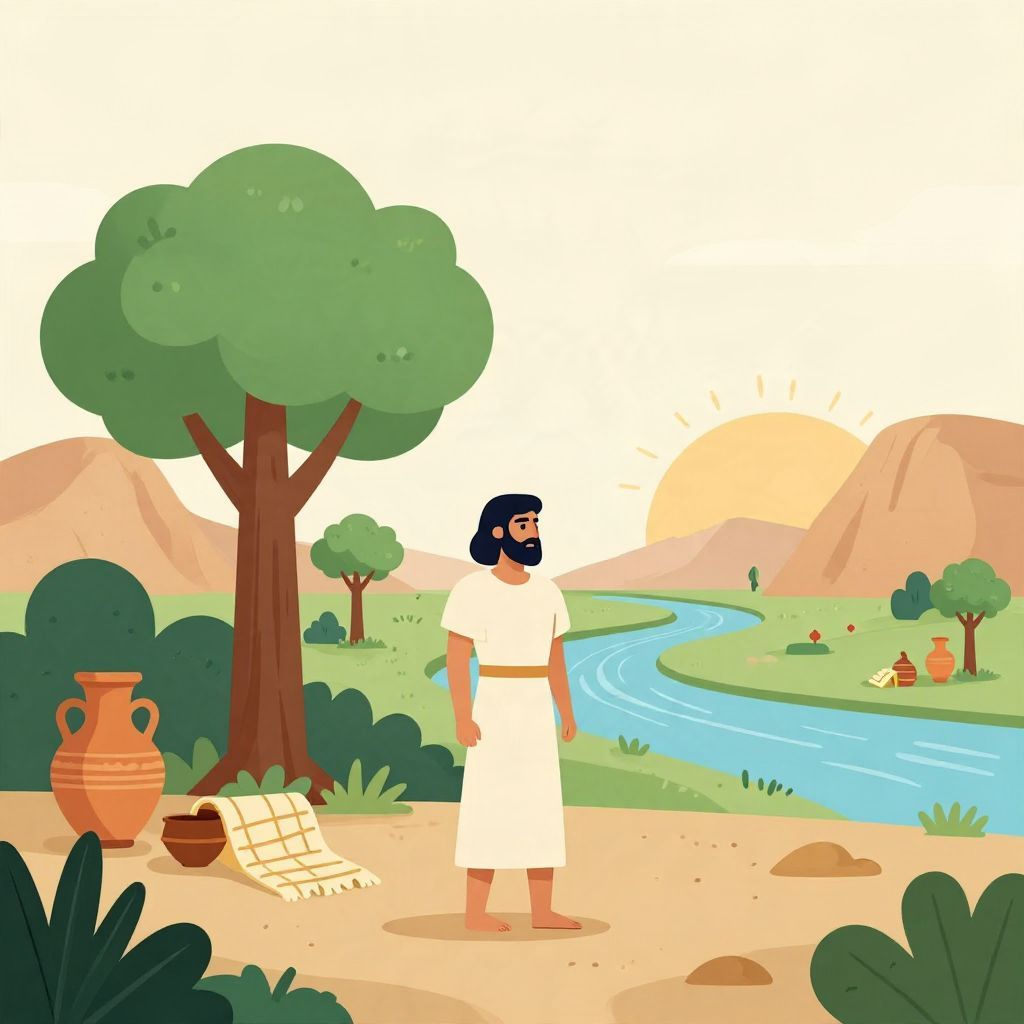
How long did Adam live? The short answer, according to the biblical chronology most often cited, is that Adam lived 930 years. This figure comes from the Book of Genesis, which describes Adam as the first human being in the Judeo-Christian creation story.
Historians treat that number as part of a religious tradition rather than a verifiable historical lifespan. Its importance lies less in biological fact than in what it reveals about ancient ideas of human origins, sacred history, and the way early communities understood time.
How long did Adam live?
Genesis says Adam lived 930 years. In the biblical account, he fathers Seth at age 130 and dies after a very long life, making him one of the longest-lived figures in Scripture. Most historians and scholars understand this as a theological and literary tradition, not a recoverable historical record.
Where does the 930-year figure come from?
The number appears in Genesis 5:5, within the genealogy that traces the line from Adam to Noah. The text presents a sequence of patriarchs with extraordinary lifespans, each linked by ages at fatherhood and death. Adam’s lifespan is part of that structured genealogy, which is central to the biblical narrative of early humanity.
In the same chapter, other early figures also live for centuries. This pattern suggests that the writer or editors were working within a symbolic or sacred framework, not modern demographic reporting. The genealogy is designed to connect creation, human decline, and the flood story in a continuous sacred timeline.
Why are the early biblical lifespans so long?
Scholars have offered several explanations for the extreme ages in Genesis, but there is no single agreed answer. The most common interpretations are literary, theological, and symbolic rather than literal.
1. Symbolic meaning
Long lifespans may have signaled greatness, closeness to creation, or the special status of the earliest generations. In many ancient cultures, the remote past was imagined as larger, longer, and more powerful than the present.
2. Genealogical purpose
The ages in Genesis help organize time and ancestry. They link one generation to the next and create a sense of continuity from Adam to later biblical figures. The numbers may have been shaped to serve that narrative structure.
3. Ancient Near Eastern background
Other ancient traditions also gave legendary figures extraordinary lifespans. Genesis belongs to a wider world of ancient storytelling in which remote ancestors often lived far longer than ordinary people. That does not prove direct borrowing in every detail, but it does show that very long lives were not unusual in sacred or legendary literature.
Was Adam a historical person?
That depends on the framework being used. In religious tradition, Adam is the first human being and ancestor of all humanity. In historical scholarship, there is no archaeological or documentary evidence that can confirm Adam as an individual person in the modern historical sense.
For historians, Adam belongs to the study of origin stories, theology, and cultural memory. The question is therefore not whether we can verify his lifespan the way we would verify that of a Roman emperor or medieval king, but how the story functioned in the tradition that preserved it.
Adam in the chronology of Genesis
Genesis presents Adam as the starting point for a chain of generations. The genealogy is not just a family list; it is a timeline that moves from creation toward catastrophe and renewal.
- Creation: Adam is formed as the first human in the Eden narrative.
- Life in Eden: He and Eve live in the garden before the fall.
- Life after Eden: Adam fathers children, including Seth.
- Death: Adam dies at age 930, completing the cycle introduced in Genesis.
This structure matters because it frames human life as finite. Even the first human, though extraordinarily long-lived, does not escape death. That theme is central to the biblical understanding of mortality.
How Adam’s lifespan compares with other biblical figures
Adam’s 930 years are impressive, but they are not the longest in Genesis. The text gives even greater ages to some of the antediluvian patriarchs, especially Methuselah, who is said to have lived 969 years. Noah is also described as living 950 years.
These numbers show that Adam’s lifespan is part of a larger pattern rather than an isolated claim. The early chapters of Genesis present the pre-flood world as a time of extraordinary longevity, which sharply contrasts with later biblical ages that become much shorter.
A simple comparison
- Adam: 930 years
- Enoch: 365 years, with a distinctive ending in the text
- Metuselah: 969 years
- Noah: 950 years
The gradual shortening of lifespans later in biblical tradition has often been read as a sign of increasing human distance from the original created order.
What do Jewish, Christian, and Islamic traditions say?
Adam is important in Judaism, Christianity, and Islam, but the details of his life are not identical across all traditions.
Judaism
In Jewish interpretation, Adam is the first human and a foundational figure in the story of humanity. The Genesis account of his lifespan is part of the Torah’s early chronology, though Jewish commentary often focuses more on the moral and theological meaning of the text than on literal age calculations.
Christianity
Christian traditions generally accept Adam as the first man in the biblical narrative. Some readers have treated the ages in Genesis as literal, while others have understood them allegorically or symbolically. The 930-year lifespan remains the standard scriptural figure.
Islam
Adam is also a prophet and the first human in Islam, but the Quran does not give him a specific lifespan. The 930-year figure is therefore tied specifically to the biblical text and later interpretive traditions, not to the Quranic account itself.
Why this question still matters historically
Asking how long Adam lived opens a larger historical question: how did ancient societies think about origins, ancestry, and time? The answer shows that early sacred histories were not written like modern biographies. They used genealogy, symbolism, and theological meaning to explain where humanity came from and what it means to be human.
Adam’s lifespan also illustrates how religious texts can shape historical imagination for centuries. Whether read literally or symbolically, the figure of Adam influenced Jewish, Christian, and Islamic thought about sin, mortality, labor, family, and the human condition.
Literal reading versus historical interpretation
Some readers approach Genesis as a literal chronology and accept Adam’s 930 years at face value. Others see the number as symbolic, literary, or traditional. Historians do not have the tools to confirm the literal lifespan, so they focus on the text’s origin, purpose, and reception.
It is important to distinguish between these approaches. A literal reading belongs to faith interpretation. Historical analysis asks how and why the number appears in the text, what it meant to ancient audiences, and how later communities used it.
What can be said with confidence?
- The Book of Genesis says Adam lived 930 years.
- This figure appears in the genealogy of Genesis 5.
- Historians cannot verify Adam as a historical individual.
- The lifespan is best understood within ancient religious and literary traditions.
The lasting significance of Adam’s lifespan
Adam’s 930 years have endured because the figure is more than a number. It marks the beginning of humanity in a sacred narrative and sets the tone for the rest of Genesis. The long life suggests nearness to creation, while death at the end of that life underscores the human condition.
In that sense, Adam’s age is part of a broader historical and religious message: human beings are created, fallible, and mortal, yet connected through generations stretching back to the beginning of the story.
So, how long did Adam live? According to Genesis, 930 years. As history, that figure belongs to the world of ancient sacred tradition rather than verifiable biography. For readers interested in related biblical chronology, see also how long Adam and Eve lived and how long Abraham lived.