
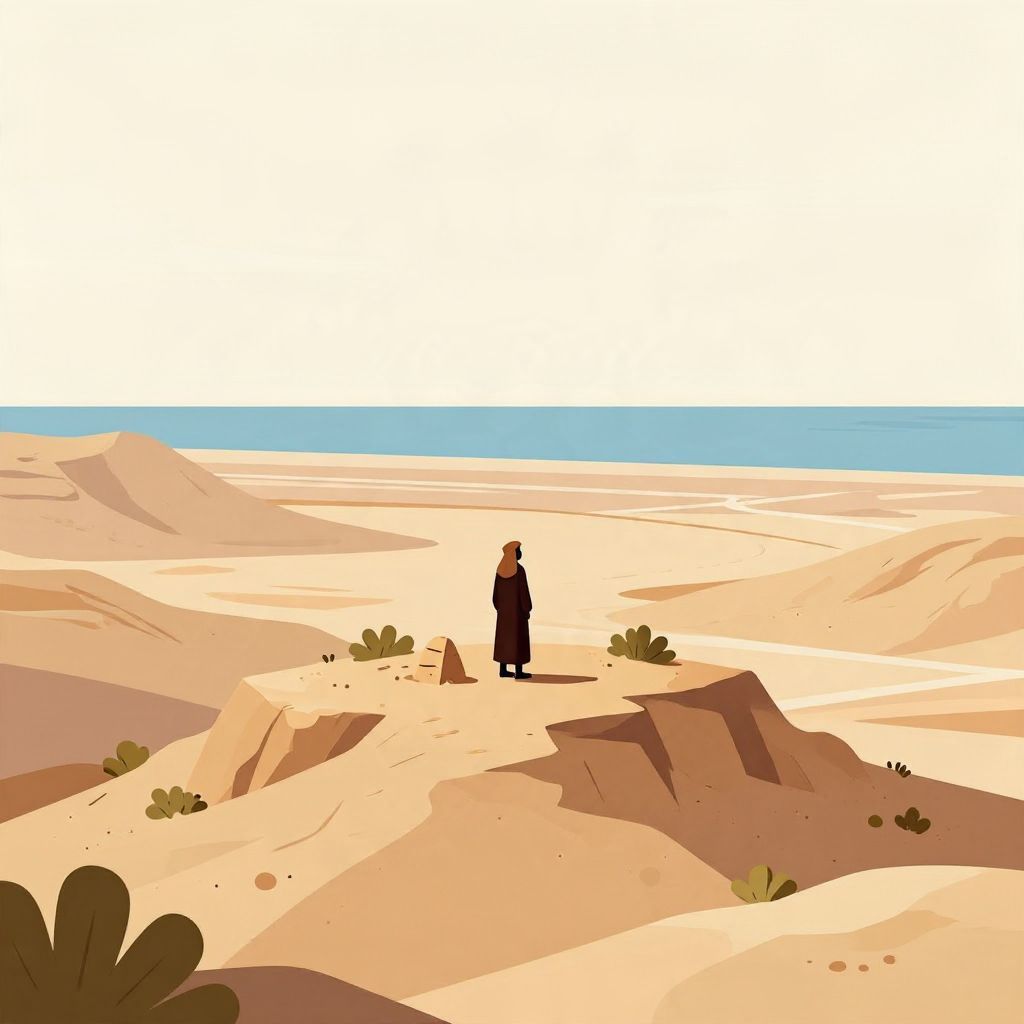
Where is Moses buried? It is one of the most enduring questions in biblical history, but the answer is not straightforward. The Hebrew Bible says Moses died in Moab, opposite Jericho, and that God buried him in an undisclosed place. That means there is no universally accepted burial site for Moses in the historical record.
Because Moses is a central figure in Judaism, Christianity, and Islam, the question has inspired tradition, pilgrimage, and debate for centuries. Yet the sources themselves leave the location deliberately hidden, which is why historians and religious scholars usually treat Moses’ burial place as unknown rather than identified.
Where Is Moses Buried?
Moses is traditionally said to have been buried by God in an unknown location in the land of Moab, near Mount Nebo, east of the Jordan River. The biblical text does not name a grave or shrine, and no archaeological evidence has verified a burial site. In historical terms, Moses’ burial place remains unknown.
What the Bible Says About Moses’ Burial
The clearest source is Deuteronomy 34, which describes Moses’ death on Mount Nebo and says that he was buried in a valley in Moab, but that “no one knows his burial place to this day.” This wording is important: it presents the location as intentionally hidden, not merely lost over time.
Why the text matters
The passage does two things at once. First, it places Moses’ death in a real geographic setting associated with the Transjordan region. Second, it denies readers access to a precise tomb. For historians, that means the text preserves memory of a death and burial without offering a recoverable grave marker.
The Historical and Geographic Setting
Moses is associated with the late Bronze Age or early Iron Age in biblical chronology, though exact dating is debated. The biblical narrative places his final moments east of the Jordan River, in Moab, a region south and east of the Dead Sea. Mount Nebo, traditionally linked to his death, overlooks the Jordan Valley and the land of Canaan.
Moab and Mount Nebo
Moab was an ancient highland kingdom or tribal region in the southern Levant. Mount Nebo became important in later Jewish, Christian, and Islamic memory because it is the place from which Moses is said to have viewed the Promised Land. The landscape fits the biblical story, but it does not prove a burial site.
Why No One Knows the Exact Burial Site
The main reason is simple: the earliest surviving source explicitly says the grave was not known. Unlike the tombs of many ancient rulers, Moses’ burial place was not preserved as a public monument in the biblical account. Over time, memory, reverence, and legend filled the silence left by the text.
Historical evidence versus tradition
- Established source: Deuteronomy 34 places Moses’ death and burial in Moab.
- Established fact: The text says the burial place was unknown.
- Unverified tradition: Later sites near Mount Nebo or elsewhere are associated with Moses, but none is historically proven.
Did Moses Have a Tomb?
There is no securely identified tomb of Moses. Some later traditions speak of shrines, memorials, or symbolic burial places, but these are not the same as a verified ancient tomb. In many religious traditions, Moses is honored through remembrance rather than a fixed grave that can be archaeologically confirmed.
Why a hidden grave may have mattered
In biblical interpretation, the hidden burial can be understood as preventing the creation of a cult centered on Moses’ remains. Instead of focusing on a tomb, the tradition emphasizes his role as lawgiver, prophet, and leader. That theological purpose helps explain why the grave is left unnamed.
Later Traditions About Moses’ Burial Place
Over the centuries, different communities proposed locations connected to Moses, especially around Mount Nebo and the broader region of biblical Moab. These traditions are historically interesting, but they developed long after the biblical narrative and should not be confused with direct evidence.
Common forms of later tradition
- Memorial sites near Mount Nebo linked to Moses’ final view of the land.
- Pilgrimage places in the Jordanian highlands associated with biblical memory.
- Interpretive traditions that place emphasis on the hidden nature of his grave rather than a physical tomb.
These traditions show how strongly Moses’ story shaped sacred geography. They also show the difference between historical memory and historical proof. A site can be religiously meaningful without being archaeologically confirmed as the actual burial place.
Moses in Jewish, Christian, and Islamic Tradition
Moses is a foundational figure in all three Abrahamic faiths, but each tradition handles his burial differently. In Judaism, the hidden grave underscores humility and divine control. In Christianity, Moses often symbolizes the Law and the continuity of salvation history. In Islam, Musa is honored as a major prophet, though the Qur’an does not provide a burial location.
Shared reverence, different emphasis
Across these traditions, Moses is remembered more for revelation, leadership, and covenant than for a tomb. That is one reason the burial question has remained open: the figure matters far more than the grave. The absence of a known burial site has not diminished his historical or religious significance.
What Historians Can and Cannot Say
Historians can say that the biblical tradition places Moses’ death and burial in Moab and that the grave was not known to later readers. They cannot say, on the basis of current evidence, that a specific tomb has been identified. Any claim of certainty beyond that goes beyond what the sources support.
Careful historical conclusion
The most responsible answer is that Moses is not known to be buried in any verified, identifiable tomb. The tradition points east of the Jordan, near Mount Nebo, but the burial place itself is intentionally concealed in the biblical narrative and remains historically unconfirmed.
Why the Question Still Matters
People continue asking where Moses is buried because burial places often anchor memory. Tombs can become symbols of identity, authority, and pilgrimage. Moses is different: his legacy was preserved through law, story, and covenant, not through a discoverable monument. That makes his burial one of history’s most famous unknowns.
In the end, the best historical answer is that Moses’ burial place is unknown, though tradition places his death in Moab near Mount Nebo. If you want to explore more about the biblical account, you may also be interested in how long Moses lived and how Moses died.