
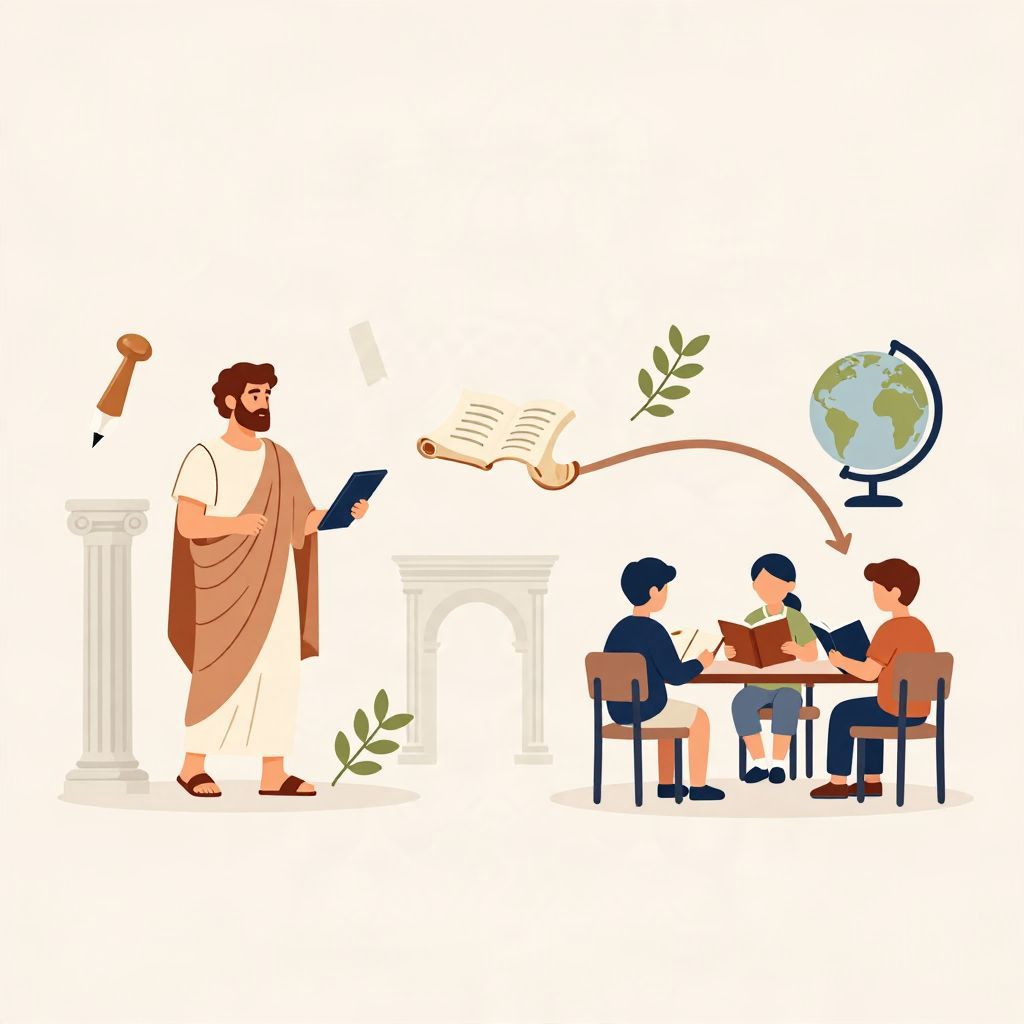
Do people still speak Latin? The short answer is yes—though not in the way ancient Romans did. Latin is no longer a native everyday language for any large community, but it remains spoken, read, taught, and used in limited contexts around the world.
Its survival is one of history’s most remarkable linguistic stories. From the Roman Republic and Empire to modern classrooms, the Catholic Church, scholarship, and even online communities, Latin has never fully disappeared.
Do People Still Speak Latin?
Yes, Latin is still spoken today, but mainly as a learned or ceremonial language rather than a mother tongue. It survives in education, religion, law, science, and specialized conversation, especially among scholars, clergy, and enthusiasts. Modern spoken Latin is based on reconstructed pronunciation and later traditions, not on a single ancient standard.
Why Latin Survived After the Roman Empire
Latin endured because it was more than the language of an empire. It became the language of administration, law, literature, and Christian worship across western Europe. After the collapse of Roman political power in the West in the 5th century, Latin remained the written language of educated people and institutions for centuries.
From spoken language to learned language
In the Roman world, Latin was spoken in many forms. Everyday speech in Italy, Gaul, Hispania, North Africa, and other provinces gradually changed over time. These local forms developed into the Romance languages—Italian, French, Spanish, Portuguese, Romanian, and others. Classical Latin, however, stayed in use as a formal written standard long after ordinary people had moved on to new vernaculars.
The Church and medieval scholarship
One major reason Latin survived was the Christian Church. By late antiquity and the Middle Ages, Latin had become the principal language of Western Christianity. Mass, theology, canon law, and many religious texts were written in Latin, helping preserve it as a living learned language. Medieval universities also used Latin for teaching and debate, which kept it central to intellectual life.
How Latin Is Spoken Today
Modern Latin is usually spoken in schools, academic settings, or religious contexts. It is not common in daily family life, but it is still active in limited communities. Speakers may use it for conversation, translation exercises, liturgical purposes, or cultural events. In this sense, Latin is “alive” as a learned language, even if it is not widely used as a first language.
Common modern settings for spoken Latin
- Education: students and teachers use spoken Latin in language classes and immersion programs.
- The Catholic Church: Latin remains the official language of the Holy See and is used in some liturgical and administrative contexts.
- Scholarly communication: historians, philologists, and classicists may use Latin phrases or read texts aloud.
- Enthusiast communities: some groups and online forums practice conversational Latin.
- Ceremonial use: Latin appears in mottos, inscriptions, academic rituals, and legal or religious formulas.
Is modern spoken Latin the same as ancient Latin?
Not exactly. Ancient Latin had regional accents and changed over time, just as any living language does. Modern speakers usually rely on reconstructed Classical pronunciation or on later ecclesiastical pronunciation shaped by church tradition. That means a person speaking Latin today is using a revived or taught form, not the exact speech of Julius Caesar’s Rome.
Was Latin Ever a “Dead” Language?
Latin is often called a dead language because it no longer has a large native-speaking population. But that label can be misleading. A dead language is usually one that no longer changes through everyday native use. Latin certainly stopped being the common mother tongue of a broad population, yet it remained in active use for writing, learning, and ritual.
Why historians and linguists use the term
Language historians call Latin “dead” because its natural evolution as a community’s first language ended. The people of medieval and early modern Europe increasingly spoke Romance languages in daily life, while Latin became a learned second language. Still, “dead” does not mean extinct. Latin has continued to function in specialized domains for more than a millennium.
When Did People Stop Speaking Latin as a Native Language?
There is no single date when people “stopped” speaking Latin. The change happened gradually over many centuries. In different parts of the former Roman world, spoken Latin evolved into local Romance languages at different speeds. By roughly the early Middle Ages, most ordinary speakers in western Europe were no longer speaking Classical Latin as their everyday tongue.
A gradual transition, not a sudden break
In the 3rd to 8th centuries, spoken Latin diversified across the empire’s former territories. Written Latin stayed relatively conservative, especially in official and church contexts, while spoken forms drifted farther apart. This created a gap between the language people wrote and the language they spoke. Over time, that gap widened until the vernaculars became distinct languages.
Regional differences mattered
The transition did not happen evenly. Urban centers, monasteries, courts, and schools preserved Latin longer than rural communities. In some places, people may have understood Latin in church or administration even after they no longer used it as their home language. The result was a long bilingual age rather than a clean linguistic replacement.
What Kind of Latin Is Used in the Catholic Church?
The Catholic Church has preserved Latin more continuously than most institutions in Europe. For centuries it was the universal language of Western Catholic worship and administration. Even after the Second Vatican Council in the 1960s encouraged greater use of local languages in the liturgy, Latin retained official status and continues to appear in church documents and ceremonies.
Ecclesiastical Latin versus Classical Latin
Ecclesiastical Latin differs from Classical Latin in pronunciation, vocabulary, and some later usages. It developed through medieval and church tradition rather than through everyday Roman speech. A person trained in ecclesiastical Latin can read many church texts, but the pronunciation and some expressions will sound different from the Latin of Cicero or Virgil.
Can Latin Still Be Learned and Used Conversationally?
Yes. Latin can be learned like any other language, and some people do speak it conversationally. While fluency is rare compared with major world languages, there are immersion programs, reading groups, and teaching methods designed to make Latin active rather than purely academic. This modern revival is small, but real.
Why people learn spoken Latin
- to read ancient texts more naturally
- to improve understanding of grammar and vocabulary
- to experience Latin as a living linguistic system
- to participate in church or scholarly traditions
- to connect with classical heritage and historical continuity
How widespread is conversational Latin?
It is not widespread in the sense of a national or community language. Most Latin learners study it in school or university for reading rather than speaking. But conversational Latin is supported by dedicated teachers, publications, podcasts, and events. The number of active speakers is small, yet the language remains usable for communication among trained participants.
Why Latin Still Matters Historically
Latin’s survival matters because it shaped European history long after Rome fell. It linked medieval scholars, church officials, diplomats, and scientists across borders. It also left a deep imprint on modern languages, legal terms, medical vocabulary, and academic traditions. Even people who never study Latin directly encounter it through words, mottos, and institutions.
Latin’s legacy in modern life
Many English words come from Latin, either directly or through French and other Romance languages. Scientific names, legal expressions, religious phrases, and university mottos often preserve Latin forms. This makes Latin one of history’s most influential languages, even though it no longer dominates everyday speech.
The Historical Answer in One Sentence
People still speak Latin today, but mostly as a learned, ceremonial, or scholarly language rather than as a native everyday tongue. Its long life after ancient Rome shows how a language can outlast the empire that made it famous.
For more context, you may also want to read about why Latin is called a dead language and what language the Romans actually spoke.