
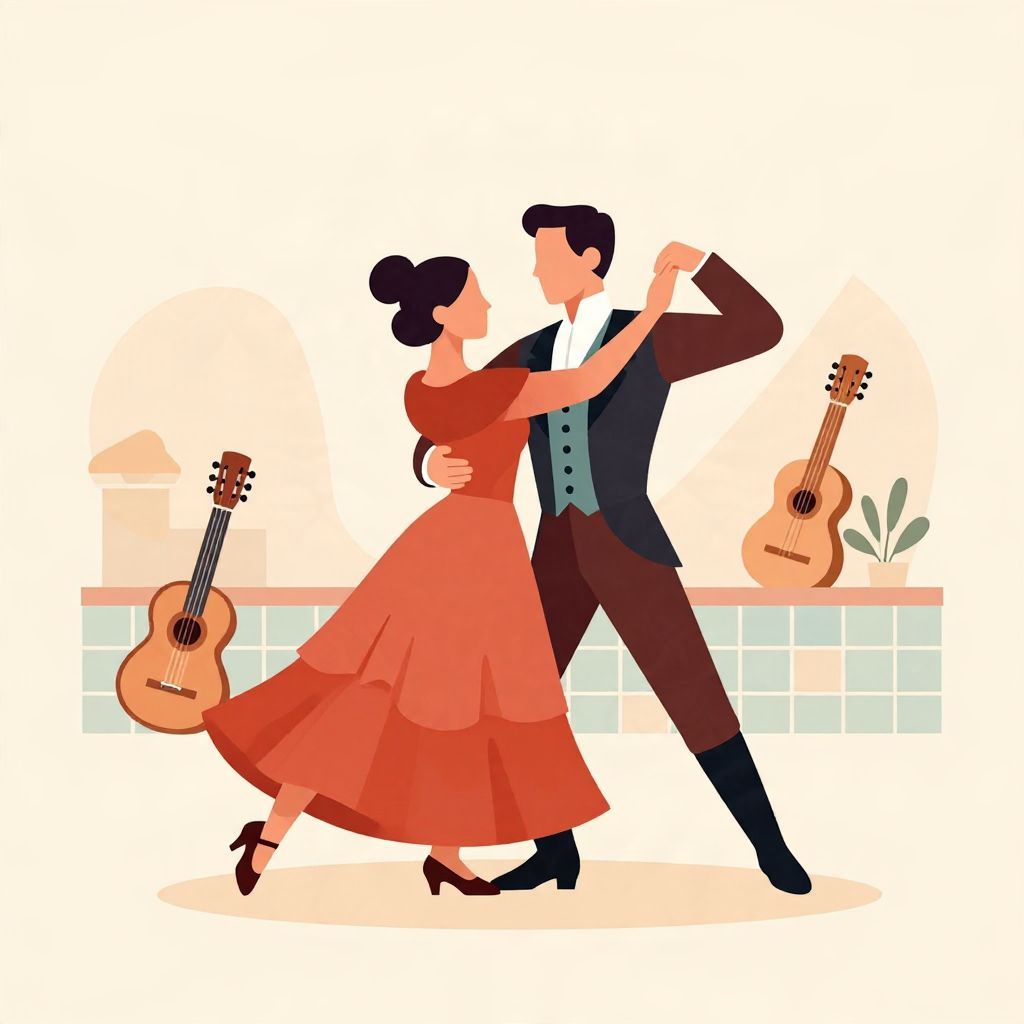
Is bolero a dance? Yes—but the answer depends on which bolero you mean. In history, “bolero” refers most famously to a Spanish dance and musical form that emerged in the late 18th century. The word also later came to describe songs, rhythms, and even fashion, which is why the term can be confusing today.
To answer the question accurately, it helps to separate the original bolero dance from later uses of the name. The bolero began as a theatrical and social dance in Spain, then spread through music and performance traditions across the Spanish-speaking world and beyond.
Is Bolero a Dance? The Short Historical Answer
Yes, bolero is historically a dance. It originated in Spain in the late 1700s as a graceful partnered dance in triple meter, often accompanied by guitar and castanets. Over time, “bolero” also became a musical style, so today the term can mean both a dance and a related genre of song or instrumental music.
Where Did the Bolero Come From?
The bolero developed in Spain, most likely in the late 18th century, during a period when regional dances were being shaped into more formal stage and salon performances. It is usually associated with Andalusia, though its exact birthplace is not documented with complete certainty. Like many folk-to-theater dances, it evolved through practice before it was described consistently in writing.
From folk movement to stylized performance
Early bolero was not simply a village dance frozen in time. It became a refined performance form, with controlled footwork, turns, arm gestures, and rhythmic accents. Dancers often performed it as a couple, and the style emphasized elegance, balance, and expressive upper-body movement. This made it suitable for both social settings and the stage.
Spanish dance culture in this period included many local forms, and the bolero stood out because it blended popular energy with courtly polish. That combination helped it survive and travel. In historical terms, the bolero was part of a wider European trend in which regional dances were adapted for theaters, academies, and fashionable gatherings.
What Makes a Bolero a Dance?
What distinguishes the bolero as a dance is its choreography, rhythm, and performance context. It is usually danced in 3/4 or 3/8 time, with a measured, lilting pulse. Traditional performance often involves castanets, guitar, and sometimes singing. The dance is known for poised steps, intricate footwork, and expressive arm movements rather than fast, sweeping motion.
Typical features of the dance
- Meter: usually triple time, giving it a flowing, graceful feel
- Movement: controlled steps, turns, and decorative gestures
- Performance style: often danced by a couple or solo performer
- Accompaniment: guitar, castanets, and sometimes voice
- Expression: elegant, dramatic, and often flirtatious in tone
These characteristics helped define the bolero as more than a generic “Spanish dance.” It became a recognizable style with its own identity, even as local variations developed.
How the Bolero Changed Over Time
Once a dance becomes widely admired, it rarely stays fixed. The bolero changed as it moved between folk traditions, theaters, and concert halls. By the 19th century, it was no longer just a dance form; it had also become a musical genre that composers used in art music, opera, and salon repertoire.
19th-century expansion
During the 1800s, European audiences often associated Spain with vivid, stylized dance imagery. Composers and choreographers used the bolero’s rhythms and gestures to evoke Spanish identity. In this period, the bolero could appear in ballets, stage works, and instrumental pieces, sometimes preserving dance elements and sometimes transforming them into concert music.
This is one reason the term can be confusing. A piece called a bolero may be intended for listening rather than dancing, yet it still draws on the dance’s rhythmic profile. The historical dance and the musical genre are related, but they are not identical.
Bolero in Music: Dance Form and Musical Genre
The bolero is historically important because it sits at the intersection of dance and music. In Spain, the dance inspired composers who wrote boleros for performance. Later, in Latin America, “bolero” came to mean a lyrical song genre, especially associated with romantic themes. That later development is separate from the original Spanish dance, though the shared name reflects cultural exchange within the Spanish-speaking world.
Spanish bolero versus Latin American bolero
The Spanish bolero is the older form and is directly tied to dance. The Latin American bolero, which emerged much later in the 19th and especially 20th centuries, is primarily a song genre rather than a social dance. It is often slow, emotional, and centered on vocal performance. Because of this, modern listeners may hear “bolero” and think of music first, even though the term began with dance.
That distinction matters historically. It shows how cultural terms can travel and change meaning as they cross regions and centuries. A single word may preserve a memory of movement long after the dance itself has become less common.
How Was the Bolero Performed Historically?
Historical descriptions suggest that the bolero was admired for its precision and charm. Performers used the body in a highly expressive way, especially the arms, hands, and torso. The dance often relied on a sense of dialogue between partners, with a combination of courtship, display, and rhythmic control.
Performance context
The bolero could appear in several settings:
- Social gatherings: as a fashionable dance among urban and elite circles
- Theaters: as part of staged dance programs and musical entertainments
- Concert settings: through composed works inspired by bolero rhythm
Like many dances of the period, it was shaped by taste and class. What began as a lively regional form could be refined for elite audiences, sometimes losing some of its original spontaneity in the process. At the same time, stage versions helped preserve and popularize the dance beyond its local roots.
Why the Question Still Causes Confusion
The question “Is bolero a dance?” remains common because the term has multiple historical meanings. In everyday speech, people may encounter bolero as a song style, a dance, or even a fashion item such as a short jacket. The dance is the original historical meaning, but later cultural uses have broadened the word far beyond its 18th-century Spanish origin.
Common sources of confusion
- Some people know the bolero mainly as a romantic song genre.
- Others encounter it in ballet, flamenco-adjacent performance, or concert music.
- The same term has been used in different countries with different meanings.
- Modern media often compresses dance history into a single label.
Historically speaking, the safest answer is this: bolero began as a dance, then expanded into a broader musical and cultural term.
Bolero and Spanish Cultural Identity
The bolero became one of the best-known symbols of Spanish dance culture, even though Spain has many distinct regional traditions. Its popularity abroad helped shape outside views of Spanish performance as elegant, passionate, and rhythmically distinctive. That image was sometimes accurate, sometimes simplified, and often filtered through foreign taste.
National image and artistic borrowing
In the 19th century, European artists frequently borrowed Spanish themes to create atmosphere and color. The bolero fit this trend well because it was visually striking and musically memorable. Composers used its rhythms to suggest Spain, while dancers and choreographers used its gestures to evoke refinement and drama.
This process had a lasting effect. Even when the original dance was not commonly performed in everyday life, its style continued to influence stage choreography, classical music, and later popular culture. In that sense, the bolero outlived its first social setting.
So, Is Bolero a Dance Today?
Today, the bolero is both a historical dance and a broader cultural label. The original Spanish bolero remains a recognized dance form in dance history and performance traditions, though it is not as widely danced socially as it once was. Meanwhile, the word is also used for musical genres, especially in Latin America, where it usually refers to song rather than choreography.
So if you are asking from a historical standpoint, the answer is clear: yes, bolero is a dance. But if you are asking about modern usage, the term may point to music first, depending on the region and context.
Historical Takeaway
The bolero is a good example of how a dance can become larger than its original form. It began in Spain in the late 18th century as a refined partnered dance, then developed into a musical and cultural idea that traveled widely. If you are studying dance history, Spanish cultural history, or the evolution of musical genres, the bolero is an important case of transformation over time.
If you want to explore related topics, you may also be interested in the history of Spanish dance history or the development of Latin American music traditions.