
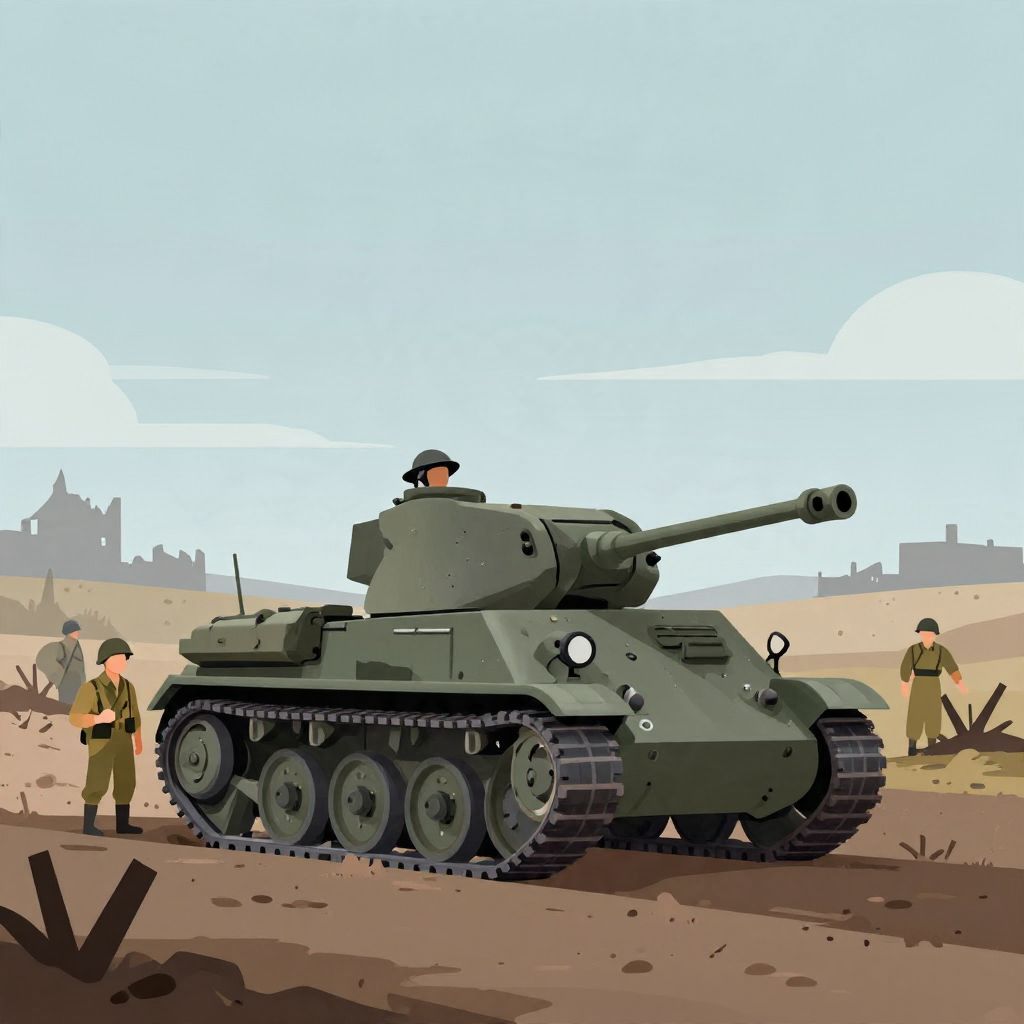
When people ask, “Is Fury a true story?” they usually mean the 2014 World War II film starring Brad Pitt. The short answer is no: it is not based on one specific documented tank crew or one exact battle. But it is rooted in the real experience of U.S. armored warfare in the final months of the war in Europe.
The film blends historical details, battlefield conditions, and combat psychology into a fictional narrative. That makes it useful as a wartime drama, but it should not be read as a literal record of one unit’s history.
Is Fury a true story?
No. Fury is a fictional film set during the Allied advance into Nazi Germany in 1945. Its characters, tank crew, and central storyline were created for the movie, although the setting, equipment, and many combat details draw on real World War II history. It is best understood as historically inspired rather than a true story.
What the film gets right about World War II
Although the plot is invented, Fury reflects several real features of the war in Europe: the brutal pace of the Allied push into Germany, the danger of armored combat, the exhaustion of crews, and the fear of ambush from infantry, artillery, mines, and anti-tank weapons. The movie also shows how isolated tank crews could become on chaotic battlefields.
Realistic wartime setting
The film is set in April 1945, when U.S. forces were crossing Germany and fighting through towns, forests, and road networks under constant threat. By this stage of the war, German resistance was collapsing in many areas, but local fighting could still be deadly. Tanks were powerful, yet vulnerable when unsupported.
Authentic military atmosphere
The movie captures the cramped interior of a Sherman tank, the noise, smoke, mechanical strain, and the dependence of each crew member on the others. It also reflects the emotional toll of prolonged combat. These are all historically grounded aspects of armored warfare, even if the specific events are dramatized.
What is fictional in Fury?
The main characters are not based on a single known crew, and the story is not a dramatization of one documented mission. The film’s dramatic encounters, especially the final stand against a large German force, are designed for narrative impact. Some scenes are plausible in broad terms, but they are not a reconstruction of a verified historical event.
Fictional characters and plot
Don “Wardaddy” Collier and his crew are invented characters. Their relationships, dialogue, and personal histories were created for the screenplay. The movie uses these characters to explore themes of leadership, trauma, brotherhood, and moral compromise under wartime pressure.
Condensed and heightened combat
Like many war films, Fury compresses time and heightens danger. Real tank warfare involved a mix of movement, reconnaissance, artillery support, logistics, and often long periods of waiting. The film focuses on intense combat episodes, which makes for strong drama but not a full picture of how armored units actually operated day to day.
The historical background behind the movie
Fury is set during the final Allied drive through Germany in 1945, one of the last and most destructive phases of the European war. By then, the Western Allies had crossed the Rhine and were pushing eastward while Soviet forces advanced from the east. German defenses were weakening, but they remained dangerous and often desperate.
Why tank warfare mattered in 1945
Tanks were central to Allied mobile warfare because they could break through defenses, support infantry, and exploit openings. The U.S. Army’s M4 Sherman was reliable and widely used, though it was often outgunned by some German tanks and anti-tank weapons. In the final months of the war, however, numbers, air power, artillery, and logistics increasingly favored the Allies.
The Sherman tank in context
The Sherman was not invincible, and crews knew it. Its reputation in popular culture is often shaped by postwar comparisons with heavier German armor, but battlefield survival depended on tactics, coordination, terrain, and support as much as armor thickness. The film’s emphasis on vulnerability reflects a real concern among tank crews.
How accurate is the battle portrayal?
Fury mixes realism with cinematic exaggeration. The film’s depiction of fear, confusion, and the destructive power of anti-tank weapons is broadly credible. However, some tactical choices and sequences are simplified or intensified for storytelling. That is common in war cinema, where emotional truth is often prioritized over exact battlefield procedure.
Elements that feel historically plausible
- Tank crews working in close quarters under extreme stress
- Urban and rural combat in late-war Germany
- Threats from mines, infantry ambushes, and anti-tank guns
- The psychological strain of repeated combat
- The dependence of armored units on infantry support
Elements that are more dramatic than documentary
- The scale and concentration of some firefights
- The final sequence, which is structured for suspense and sacrifice
- Some character behavior and battlefield decisions made for narrative effect
Did real tank crews experience things like this?
Yes, in the broad sense. Many Allied tank crews faced sudden danger, mechanical breakdowns, poor visibility, and the constant possibility of being hit by hidden anti-tank weapons. Combat in Germany could be especially harsh because villages, roads, woods, and rubble created ambush conditions. The emotional burden shown in Fury is consistent with what is known about front-line service.
Combat stress and battlefield fatigue
The film pays close attention to the mental wear of war. Soldiers in prolonged combat often developed exhaustion, numbness, aggression, or emotional detachment. Historians and military studies of World War II have long noted that repeated exposure to violence shaped behavior as much as training did. The movie dramatizes this truth through its characters’ harshness and vulnerability.
The limits of battlefield heroism
Fury also reflects a real wartime dilemma: even skilled crews could not control everything. A tank crew might do everything “right” and still be trapped by terrain, enemy fire, or bad timing. That uncertainty was a defining feature of mechanized warfare in 1944–45.
Why people think Fury might be a true story
Viewers often assume the film is based on real events because it feels specific and grounded. The uniforms, vehicles, weapons, and ruined landscapes give it a documentary texture. In addition, war films often borrow from actual accounts, so audiences may expect a direct historical source behind the story.
Inspired by history, not one case file
The movie is better described as a fictional story built from many real wartime experiences. That is a common approach in historical drama. Filmmakers often combine testimony, military history, and visual research to create a believable world without tying the plot to one exact incident.
How historians should read films like Fury
Historical films are most useful when they are treated as interpretations, not evidence by themselves. Fury can help viewers imagine the atmosphere of late-war armored combat, but it cannot replace archival records, veteran testimony, or military histories. Its value lies in evoking conditions that were real, even when the plot is invented.
Good questions to ask while watching
- What parts of the film reflect documented wartime conditions?
- Which scenes are clearly shaped for drama?
- How does the movie portray soldiers’ fear, discipline, and exhaustion?
- What larger history of the war does the film leave out?
So, is Fury a true story?
Not exactly. Fury is a fictional war film set against a real historical backdrop. It does not tell the verified story of one tank crew, but it does draw on the realities of World War II armored combat in 1945. Its strength is not documentary accuracy in every detail, but a convincing portrayal of the danger and strain of war.
If you want more historical context after watching the film, you can explore broader wartime and modern history topics at HistoryOrg or read about how leaders shaped the modern world in this article on Martin Luther King Jr.