
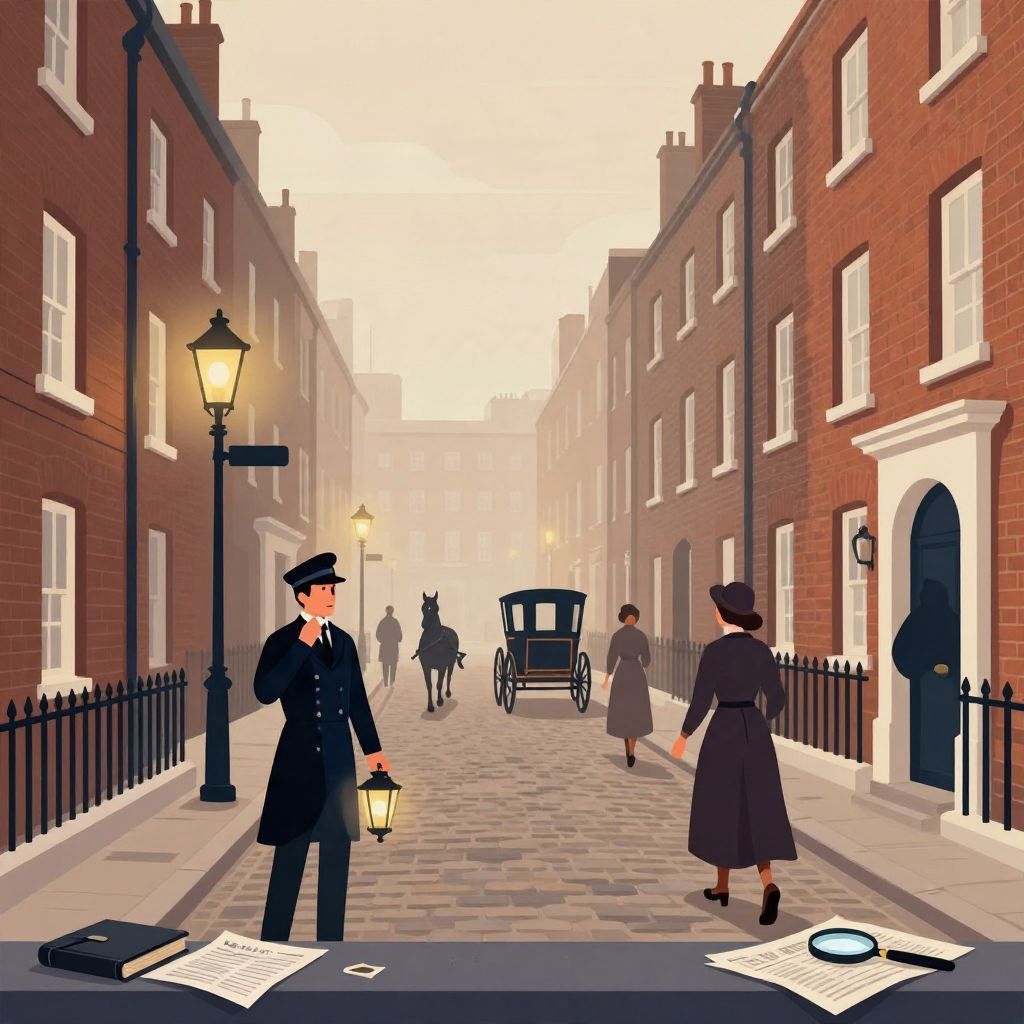
Was Jack the Ripper real? Yes—the murders attributed to “Jack the Ripper” were real, and they shook London in 1888. What is not real in the same sense is the identity behind the name: “Jack the Ripper” was a press-made nickname for an unknown killer, not a confirmed person.
The case became one of history’s most famous unsolved crimes because it combined brutal violence, weak forensic methods, sensational journalism, and a city under social strain. The facts are real; the certainty about who did it is not.
Was Jack the Ripper real?
Yes. Jack the Ripper was the name given to a real, unidentified serial killer active in Whitechapel, London, in 1888. The murders are historically documented, but no suspect has been proven beyond doubt, which is why the case remains unsolved more than a century later.
Who was “Jack the Ripper” in historical terms?
The name “Jack the Ripper” did not belong to a known suspect at the time. It emerged from letters and newspaper coverage during the investigation. Historians generally use the term to refer to the unidentified killer or killers responsible for a series of murders in London’s East End, especially those of women in the autumn of 1888.
The Whitechapel murders
The core case is usually linked to the so-called Whitechapel murders, a set of violent attacks in London’s impoverished East End. The most widely accepted canonical victims are Mary Ann Nichols, Annie Chapman, Elizabeth Stride, Catherine Eddowes, and Mary Jane Kelly. Some historians include additional murders in the broader investigation, while others are more cautious about assigning every East End killing to one offender.
Why the name stuck
The nickname spread after a letter allegedly signed “Jack the Ripper” was sent to the press. Whether that letter came from the murderer is doubtful, but the name captured public imagination and quickly became the label for the case. In that sense, “Jack the Ripper” is both a historical figure of sorts and a media creation.
What evidence shows the murders were real?
The murders were documented by police records, coroner’s inquests, newspaper reports, witness statements, and contemporary public reaction. The victims were real women, the crime scenes were investigated, and the killings caused a major police response in Victorian London. The uncertainty lies in identification, not in whether the crimes happened.
Contemporary records
Victorian authorities recorded the deaths, examined the bodies, and held inquests. These records show that the killings were treated as serious homicides at the time, not as rumor or folklore. Newspapers also reported the murders extensively, helping to create a national and international sensation.
Public panic and police investigation
The Whitechapel murders prompted a large-scale police hunt in a district already associated in the public mind with poverty, overcrowding, and crime. The case exposed the limits of policing before modern forensic science. There was no DNA analysis, no CCTV, and no reliable way to compare fingerprints in the way later investigators could.
Why is the case still unsolved?
The case remains unsolved because the evidence is incomplete, contradictory, and filtered through the limitations of 19th-century policing and journalism. Many suspects have been proposed, but none has been conclusively proven. The surviving material allows interpretation, not final certainty.
Limited forensic science
In 1888, forensic methods were far less developed than today. Investigators relied on witness testimony, scene inspection, and medical observations. That made it difficult to establish a reliable chain of evidence, especially in crowded urban streets where scenes could be disturbed quickly.
Conflicting witness accounts
Witness statements in the case are often inconsistent. Some reports were made after the fact, some were shaped by fear, and some may have been influenced by newspaper stories. This does not mean the witnesses were dishonest; it means the historical record is uneven and must be handled carefully.
Possible multiple interpretations
Some researchers argue that the canonical murders were committed by one killer. Others suggest that not every attributed murder fits the same pattern. A few even propose more than one offender in the wider Whitechapel series. The most cautious historical position is that the famous “Ripper” case centers on a real sequence of murders, but the exact scope and authorship remain disputed.
What do historians agree on?
Most historians agree on several basic points: the murders happened in 1888; they took place in Whitechapel and nearby parts of London; the victims were mainly women from vulnerable backgrounds; and the case became famous because the killer was never identified. Beyond that, interpretations become more tentative.
Victorian London mattered
The East End of London was marked by overcrowding, poverty, casual labor, and social anxiety. Those conditions shaped both the murders and the public response. The case was not only about one killer; it also reflected Victorian fears about urban crime, class division, and the perceived dangers of modern city life.
Media sensationalism amplified the mystery
Newspapers competed fiercely for readers in late 19th-century Britain. The Ripper story was dramatic, frightening, and highly marketable. Sensational reporting helped turn a local crime wave into an enduring legend. That media attention also blurred the line between verified fact and rumor.
Who are the main suspects?
Over the years, many suspects have been proposed, including doctors, butchers, local residents, and even members of the aristocracy. None has been proven. Because the evidence is so limited, suspect theories often reveal as much about later fascination with the case as they do about the historical murders themselves.
Why suspect lists keep growing
The unsolved nature of the crime invites speculation. Each generation revisits the evidence with new assumptions and new theories. Some suspects are based on circumstantial clues, others on questionable memoirs or late claims. Historians usually treat such theories cautiously unless they are supported by contemporary documentation.
The danger of hindsight
It is easy to read later theories into the evidence and assume that a compelling story must be true. But a dramatic narrative is not the same as proof. In the Ripper case, the gap between popular certainty and historical certainty is especially wide.
Did “Jack the Ripper” really exist as a single person?
That is the central historical uncertainty. The murders were real, but whether they were all committed by one person is not absolutely proven. The traditional view is that a single serial killer was responsible for at least the best-known murders, yet some scholars remain open to alternative explanations because the evidence does not allow complete certainty.
Why the single-killer theory is common
The brutality, location, and timing of the canonical murders suggest a possible pattern. Police at the time also worked from the assumption that one offender might be responsible. That theory remains the most famous and widely discussed, but it is still a theory rather than a solved identity.
Why certainty is impossible
More than 130 years have passed, and the physical evidence is fragmentary. Documents are incomplete, some records were lost, and many surviving accounts were shaped by the press. Without decisive forensic proof, historians cannot responsibly claim to know the killer’s identity with absolute confidence.
Why the Ripper case still matters
The Jack the Ripper murders remain important because they reveal how crime, media, and urban society interacted in late Victorian Britain. The case influenced popular culture, police history, and the public imagination. It also serves as a reminder that famous historical mysteries often survive because the evidence is real but incomplete.
A lesson in historical method
The Ripper case is a useful example of how historians work. They separate evidence from rumor, compare sources, and accept uncertainty where the record is weak. The goal is not to force a dramatic answer, but to understand what can and cannot be known.
Lasting cultural impact
Books, films, tours, and documentaries have kept the case alive for generations. That popularity has sometimes obscured the victims, whose lives were more than the crime that made them famous. A careful historical approach keeps both truths in view: the murders were real, and the women were real people, not just characters in a mystery.
Conclusion
So, is Jack the Ripper real? Yes—the murders are a real part of London’s history, but the name refers to an unidentified killer, not a confirmed individual. The case remains unsolved because the evidence is incomplete, the records are imperfect, and later legend has often outgrown the facts. For readers interested in how real crimes become lasting historical mysteries, related stories such as what happened to John Walsh’s son and how John Wayne Gacy died offer another look at crime, evidence, and public memory.