
Is Kwanzaa celebrated in Africa? The short historical answer is: generally, no—not as a widespread or traditional holiday across the African continent. Kwanzaa was created in the United States in 1966 by Maulana Karenga as an African American cultural holiday, not as an ancient African festival.
That said, Kwanzaa draws heavily on African languages, values, and harvest traditions, so it can feel familiar in some African settings. Today, a few people and organizations in Africa may observe it, especially in cosmopolitan or diaspora-connected communities, but it is not a continent-wide African holiday with deep historical roots in precolonial Africa.
Is Kwanzaa Celebrated In Africa?
Mostly no, not as a traditional or widely established holiday. Kwanzaa began in the United States during the Black freedom era of the 1960s and was designed for African Americans. In Africa, it is far less common than local religious, national, and harvest celebrations, though some people do mark it because of its Pan-African message.
What Kwanzaa Is, Historically
Kwanzaa was founded in 1966 by Maulana Karenga, an African American scholar and activist. He created it in the aftermath of the civil rights movement and the rise of Black cultural nationalism. Its purpose was to encourage pride, community responsibility, and connection to African heritage among African Americans.
The holiday lasts seven days, from December 26 to January 1. Each day highlights one of the Nguzo Saba, or Seven Principles: unity, self-determination, collective work and responsibility, cooperative economics, purpose, creativity, faith, and struggle. These principles are modern formulations, not ancient African state rituals.
Why People Sometimes Assume It Is an African Holiday
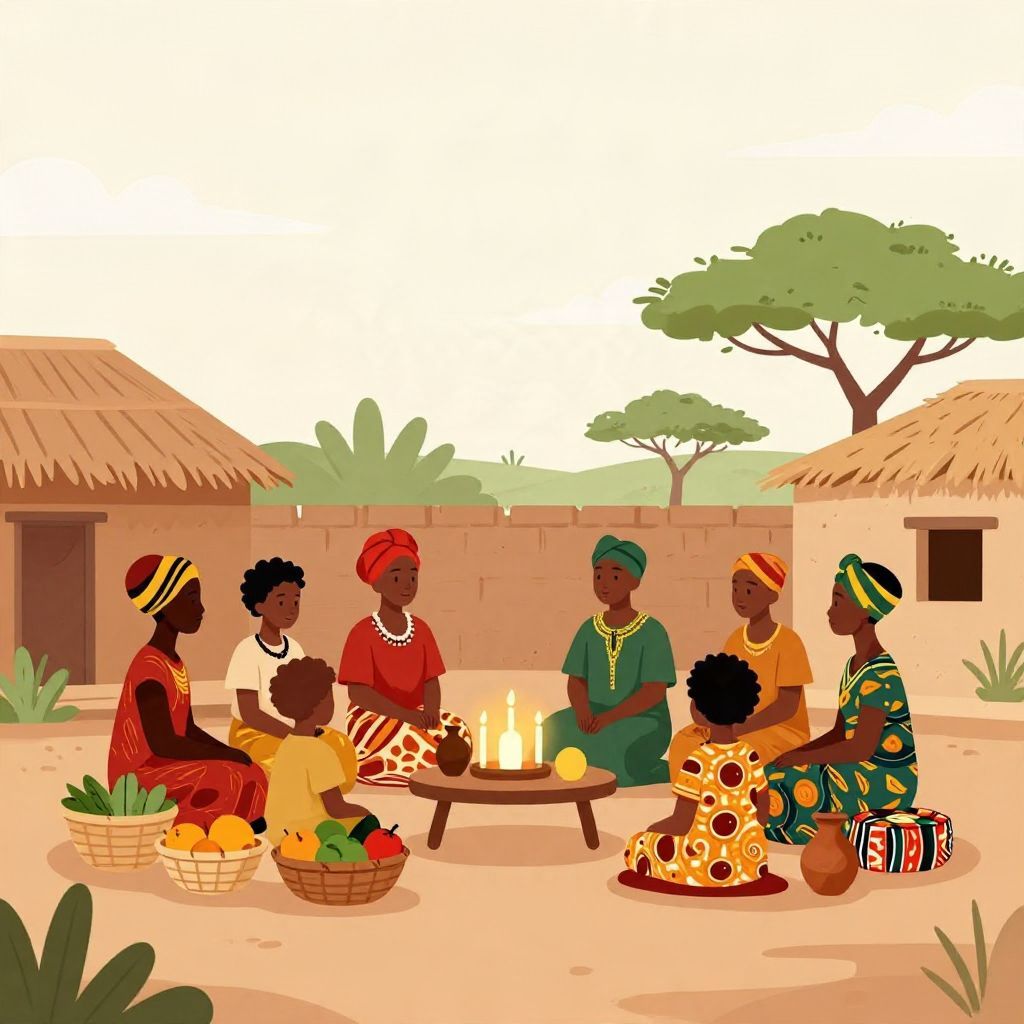
Kwanzaa uses Swahili terms, African symbols, and harvest imagery, which gives it an African appearance. The name itself comes from the Swahili phrase meaning “first fruits.” It also uses items such as the mkeka (mat), kinara (candleholder), mishumaa saba (seven candles), and mazao (crops), all intended to evoke African cultural themes.
Because of these features, many people outside the United States assume Kwanzaa must be a traditional African celebration. In reality, it is better understood as a modern African diasporic holiday inspired by African history and culture rather than one inherited directly from a specific African society.
Why Kwanzaa Is Not a Traditional Continental African Holiday
Africa is not culturally uniform. It contains thousands of ethnic groups, many languages, and a wide range of religious and historical traditions. A holiday that is common in one region may be unknown in another. Kwanzaa has not become a standard holiday across African countries because it did not emerge from local African historical development.
Different Historical Origins
Traditional African festivals usually grew out of local farming cycles, religious calendars, royal ceremonies, ancestral rites, or community events. Kwanzaa, by contrast, was created in the context of African American identity politics in the United States in the 20th century. Its origin is therefore diasporic rather than indigenous to Africa.
This distinction matters historically. A culture can be inspired by Africa without being historically rooted in Africa in the same way as a local festival in Ghana, Nigeria, Ethiopia, or Senegal. Kwanzaa belongs to the history of the African diaspora, especially in the United States.
Religion, Nation, and Local Tradition in Africa
In many African countries, December and January are already filled with Christian, Muslim, civic, or local harvest observances. For example, Christmas and New Year’s celebrations are widely recognized in many places, while other communities observe indigenous festivals tied to seasonal or ancestral calendars. Kwanzaa has not displaced these traditions or become a dominant shared holiday.
Some African intellectuals and cultural leaders have appreciated Kwanzaa as a symbol of Pan-African solidarity. Others have seen it as a diaspora invention that does not necessarily fit local African customs. Both views are historically understandable.
Where Kwanzaa Is Actually Celebrated
Kwanzaa is most strongly associated with African American communities in the United States. It is also observed in some parts of the African diaspora, including communities in the Caribbean, Canada, and the United Kingdom. In Africa itself, observance is limited and usually informal.
Common Settings for Kwanzaa Observance
- United States: the main center of Kwanzaa observance since the 1960s
- Caribbean communities: sometimes celebrated as part of broader Black cultural identity
- Urban African settings: occasional observance in schools, cultural centers, or activist circles
- Pan-African events: sometimes included as a symbolic cultural practice
In Africa, Kwanzaa is more likely to appear in educational or cultural programming than in everyday household practice. It is not usually a public holiday, and most people on the continent would not regard it as one of their main annual celebrations.
How Kwanzaa Connects to Africa
Even though Kwanzaa is not a traditional African holiday, it was deliberately designed to connect African Americans to African cultural memory. That connection is part of its historical importance. The holiday reflects a 20th-century effort to recover dignity, history, and communal values after centuries of slavery, segregation, and cultural displacement.
Swahili as a Symbolic Language
Karenga chose Swahili because it is an African language with broad symbolic value and because it was seen as a unifying cultural reference rather than the language of one single ethnic group. This choice was meant to create a pan-African identity, not to claim that Kwanzaa came from one specific African nation.
That symbolic use of African language is one reason the holiday resonates with some people in Africa and the diaspora. Still, symbolic connection is not the same as historical origin.
African Harvest Traditions and Modern Adaptation
Many African societies have long celebrated harvest seasons with rituals of gratitude, community gathering, and ancestral remembrance. Kwanzaa borrows that general structure. However, it does so in a modern, adapted form shaped by the social conditions of African Americans in the mid-20th century.
In other words, Kwanzaa is historically best understood as a modern cultural reconstruction: it draws from African ideas, but its specific form is new.
How Scholars and Historians Usually Classify Kwanzaa
Historians typically classify Kwanzaa as a modern African American holiday with Pan-African inspiration. That classification avoids two extremes: treating it as if it were an ancient African festival, or dismissing it as having no African significance at all.
What Is Well Established
- Kwanzaa was founded in 1966.
- It was created in the United States.
- Its founder was Maulana Karenga.
- It was intended to strengthen African American cultural identity.
- Its symbolism draws on African languages and harvest customs.
What Is More Limited or Contested
- Whether Kwanzaa should be described as “African” in a broad cultural sense.
- How widely it is actually observed in different African countries.
- How closely its principles reflect historical African traditions versus modern Black nationalist thought.
These questions are not contradictions. They show that Kwanzaa is both rooted in African heritage and distinct from historical African holidays.
Why the Answer Matters
Asking whether Kwanzaa is celebrated in Africa is really asking how culture travels across the Atlantic world. The holiday reveals how people in the African diaspora have turned to African history to rebuild identity, especially after enslavement and racial oppression. It also shows that African culture is not frozen in the past; it continues to be reinterpreted in new places and new eras.
Kwanzaa’s significance lies less in how many Africans celebrate it and more in what it represents: a modern attempt to reconnect with African values, community ethics, and historical memory. That is why it is important in diaspora history even if it is not a major continental African holiday.
Conclusion
Kwanzaa is not generally celebrated across Africa as a traditional or widespread holiday. It is a modern African American cultural celebration, created in 1966, that uses African symbols and values to honor heritage and community. Some Africans and African organizations do observe it, but its main historical home remains the African diaspora. For related cultural history, see what a Black American flag means and what hoodoo is.