
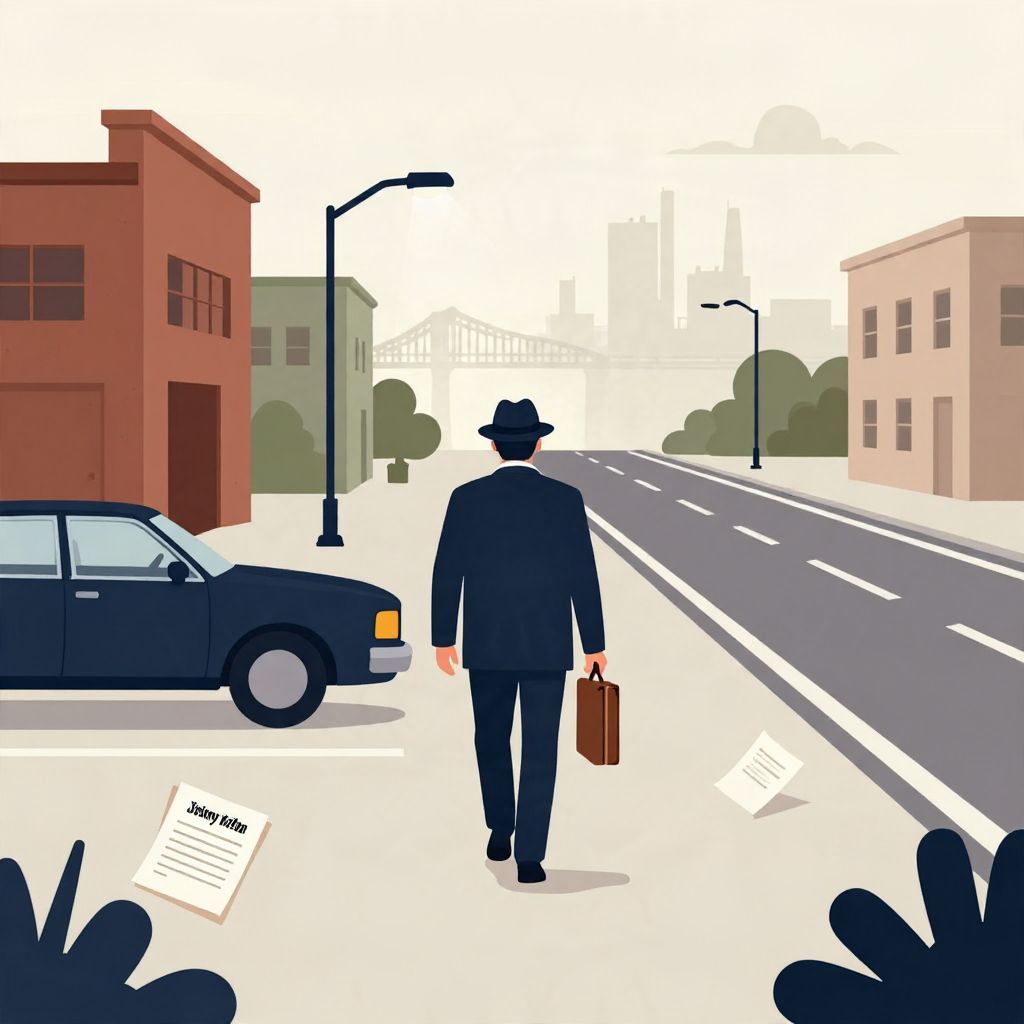
What happened to Jimmy Hoffa is one of the most famous unsolved mysteries in modern American history. Hoffa, the powerful labor leader who dominated the International Brotherhood of Teamsters, disappeared in 1975 and was never found. His case became a blend of organized labor history, organized crime, and public fascination with a vanished figure.
The historical record is clear on some points: Hoffa was last seen in suburban Detroit on July 30, 1975, and he was legally declared dead in 1982. What remains uncertain is exactly who killed him, where his body was taken, and why the disappearance has endured for decades as a symbol of power, corruption, and mystery.
What happened to Jimmy Hoffa?
Jimmy Hoffa disappeared on July 30, 1975, after going to meet two men at the Machus Red Fox restaurant in Bloomfield Township, Michigan. He was never seen again. Authorities later concluded he was likely murdered, but no body was ever recovered and no one was convicted in connection with his disappearance.
Who was Jimmy Hoffa?
James R. Hoffa was born in 1913 and rose from a working-class background to become one of the most influential labor leaders in the United States. As president of the Teamsters union from the late 1950s into the 1960s, he helped expand union power and negotiated major contracts for truck drivers and other workers.
Hoffa was also a controversial figure. Federal investigators and journalists long linked parts of Teamsters leadership to organized crime influence, and Hoffa himself was convicted in the 1960s on charges including jury tampering and fraud. He became a national symbol of both labor strength and labor corruption.
The disappearance: timeline of events
Hoffa’s disappearance unfolded quickly, and the basic chronology is well established even though the final details are not.
- July 30, 1975: Hoffa drove to the Machus Red Fox restaurant to meet Anthony Giacalone and Anthony Provenzano, two men with underworld connections.
- When the men did not appear, Hoffa made calls from the restaurant and waited outside.
- He was last reported seen in the parking lot in the late afternoon.
- By evening, he had not returned home, and concern grew immediately among family and associates.
- Despite a massive investigation, no confirmed trace of Hoffa was ever found.
The meeting itself has fueled decades of speculation. Hoffa reportedly believed he was trying to settle a dispute or resume political influence in Teamsters affairs. Instead, the appointment appears to have been a trap, though the exact planning remains contested.
Why did Jimmy Hoffa disappear?
The most widely accepted historical explanation is that Hoffa was killed because he was a threat to powerful interests. By 1975, he was trying to regain influence in the Teamsters after prison and after losing control of the union. That made him a potential rival to newer leaders and a possible liability to people who feared what he might reveal.
Possible motives
- Union power struggle: Hoffa wanted back into Teamsters leadership, which could have threatened existing leadership networks.
- Organized crime tensions: Hoffa had longstanding ties, real or alleged, to figures associated with the mob, and those ties may have turned dangerous.
- Silencing risk: Some theories suggest he knew too much about corruption and could expose damaging information.
Historians and investigators generally agree that the disappearance was not random. The uncertainty lies in the identity of the perpetrators and the exact chain of command behind the crime.
The investigation and legal aftermath
The disappearance triggered one of the most famous criminal investigations in U.S. history. The FBI interviewed hundreds of people, pursued numerous leads, and tested many theories over the years. Yet the case remained frustratingly elusive because there was no body, no definitive crime scene, and conflicting testimony from unreliable witnesses.
In 1982, Hoffa was declared legally dead, a formal recognition that allowed his estate and family matters to move forward. Still, the lack of physical evidence meant the case never reached a final judicial conclusion. Several suspects and informants emerged over time, but none produced a courtroom resolution that settled the mystery.
Why the case was so hard to solve
- No confirmed body or burial site.
- Witness accounts changed over time and often conflicted.
- Possible involvement of organized crime made cooperation difficult.
- Decades passed, allowing evidence to disappear and memories to fade.
Popular theories about what happened
Because the case remains unsolved, many theories have circulated. Some are grounded in investigative leads; others belong more to folklore than evidence. The most credible historical interpretation is that Hoffa was murdered by people connected to organized crime or union power struggles, then secretly buried or destroyed in a way that left no recoverable remains.
Common theories
- Buried in a landfill: One of the most famous theories, but never proven.
- Cremated or otherwise destroyed: A way to explain the absence of a body, though there is no firm evidence.
- Moved multiple times: Some accounts suggest his remains were relocated to avoid detection.
- Shot and hidden quickly: A simpler explanation that fits some witness claims, but details remain uncertain.
Over the years, investigators searched homes, yards, and industrial sites, but none of the searches produced conclusive proof. The persistence of these theories reflects the public’s fascination with unresolved violence at the intersection of labor politics and organized crime.
Historical impact of Hoffa’s disappearance
Hoffa’s disappearance mattered because it exposed how closely labor politics, criminal influence, and public distrust could overlap in mid-20th-century America. The Teamsters were one of the most powerful unions in the country, and Hoffa’s fall helped cement a lasting image of union corruption in the public mind.
At the same time, his story also reflects the strength and vulnerability of labor movements. Hoffa was a skilled organizer who won real gains for workers, but his methods and associations damaged the legitimacy of the institutions he led. His disappearance became a cautionary tale about power without transparency.
Long-term significance
- It remains one of America’s most famous unsolved disappearances.
- It shaped public perceptions of the Teamsters and organized labor.
- It inspired books, films, documentaries, and endless speculation.
- It continues to symbolize the blurred line between politics, unions, and criminal influence in the 20th century.
So, what is the most likely answer?
The most historically grounded answer is that Jimmy Hoffa was almost certainly murdered shortly after his disappearance on July 30, 1975, likely because of a mix of union politics and organized crime tensions. But because no body was found and no definitive conviction followed, the exact circumstances remain unresolved.
That uncertainty is why Hoffa’s fate still captures attention: it is a real historical event with a known ending in broad terms, but without the final evidence that would close the case. His disappearance endures as a reminder that even in the modern era, some historical mysteries remain stubbornly open.