
What is a Saxon? The short answer is that “Saxon” originally referred to a Germanic people of northern Europe, but over time the word came to mean different things in different places. In early medieval history, Saxons were one of the major groups that shaped what is now Germany and later England.
The term has a long and complicated history. It can describe an ancient tribal confederation, the inhabitants of medieval Saxony, or, in some later contexts, people associated with Anglo-Saxon England. Understanding the word means tracing migration, conquest, kingdom-building, and the changing use of ethnic names across centuries.
What Is a Saxon?
A Saxon was originally a member of a Germanic people from northwestern Europe, especially the region around the lower Elbe and Weser rivers. In the early Middle Ages, Saxons became important in continental Europe and in Britain, where they helped form Anglo-Saxon England. The name later survived as a regional and political identity.
Where Did the Saxons Come From?
The earliest Saxons appear in Roman-era sources as a Germanic people living near the North Sea coast, probably in parts of modern northern Germany and the Netherlands. Their exact origins are not fully clear, because ancient writers described them from the outside and tribal identities could shift over time. What is clear is that they were part of the wider Germanic world.
Roman references and early identity
Roman authors mentioned the Saxons relatively late, compared with some other Germanic groups. By the 3rd and 4th centuries CE, they were associated in Roman eyes with raiding along the North Sea and the English Channel. This does not mean they were a single unified nation in the modern sense; rather, “Saxon” likely covered a loose confederation of related communities.
The meaning of the name
The origin of the word “Saxon” is debated. Some scholars connect it to a Germanic word related to a “knife” or “short sword,” often called a seax. That explanation is plausible and widely repeated, but it is not absolutely certain. Like many tribal names, it may have developed from a weapon, a local term, or a social label that later became an ethnic identity.
The Saxons in Early Medieval Europe
By the early Middle Ages, the Saxons were one of the most significant peoples in northern Europe. They occupied a broad region in what is now northern Germany and resisted Frankish expansion for generations. Their story became closely tied to the rise of the Carolingian Empire and the Christianization of central Europe.
Conflict with the Franks
One of the defining episodes in Saxon history was the Saxon Wars, fought mainly in the late 8th and early 9th centuries under Charlemagne. These campaigns were not just military struggles; they were also about religion, authority, and incorporation into a larger Christian empire. The Franks sought to conquer and convert the Saxons, while many Saxon groups resisted fiercely.
Conversion to Christianity
Christianization was gradual and often coercive. Frankish rulers, missionaries, and local elites worked to replace older religious practices with Christianity. This process involved violence, political pressure, and the restructuring of society. Over time, Saxon lands became part of the Christian Latin West, though older customs and local identities did not disappear overnight.
How Did Saxons End Up in England?
The Saxons are also central to the history of early England. From the 5th century onward, groups identified as Saxons, along with Angles and Jutes, migrated to Britain after Roman rule weakened. These migrations were complex and probably involved warriors, settlers, families, and local alliances rather than a single mass movement.
From migration to settlement
After Roman administration in Britain collapsed in the early 5th century, power became fragmented. In that context, Germanic-speaking settlers established new kingdoms in parts of southern and eastern Britain. Over time, these communities helped form what historians call Anglo-Saxon England. The term “Anglo-Saxon” is a later label used to describe the fusion of Angles and Saxons in Britain.
What did “Saxon” mean in England?
In England, “Saxon” became both an ethnic and political term. It could refer to a people, a language, or a set of kingdoms such as Wessex, Essex, and Sussex—names that preserve the memory of Saxon settlement. Yet the reality was more mixed than the labels suggest, because Britain’s population included Romano-British communities, migrants, and local elites who adapted to new political arrangements.
Different Kinds of Saxons in History
Because the word changed over time, it is helpful to distinguish between several historical meanings. Not every “Saxon” in history was the same kind of Saxon, and later uses of the term sometimes obscured earlier realities.
- Continental Saxons: the early Germanic people in northern Europe.
- Anglo-Saxons: the Germanic-speaking peoples and kingdoms in early medieval England.
- Medieval Saxons: inhabitants of the region of Saxony within the Holy Roman Empire.
- Modern regional Saxons: people associated with the German state or cultural region of Saxony.
Not a single unbroken ethnic line
It is tempting to imagine the Saxons as a fixed people moving unchanged through history, but that would be misleading. Ethnic names in early medieval Europe often shifted as groups merged, split, conquered, and adopted new identities. “Saxon” was real as a historical label, but its meaning changed with politics, language, and geography.
The Saxons and the Holy Roman Empire
After the early medieval period, Saxon identity became tied to the political structures of central Europe, especially the Holy Roman Empire. Saxony was one of the empire’s important regions, and Saxon rulers played major roles in imperial politics. The name continued, but it no longer meant exactly the same thing as in the age of migration.
From tribe to territory
As medieval states developed, tribal names often became territorial names. Saxony gradually referred less to a roaming people and more to a specific political region. This shift was common in medieval Europe, where older ethnic labels survived even as their original social meaning changed.
Why this matters historically
The Saxons mattered because they were part of the formation of two major historical worlds: medieval Germany and medieval England. In Germany, they were absorbed into imperial structures and helped shape regional power. In England, they were among the peoples whose settlement and state-building laid the foundations of the English kingdom.
Language, Culture, and Everyday Life
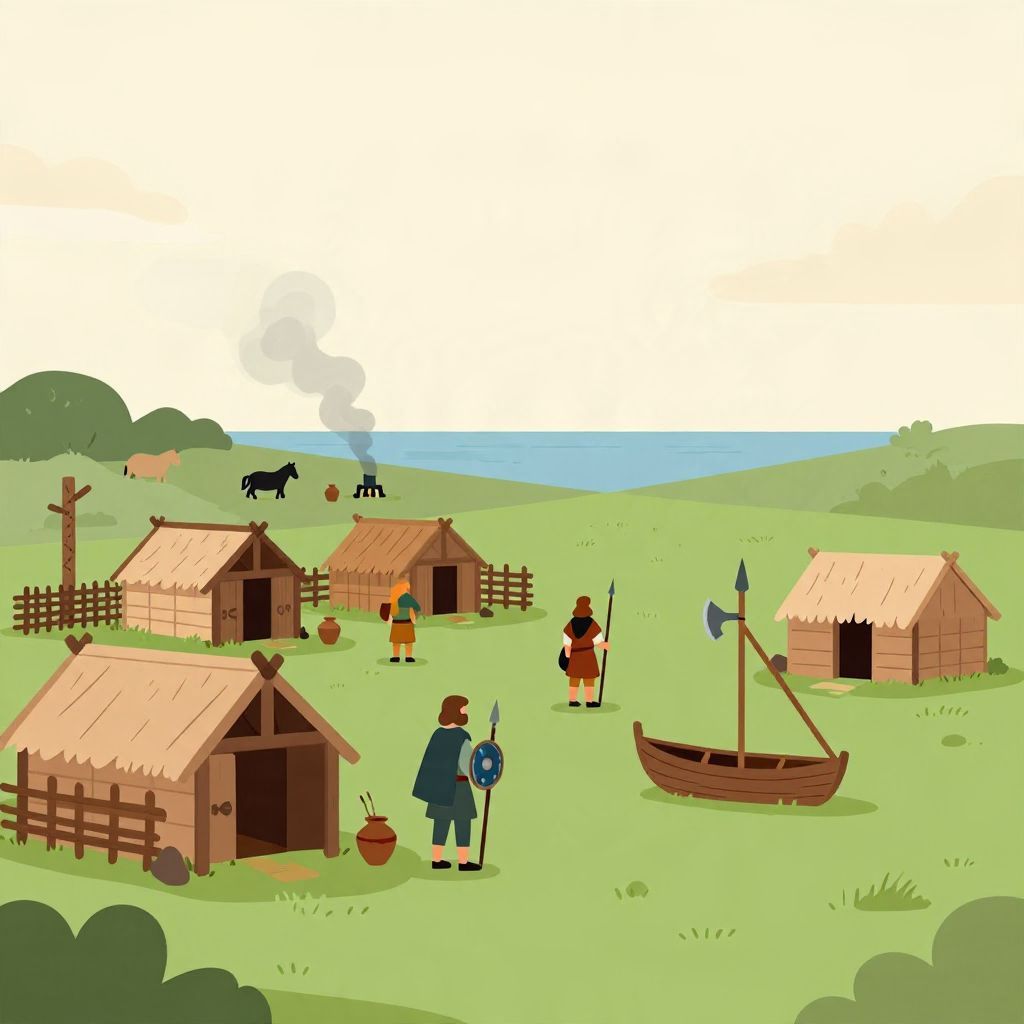
Saxon life was shaped by farming, local lordship, warfare, kinship, and religion. Their material culture was typical of early medieval northern Europe: wooden buildings, fields worked by small communities, and social ranks ranging from free people to dependents and elites. Archaeology and later texts together help reconstruct this world, though much remains uncertain.
Language and the English connection
The Saxons spoke a Germanic language closely related to Old English and other early West Germanic dialects. In England, their speech contributed heavily to the development of the English language. Many basic English words and grammatical structures have roots in this early Germanic linguistic world.
Religion before and after conversion
Before Christianization, Saxons practiced forms of Germanic pagan religion, though details are limited because most descriptions come from Christian writers. After conversion, churches, monasteries, and bishops became central institutions. This religious change was not only spiritual; it also supported new systems of law, literacy, and royal authority.
Common Misunderstandings About Saxons
Because the word has been used in several different ways, it is easy to misunderstand what “Saxon” means. A few clarifications help avoid confusion.
- Saxon does not always mean English. The Saxons were originally continental Europeans, not native Britons.
- Saxon does not mean one fixed race. It was a changing historical identity, not a modern biological category.
- Saxon and Anglo-Saxon are related but not identical. Anglo-Saxon refers specifically to the peoples and culture of early medieval England.
- Modern Saxony is not the same as ancient Saxon territory. The names overlap, but the geography shifted over time.
Why the Saxons Still Matter
The Saxons matter because their history connects migration, conquest, state formation, and cultural change across Europe. They helped shape the political map of early medieval Germany, influenced the making of England, and left a lasting mark on language and identity. Their story shows how names can endure even as the peoples behind them change.
So, what is a Saxon? Historically, it is a Germanic people from northern Europe whose name later came to describe regions, kingdoms, and cultural traditions in both Germany and England. If you want to place the Saxons in a wider medieval context, it also helps to explore the Holy Roman Empire and Prussia, two later states shaped by the long history of central Europe.