
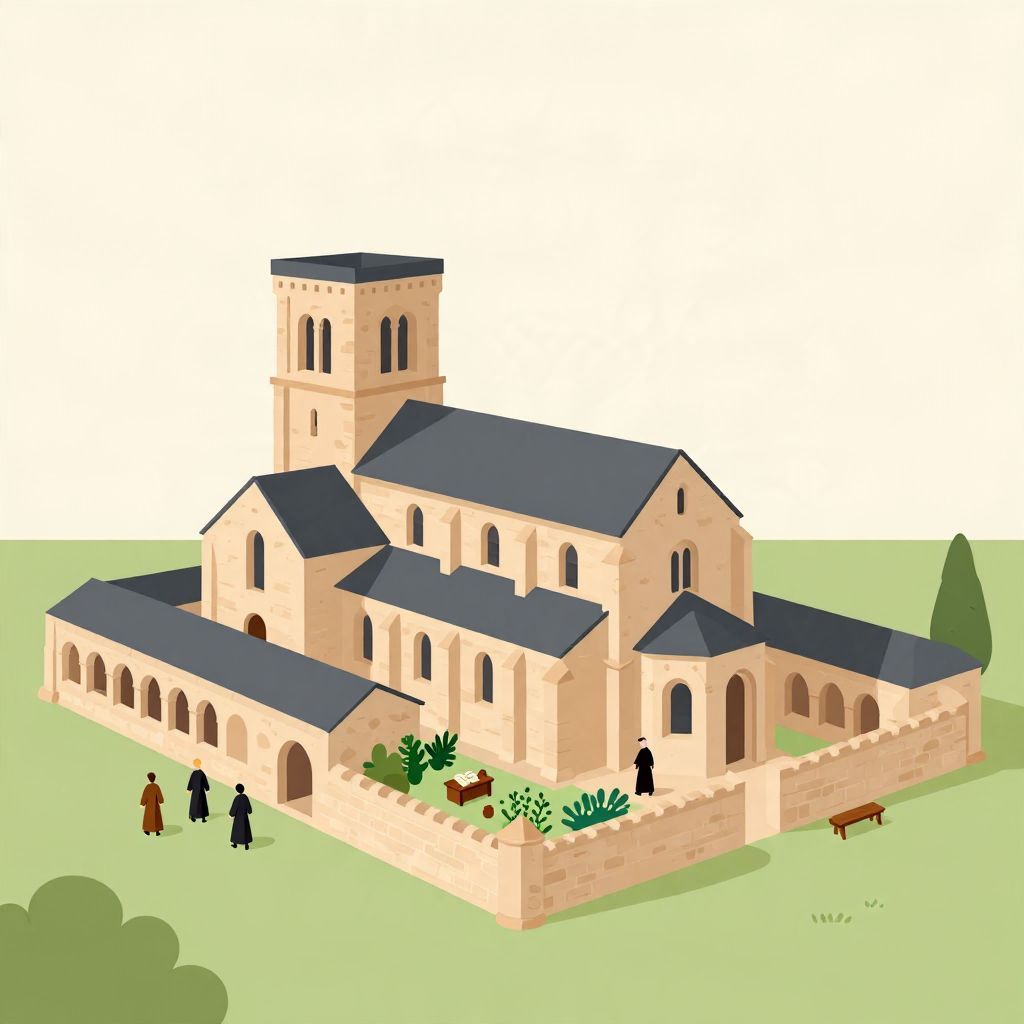
What is an abbey? In history, an abbey is a religious house centered on a community of monks or nuns, usually led by an abbot or abbess. The word can also refer to the church and buildings attached to that community, many of which became major landmarks in medieval Europe.
Abbeys were not just places of prayer. They were centers of learning, landholding, charity, agriculture, manuscript production, and political influence, especially from the early Middle Ages onward.
What Is an Abbey?
An abbey is a monastery or convent governed by an abbot or abbess. In medieval usage, the term often meant both the religious community and the complex of buildings where it lived and worshipped. Most abbeys belonged to Christian traditions, especially in Western Europe, and many were founded between the 6th and 15th centuries.
The Origins of Abbeys
Abbeys developed from the broader rise of Christian monasticism. Monastic life began in the late Roman world, first in Egypt and the eastern Mediterranean, where hermits and communities sought a life devoted to prayer, discipline, and separation from ordinary society. By the 4th and 5th centuries, organized communities of monks were becoming more common.
From monastic communities to formal institutions
The abbey as a distinct institution emerged when monasteries became larger, more stable, and more formally governed. A key influence was the Rule of Saint Benedict, written in the early 6th century. Benedictine communities spread across Europe and helped standardize monastic life, making the abbey one of the most important religious institutions of the medieval West.
Why the term matters
The word “abbey” comes from the Latin abbatia, meaning the office or place of an abbot. That is why the title of the superior is central to the definition. Not every monastery was an abbey; some were smaller houses or priories that answered to a larger religious authority.
How Abbeys Worked in Medieval Society
Abbeys were self-contained communities with a clear hierarchy, daily routines, and economic responsibilities. Monks and nuns followed rules of prayer, work, study, and communal living. In many regions, abbeys also owned farmland, mills, fisheries, and villages, making them powerful local institutions as well as spiritual ones.
Daily life inside an abbey
- Prayer: Regular worship structured the day, often around the canonical hours.
- Work: Members labored in gardens, kitchens, workshops, or fields.
- Study: Many abbeys preserved books and educated novices or clergy.
- Hospitality: Some offered food, shelter, and care to travelers and the poor.
This balance of prayer and labor gave abbeys a practical role in medieval life. They were not isolated in the modern sense; many were deeply woven into local economies and networks of patronage.
Abbeys as centers of learning
One of the most important historical functions of abbeys was the preservation and copying of texts. In the early and central Middle Ages, monastic scriptoria produced religious works, legal texts, chronicles, and classical literature. Not every abbey was a great intellectual center, but many helped transmit knowledge across centuries of instability and political change.
Abbeys in the Middle Ages
The high Middle Ages, roughly the 11th to 13th centuries, were the great age of abbey building in much of Europe. Reform movements encouraged stricter observance, and new orders such as the Cistercians emphasized simplicity, discipline, and agricultural development. Abbeys multiplied across France, England, the Holy Roman Empire, and beyond.
Architecture and layout
Abbey architecture varied by order and period, but many followed a recognizable plan. A typical abbey complex could include a church, cloister, chapter house, dormitory, refectory, guesthouse, kitchens, workshops, gardens, and burial grounds. Large abbey churches were often built in Romanesque or Gothic styles and became some of the most impressive structures in medieval Europe.
The cloister, a covered courtyard often used for walking and reflection, became one of the most recognizable features of abbey life. It symbolized enclosure, order, and separation from the outside world.
Women’s abbeys
Abbeys were not exclusively male. Nunneries led by abbesses were important across medieval Europe, especially among aristocratic families who endowed women’s religious houses. Female abbeys could be influential centers of devotion, education, and land management, though they often faced tighter restrictions and fewer resources than male houses.
What Was the Difference Between an Abbey, Priory, and Monastery?
These terms are related but not identical. A monastery is the broadest term for a religious community living under vows. A priory is usually a smaller house led by a prior or prioress. An abbey is a monastery with an abbot or abbess as superior, often with greater autonomy, wealth, or status.
Simple distinctions
- Monastery: General term for a religious community.
- Abbey: A monastery headed by an abbot or abbess.
- Priory: Often smaller or dependent, headed by a prior or prioress.
In practice, medieval usage could be inconsistent. Some houses changed status over time, and local custom sometimes mattered as much as formal definition.
Abbeys and Power
Abbeys were spiritual institutions, but they also held land, collected rents, and influenced politics. Kings and nobles founded abbeys to display piety, secure prayers for their souls, and strengthen their authority. In return, abbeys could become centers of dynastic memory, burial, and royal patronage.
Patronage and prestige
Founding an abbey was often an act of status as well as devotion. Noble families endowed religious houses with land and money, expecting spiritual benefits and social prestige. Some abbeys became burial places for rulers or elite families, linking the institution to memory and legitimacy.
Conflict and reform
Because abbeys controlled wealth and land, they sometimes became targets in political struggles. Reformers criticized lax discipline, while rulers tried to influence appointments or seize revenues. Over time, many abbeys were reformed, absorbed into larger orders, or damaged by war and political upheaval.
What Happened to Abbeys Over Time?
Abbeys changed dramatically from the medieval period into the early modern era. Some were dissolved during religious reforms, especially in the 16th century. In England, for example, the Dissolution of the Monasteries under Henry VIII in the 1530s closed many religious houses and transferred their property to the Crown or private owners.
Survival, ruin, and reuse
After dissolution or decline, abbey buildings were often dismantled, converted into parish churches, manor houses, or estates, or left as ruins. In some places, abbey churches survived while domestic buildings disappeared. In others, the entire complex was destroyed. What remains today often reflects centuries of reuse, neglect, and restoration.
Abbeys in the modern imagination
Today, abbeys are often admired as historic monuments. Their ruins evoke medieval religion, architecture, and power, while functioning abbeys still exist in many Christian traditions. Modern visitors may see them as picturesque heritage sites, but historically they were much more than scenic buildings: they were working communities with spiritual, economic, and social roles.
Why Abbeys Matter in History
Abbeys help historians understand how religion shaped medieval society. They show how prayer, labor, landownership, education, and politics could be combined in one institution. They also reveal the long continuity of Christian monastic life from late antiquity through the Middle Ages and into the modern era.
In short, an abbey was a governed religious community, usually led by an abbot or abbess, that often became a major center of worship, learning, and power. If you want to explore related historic buildings and sacred sites, you may also enjoy what is a chateau and what is the Acropolis.