
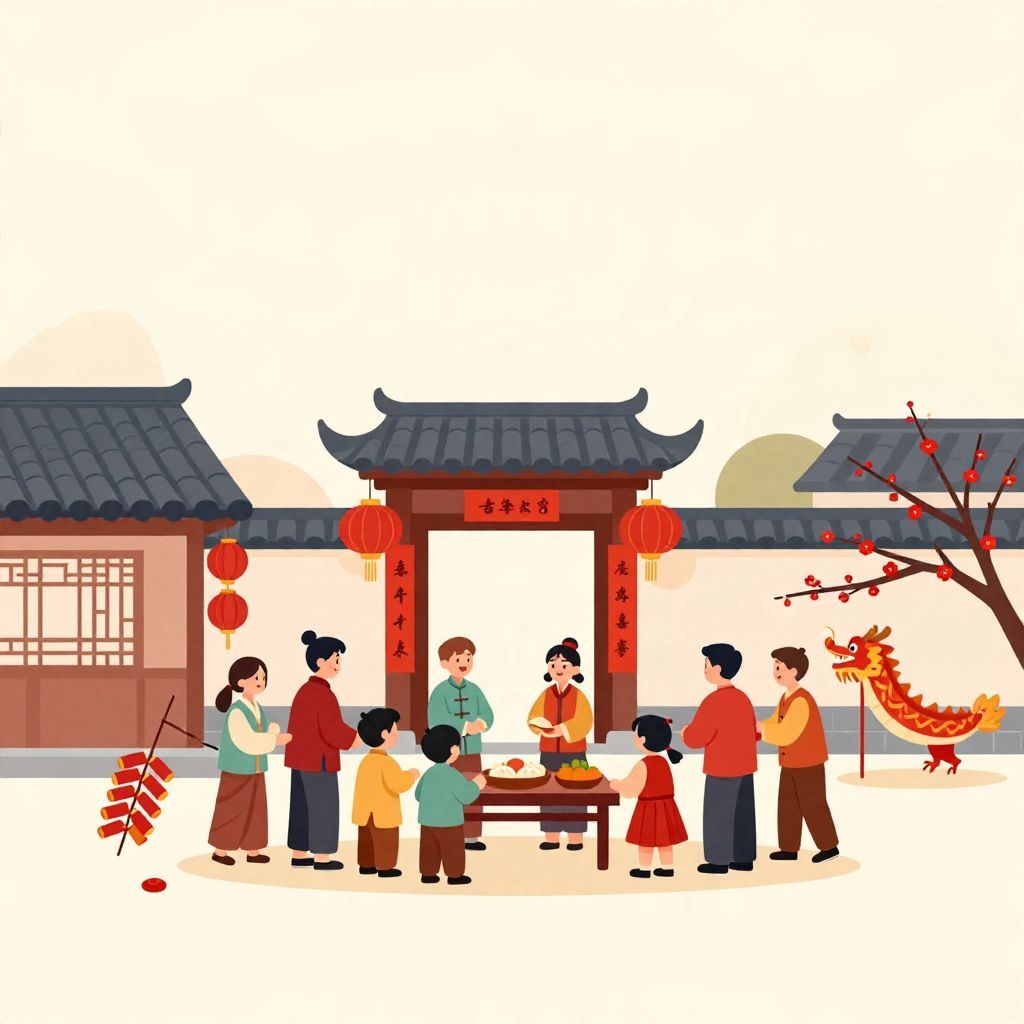
What is an important holiday in China? The most important and widely celebrated holiday is Chinese New Year, also called the Spring Festival (Chūnjié). It marks the start of the lunar new year and is the central family holiday in Chinese culture, with roots stretching back to ancient agrarian rituals and seasonal observances.
Its meaning goes far beyond a single day. Chinese New Year is a time for reunion, ancestor respect, house cleaning, special foods, fireworks, and public travel on a massive scale as millions return home to celebrate with family.
What Is An Important Holiday In China?
Chinese New Year, or the Spring Festival, is the most important holiday in China. Celebrated according to the traditional lunisolar calendar, it usually falls between late January and mid-February. Historically tied to farming cycles, ancestor worship, and the hope for renewal, it remains the most significant holiday for family reunion and cultural identity in China today.
Why Chinese New Year Became China’s Most Important Holiday
Chinese New Year became central because it brought together several deep traditions at once: the end of winter, the beginning of a new agricultural cycle, and the renewal of family and social bonds. In a society shaped for centuries by farming, seasonal change mattered enormously. The holiday also absorbed older religious and folk practices, making it both practical and symbolic.
From ancient seasonal rites to a national festival
The holiday has very old roots, though its exact beginnings are difficult to pin down to a single date. In ancient China, communities held rites to honor heaven, earth, ancestors, and the coming of spring. Over time, these observances were tied to the lunar calendar and to imperial state rituals. By the Han dynasty (206 BCE–220 CE), the New Year period had become an established part of Chinese life.
Why family reunion matters so much
Chinese New Year is not only about the calendar. It is the annual moment when families reunite, honor elders, and remember ancestors. In traditional Chinese society, family continuity was a major value, and the New Year reinforced it. Even in modern China, the holiday remains the most important time for returning home, which is why travel during this season is often called the world’s largest annual human migration.
Origins and Historical Development of the Spring Festival
The holiday’s history reflects China’s long cultural development rather than one single founding event. It grew from seasonal rites, local customs, and imperial calendars into a shared national celebration. Different regions developed their own traditions, but the core themes of renewal, luck, and family remained remarkably stable.
Ancient agricultural roots
Before modern calendars, farming communities depended on close attention to the seasons. The end of winter was a critical turning point: seeds would soon be planted, stores had to be managed, and households prepared for a new cycle of work. New Year customs likely emerged from these practical needs, then gained religious and symbolic meaning.
Imperial China and calendrical order
Chinese dynasties used calendars as tools of government as well as astronomy. The state calendar helped define festivals, farming schedules, and ritual life. By standardizing the calendar, imperial authorities gave the New Year broader cultural authority. This helped turn a local seasonal observance into a holiday recognized across much of China.
Legends and folklore around the holiday
Popular stories explain some New Year customs, especially the use of red decorations and loud noise. One famous legend tells of a monster called Nian that feared red color, fire, and loud sounds. These stories are part of folklore rather than confirmed history, but they help explain why people hang red couplets, set off firecrackers, and decorate homes so prominently.
How Chinese New Year Is Celebrated
Modern celebrations vary by region, but the holiday usually includes several common practices. These customs combine practical preparation, symbolic cleansing, and festive display. They also show how Chinese New Year links the home, the community, and the wider social world.
Cleaning and preparing the home
Before the New Year arrives, families clean their homes carefully. This is more than housekeeping: it symbolizes sweeping away bad luck and making room for good fortune. After the first day of the new year, some people avoid sweeping immediately, so as not to “sweep out” luck that has just arrived.
Decorations in red and gold
Red is the dominant color of the festival. Door couplets, lanterns, paper cuttings, and banners are displayed to express joy and invite prosperity. Gold is also common because it suggests wealth and good fortune. These visual traditions make the holiday instantly recognizable across China and in Chinese communities abroad.
Food and symbolic meanings
Food is central to the celebration. Dishes differ by region, but many carry symbolic meanings. Dumplings are associated with wealth because their shape resembles old Chinese money; fish is often served because the word for fish sounds like “surplus” in Chinese; and long noodles may represent longevity. These meanings are cultural traditions, not historical facts in the strict sense, but they shape how the holiday is experienced.
Fireworks, firecrackers, and public celebration
Fireworks and firecrackers have long been used to mark the holiday. Historically, they were believed to drive away evil spirits and bring energy to the new year. In many places today, safety rules and urban regulations have changed how they are used, but the association between loud celebration and New Year remains strong.
The Lunar Calendar and Why the Date Changes
Chinese New Year does not fall on the same Gregorian date each year because it follows the traditional lunisolar calendar. This calendar tracks both the moon’s phases and the solar year. As a result, the holiday usually occurs sometime between January 21 and February 20.
What “lunar” really means
The term “lunar new year” is common, but the Chinese calendar is more precisely lunisolar. It uses lunar months while adjusting for the solar year. This system has deep historical roots and was important for agriculture, ritual timing, and imperial administration.
Why the festival lasts for days
The New Year season is not limited to one evening. Traditionally, it includes a period of preparation before the holiday and a sequence of observances afterward. In modern China, the official holiday often lasts several days, but the broader festive period can extend much longer in family and community life.
Historical Changes in Modern China
Chinese New Year has not remained unchanged. It has adapted to political change, urbanization, migration, and modern work schedules. Yet it has survived because it answers a deep social need: the desire for reunion, continuity, and renewal.
Republican and early modern reforms
In the early 20th century, some reformers and officials tried to modernize China’s calendar and public holidays. The Gregorian calendar became more important in government and business, but the Spring Festival remained deeply rooted in popular life. Even when official systems changed, family customs continued to make the holiday powerful.
Under the People’s Republic of China
After 1949, the state promoted modern labor and public holiday structures, yet Chinese New Year remained culturally dominant. In different periods, public expressions of traditional religion and folk practice were discouraged or restricted, but the holiday itself endured. In recent decades, many customs have revived openly, reflecting both cultural continuity and renewed interest in tradition.
Urban life and the migration of millions
Today, the holiday is shaped by modern mobility. Workers often travel long distances to return to hometowns, creating intense pressure on railways, highways, and airports. This annual movement shows how an ancient festival still organizes modern life. The reunion dinner on New Year’s Eve remains one of the most meaningful moments of the year for many families.
Other Important Holidays in China
Although Chinese New Year is the most important holiday, it is not the only major festival in China’s long cultural calendar. Other holidays reflect history, literature, religion, and local custom. Together, they show the richness of Chinese festive life.
Qingming Festival
Qingming, or Tomb-Sweeping Day, is an important time for honoring ancestors and tending graves. It usually falls in early April. The holiday reflects the strong historical importance of filial piety and family remembrance in Chinese culture.
Dragon Boat Festival
The Dragon Boat Festival is associated with river traditions, protective customs, and the memory of the poet Qu Yuan, though the historical details of the festival’s origin are mixed with legend. It is known for dragon boat races and sticky rice dumplings called zongzi.
Mid-Autumn Festival
The Mid-Autumn Festival is another major celebration, centered on the full moon, family gathering, and mooncakes. Like Chinese New Year, it emphasizes reunion, but it is tied more closely to autumn harvest imagery and lunar symbolism.
Why Chinese New Year Still Matters Today
Chinese New Year remains important because it connects past and present. It preserves ancient ideas about seasonal change, family duty, and good fortune while adapting to modern life. Few holidays in the world combine so much history, symbolism, and social importance in one celebration.
For anyone asking what is an important holiday in China, the clearest answer is Chinese New Year, or the Spring Festival. It is the country’s most significant traditional holiday, and its history reveals how Chinese culture has linked agriculture, family, ritual, and renewal for centuries. For more on related festive traditions, see Do Chinese Celebrate Christmas? and, for a comparison with another widely recognized celebration, Do Mexicans Celebrate Cinco de Mayo?