
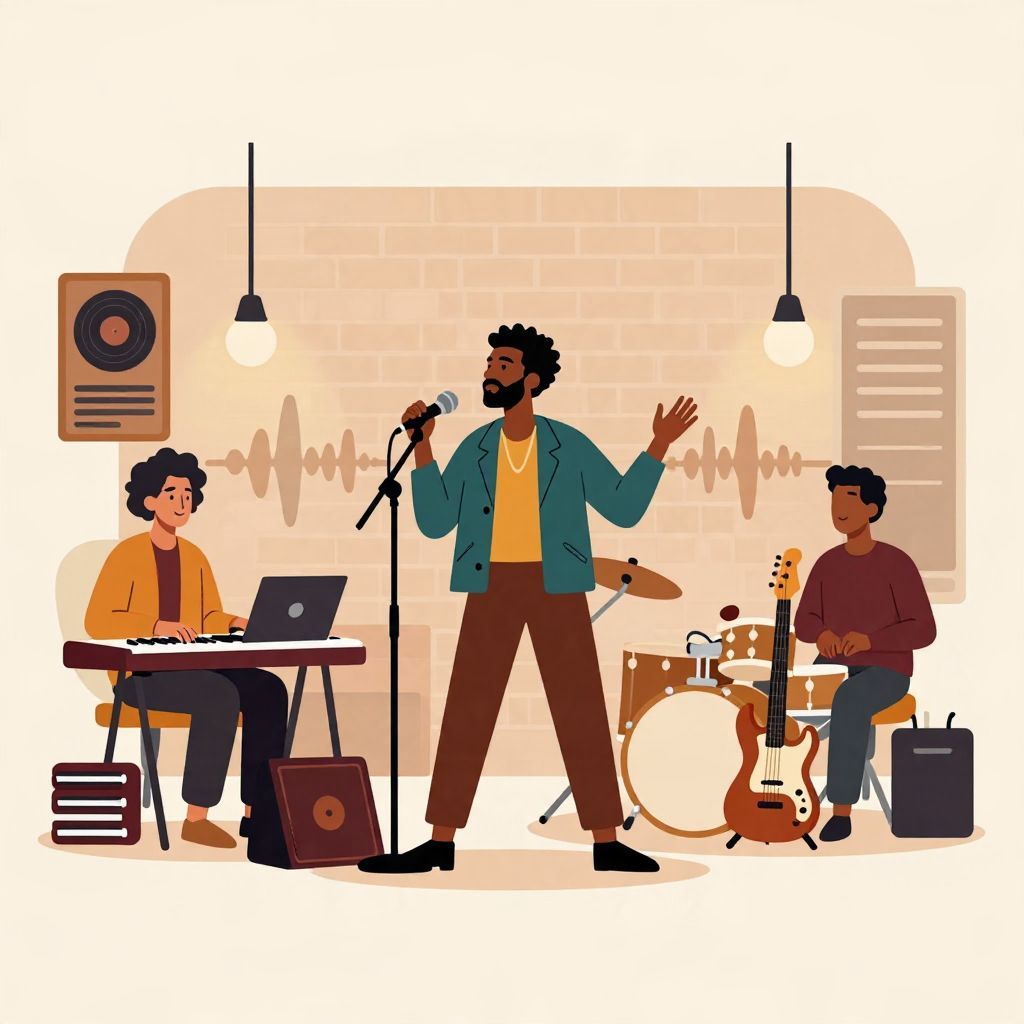
What is neo soul? In historical terms, it is a late-20th-century popular music genre that grew out of African American musical traditions, especially soul, R&B, funk, jazz, and hip-hop. It emerged as artists and producers sought a sound that felt rooted in classic soul but more personal, experimental, and contemporary.
The style became especially visible in the 1990s, though its roots reach back to earlier Black musical innovation. Neo soul is both a musical label and a cultural moment: it describes a sound, but also a generation of artists reshaping Black popular music after the commercial peak of 1970s soul and the rise of polished 1980s R&B.
What is neo soul?
Neo soul is a genre of contemporary music that blends classic soul aesthetics with modern production, jazz harmony, hip-hop rhythms, and introspective songwriting. It is usually associated with the 1990s and 2000s, when artists revived the emotional depth of earlier soul while moving away from heavily synthesized mainstream R&B.
Where did neo soul come from?
Neo soul did not appear from nowhere. It developed from a long history of African American musical forms, especially gospel, blues, rhythm and blues, and soul. By the late 1980s and early 1990s, many artists were drawing on older sounds while reacting against the increasingly commercial and electronically polished direction of mainstream pop and R&B.
The musical roots before the label
The foundations of neo soul lie in the soul music of the 1960s and 1970s, which itself grew from Black church music, blues, and secular rhythm and blues. Artists such as Marvin Gaye, Curtis Mayfield, Stevie Wonder, Aretha Franklin, and Donny Hathaway helped define a style that emphasized expressive vocals, social commentary, and musical sophistication. Neo soul later revisited those qualities, but through a newer cultural lens.
Jazz also mattered. Many neo soul musicians used extended chords, loose grooves, and live instrumentation that echoed jazz improvisation. Hip-hop mattered too, not only because of its beats and sampling culture, but because it encouraged a more self-aware, street-level, and sometimes politically conscious mode of expression.
Why the genre emerged in the 1990s
By the 1980s, mainstream R&B had become more dependent on drum machines, glossy production, and crossover appeal. Some listeners and musicians felt that emotional nuance and organic musicianship were being pushed aside. Neo soul answered that shift by returning to warmer instrumentation, live bands, and lyrics that often focused on identity, love, spirituality, and everyday life.
The genre also reflected broader cultural changes. The 1990s saw a growing interest in Black cultural authenticity, Afrocentric style, and alternative approaches to commercial music. Neo soul fit this environment because it sounded familiar and fresh at the same time: retro in spirit, but modern in attitude.
How did neo soul get its name?
The term neo soul is generally linked to the late 1990s and is often associated with music executive Kedar Massenburg, who used it to describe a new wave of artists. The label helped distinguish these musicians from mainstream R&B acts, though many artists later resisted being boxed into a single category.
The name itself is useful but imperfect. “Neo” means new, while “soul” points back to the older genre. That combination captures the style’s historical position: it was not a rejection of soul music, but a reinterpretation of it for a new era. Still, not every artist grouped under the label embraced it, and scholars and critics sometimes use the term differently.
Who were the key neo soul artists?
Neo soul is strongly associated with a group of artists who rose to prominence in the 1990s and early 2000s. The movement was never a formal school with a manifesto, but several performers became central to its identity because of their sound, influence, and critical reception.
Major figures often linked to neo soul
- D’Angelo — often seen as one of the defining neo soul artists, especially for his albums Brown Sugar (1995) and Voodoo (2000).
- Erykah Badu — known for blending soul, jazz, funk, and spiritual themes, especially on Baduizm (1997).
- Maxwell — associated with smooth, elegant arrangements and a strong connection to classic soul traditions.
- Lauryn Hill — her solo work, especially The Miseducation of Lauryn Hill (1998), is often connected to the movement for its fusion of soul, hip-hop, and personal storytelling.
- Jill Scott — recognized for poetic lyrics and a rich, conversational vocal style.
- India.Arie — known for acoustic textures, self-affirming lyrics, and a gentle, soulful approach.
- Bilal, Common, Musiq Soulchild, and others — artists who expanded the sound in different directions.
These artists were not identical in style. Some leaned closer to jazz, others to hip-hop, and others to traditional soul balladry. What connected them was a shared emphasis on musical depth, emotional honesty, and a less manufactured feel than much mainstream pop of the period.
What does neo soul sound like?
Neo soul is usually recognizable by its warm, layered instrumentation and its relaxed but intricate rhythms. The genre often uses live drums, electric bass, Rhodes-style keyboards, guitar, and background harmonies. Vocals may be smooth, conversational, improvised, or richly ornamented, depending on the artist.
Common musical features
- Influence from 1970s soul and funk
- Jazz-influenced chords and harmonies
- Hip-hop-inspired beats and phrasing
- Organic or analog-sounding production
- Lyrics centered on love, selfhood, spirituality, and social reflection
Some neo soul recordings are polished and intimate; others are loose and experimental. The genre’s flexibility is part of its history. It was never one fixed formula, but a broad style shaped by artists who wanted more room for individuality than commercial categories usually allowed.
How is neo soul different from soul and R&B?
Neo soul is related to soul and R&B, but it is not simply the same thing with a new name. Traditional soul music emerged in the 1950s and 1960s from gospel and rhythm and blues. Contemporary R&B, especially in the 1980s and 1990s, often emphasized sleek production and crossover pop appeal. Neo soul drew from both, while adding a more self-conscious, sometimes retro, artistic sensibility.
One way to think about the difference is this: soul was a foundational historical genre; R&B became a broad commercial category; neo soul was a later artistic revival and reinvention that looked backward and forward at once. It was less about replacing earlier forms than about reinterpreting them for a new audience.
What was the cultural significance of neo soul?
Neo soul mattered because it expanded the possibilities of mainstream Black music at a time when many artists were being pushed toward commercial uniformity. It offered a space for experimentation, lyrical depth, and a stronger connection to older Black musical traditions. It also helped make room for more varied representations of Black identity in popular culture.
Identity, style, and politics
Many neo soul artists presented themselves through Afrocentric fashion, natural hairstyles, and themes of self-definition. That visual and lyrical language resonated with audiences looking for alternatives to narrow beauty standards and mass-market pop images. The movement was not uniformly political, but it often carried an undercurrent of cultural affirmation.
At the same time, neo soul was not one ideology. Some artists focused on romance and introspection; others addressed social issues more directly. The genre’s historical importance lies partly in that openness. It allowed Black musicians to be experimental without abandoning accessibility.
What happened to neo soul after its peak?
Neo soul did not disappear, but its peak as a clearly named movement was strongest in the late 1990s and early 2000s. Over time, its ideas were absorbed into other styles, including alternative R&B, progressive soul, and contemporary pop. The boundaries became less distinct as younger artists borrowed freely from its vocabulary.
That absorption is a sign of success rather than failure. Genres often fade as labels but survive as influences. Neo soul helped normalize more intimate songwriting, richer harmonies, and genre blending in mainstream Black music. Later artists could draw on those elements without necessarily calling their work neo soul.
Why does neo soul still matter today?
Neo soul remains important because it changed expectations about what modern soul-based music could sound like. It showed that commercial success and artistic complexity did not have to be opposites. It also helped preserve and renew interest in the musical traditions that shaped it, especially classic soul, jazz, and funk.
Historically, neo soul is best understood as a bridge: it connected the legacy of 20th-century Black music to a more eclectic 21st-century soundscape. Its artists did not invent soul, but they reimagined its possibilities for a new generation.
In short, neo soul is a late-20th-century musical movement rooted in African American soul traditions, shaped by jazz and hip-hop, and defined by its warm sound, emotional honesty, and creative independence. If you want to explore related cultural history, you may also enjoy articles on soul music and the history of R&B.