
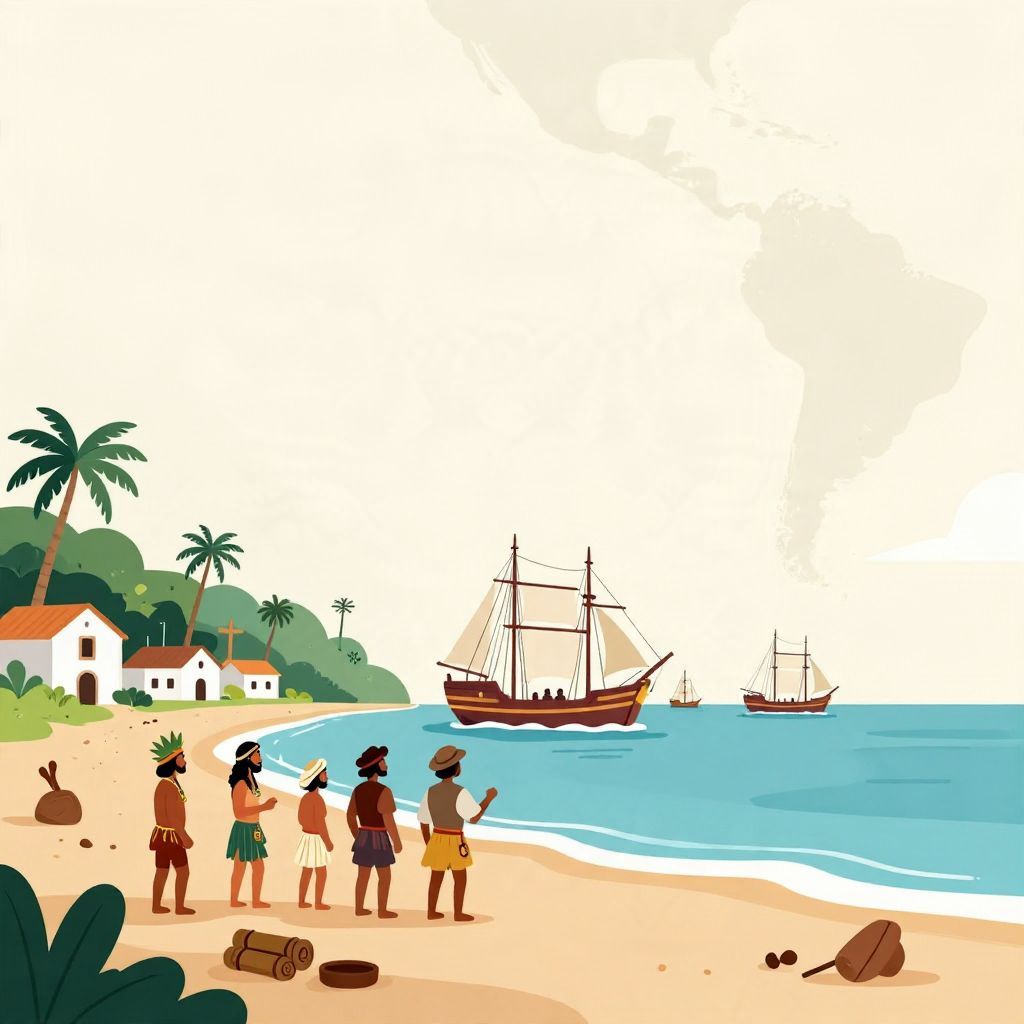
Why do Brazilians speak Portuguese? The short answer is that Brazil was colonized by Portugal beginning in the early 1500s, and Portuguese became the language of administration, settlement, trade, religion, and eventually national life. Over centuries, it spread far beyond the small number of European settlers and replaced many Indigenous languages in public use.
That outcome was not automatic. It resulted from conquest, migration, missionary activity, slavery, colonial policy, and later nation-building after independence in 1822. Brazil’s Portuguese is therefore a historical legacy of empire, but it also reflects the country’s own diverse social history.
Why Do Brazilians Speak Portuguese?
Brazilians speak Portuguese because Brazil was a Portuguese colony from 1500 until 1822. Portuguese settlers, officials, missionaries, and enslaved Africans used the language in government and commerce, and the colonial state gradually made it dominant. After independence, Brazil kept Portuguese as the national language, which helped unify a vast and diverse country.
How Portuguese Arrived in Brazil
Portuguese reached Brazil with the arrival of the Portuguese expedition led by Pedro Álvares Cabral in 1500. Portugal claimed the territory soon afterward, but early colonization was slow. For decades, the Portuguese presence was concentrated along the coast, where sugar plantations, forts, ports, and missionary settlements began to take shape.
The first century of colonization
In the 1500s and 1600s, Portugal did not immediately populate Brazil with large numbers of settlers. Instead, the colony developed through a mix of coastal settlements, plantation agriculture, and trade. Even so, the Portuguese crown, colonial officials, and church institutions established Portuguese as the language of power from the beginning.
This mattered because language often follows institutions. The people who controlled law, taxation, land grants, and religious education used Portuguese in writing and administration. Over time, that gave the language a strong advantage over local languages in formal settings.
Was Portuguese the Only Language Spoken in Colonial Brazil?
No. Colonial Brazil was multilingual for centuries. Hundreds of Indigenous languages were spoken before European contact, and many survived well into the colonial period. In addition, enslaved Africans brought to Brazil spoke many different languages, creating a highly diverse linguistic environment. Portuguese became dominant gradually, not instantly.
Indigenous languages and the role of general languages
In many regions, especially in the early colonial period, communication often depended on Indigenous languages or mixed contact languages. One important example is Língua Geral, a broad term for Tupian-based lingua francas used in parts of Brazil by Indigenous peoples, settlers, and missionaries. In some areas, these languages were more widely spoken than Portuguese for a time.
Jesuit missionaries also learned Indigenous languages to evangelize and teach. This sometimes slowed the spread of Portuguese in daily life, even while the colonial state continued to favor it. The result was a long period of linguistic overlap rather than a simple replacement.
Why Did Portuguese Eventually Become Dominant?
Portuguese became dominant because the colonial system rewarded it. It was the language of the crown, of legal documents, of official correspondence, and increasingly of urban life and commerce. As Brazil’s population grew through European migration, African enslavement, and internal expansion, Portuguese became the shared language across different communities.
Colonial administration and social power
Language spread through practical necessity. If someone wanted to deal with courts, land ownership, taxation, or church authorities, Portuguese was the language that mattered most. Over generations, families adopted it for social mobility, especially in towns and plantation regions where interaction between groups was common.
Portuguese also benefited from the fact that Brazil was ruled by a single European colonial power rather than divided among several competing empires. That gave the language a clearer institutional path to dominance than in some other parts of the Americas.
The impact of slavery
Enslaved Africans and their descendants were central to colonial Brazil’s economy, especially in sugar production, mining, and later coffee cultivation. Because people from many different linguistic backgrounds were forced together, Portuguese often became the common language used across plantations, ports, and urban centers. This was a tragic and coercive process, not a voluntary cultural exchange.
At the same time, African languages, religions, rhythms, and words influenced Brazilian Portuguese. So while Portuguese became the dominant language, it was never identical to the language of Portugal. Brazilian speech developed its own accents, vocabulary, and expressions through contact with Indigenous and African peoples.
The Pombaline Reforms and the Push for Portuguese
A major turning point came in the 18th century under the Marquis of Pombal, the powerful Portuguese minister. In 1757, colonial authorities moved to restrict the use of Indigenous mission languages in favor of Portuguese. This policy was part of a broader effort to strengthen royal control and reduce the influence of the Jesuits.
These reforms did not instantly erase other languages, but they signaled a stronger state-backed push toward Portuguese as the language of empire. In historical terms, this was one of the clearest moments when the colonial government tried to make Portuguese the standard language of Brazil.
Why Didn’t Brazil Become Spanish-Speaking Like Most of South America?
Brazil speaks Portuguese because of the diplomatic division of the Americas between Spain and Portugal in the late 15th century. The Treaty of Tordesillas in 1494 drew an imaginary line that gave Portugal claims to lands in eastern South America, including what became Brazil. That is why Brazil developed under Portuguese rule while neighboring territories came under Spain.
Geography and imperial expansion
The treaty was only part of the story. Borders in colonial South America were often vague and changed over time. Portuguese settlers later expanded far beyond the original treaty line, especially through inland exploration, frontier settlement, and the movement of bandeirantes. Still, the basic colonial division between Portuguese Brazil and Spanish America remained decisive for language history.
Because Brazil was governed from Lisbon rather than Madrid, its institutions, schools, and legal culture developed in Portuguese. That colonial inheritance is the main reason Brazil differs linguistically from most of the rest of Latin America.
How Independence Preserved Portuguese
When Brazil became independent in 1822, it did not change languages. Instead, the new empire kept Portuguese because it was already the language of government, law, commerce, and elite education. Choosing another language would have been impractical in a country of continental scale and regional diversity.
National unity and state-building
After independence, Portuguese served as a unifying language across a huge territory with many local differences. Brazil’s leaders could have promoted regional languages or Indigenous languages, but the political reality favored continuity. Portuguese was already the language most people in positions of power used, and it remained the language of administration and schooling.
Over the 19th and 20th centuries, mass education, urbanization, and national institutions strengthened Portuguese even further. This did not eliminate linguistic diversity, but it made Portuguese the common national language for most Brazilians.
Did Brazilian Portuguese Stay the Same as European Portuguese?
No. Brazilian Portuguese developed its own pronunciation, vocabulary, and grammar patterns over time. It remained mutually intelligible with European Portuguese, but the two varieties are distinct. Differences reflect Brazil’s different history, including Indigenous and African influence, regional settlement patterns, and later immigration from Europe and Asia.
Examples of historical language change
- Pronunciation: Brazilian Portuguese often has softer consonants and different vowel patterns than European Portuguese.
- Vocabulary: Many everyday words in Brazil come from Indigenous languages, African languages, or later immigrant communities.
- Usage: Brazilian Portuguese developed its own forms of address, verb use, and informal speech patterns.
These differences are not signs of a separate language in the historical sense, but they do show that Portuguese in Brazil evolved in its own social environment.
What Happened to Indigenous Languages in Brazil?
Many Indigenous languages declined sharply after colonization because of disease, warfare, forced displacement, missionization, and assimilation policies. Some languages disappeared, while others survived and are still spoken today. The spread of Portuguese often came at a devastating cost to Indigenous communities and cultural continuity.
It is important not to describe the rise of Portuguese as a simple or neutral spread of communication. It was tied to colonial domination. In many places, Indigenous people were pressured to abandon their languages in schools, missions, and settlements, though resistance and survival persisted.
Why Portuguese Remains So Strong in Brazil Today
Portuguese remains Brazil’s dominant language because it has been reinforced for more than five centuries by state institutions, urban life, national media, and education. Brazil is also one of the largest Portuguese-speaking countries in the world, so the language has become deeply tied to national identity.
Modern Brazil still contains rich linguistic diversity, including Indigenous languages, immigrant languages, and regional speech forms. But Portuguese continues to function as the shared national language because history made it central to public life long before the modern republic emerged.
Conclusion
Brazilians speak Portuguese because Brazil was colonized by Portugal, and Portuguese became the language of power, settlement, religion, trade, and state-building. It spread gradually through colonial institutions and social change, then remained dominant after independence. The language is a lasting trace of empire, but also a distinctly Brazilian historical creation shaped by Indigenous and African influence.
For related reading, see why Brazil speaks Portuguese and whether Portugal is in Spain.