
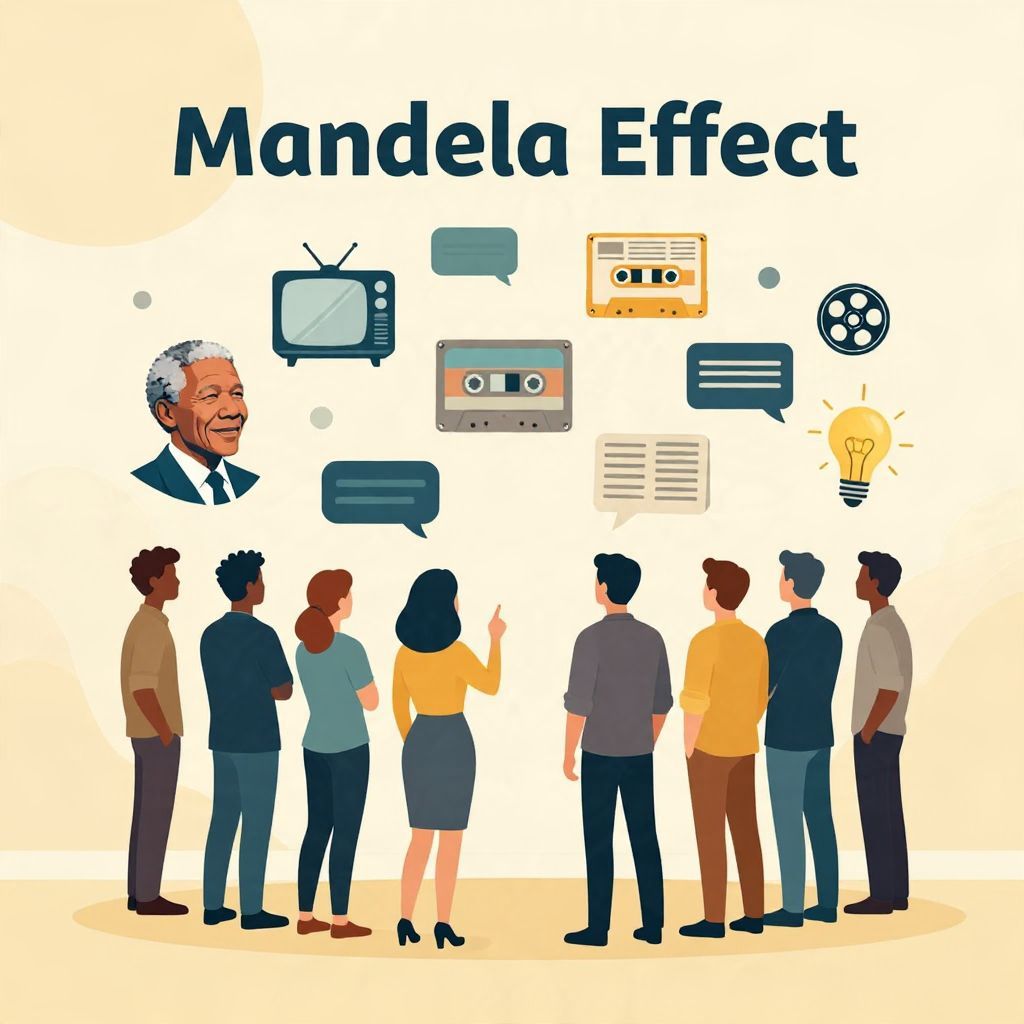
The question “Why is it called the Mandela Effect?” points to a surprisingly modern history of memory, media, and the internet. The term does not come from an ancient legend or a formal psychological theory. It emerged from people noticing that large groups seemed to remember the same event incorrectly, and then trying to explain why.
Its name comes from Nelson Mandela, the South African anti-apartheid leader, because many people believed for years that he had died in prison in the 1980s. In reality, Mandela was released in 1990, became president of South Africa in 1994, and died in 2013. That shared false memory helped give the phenomenon its popular label.
Why is it called the Mandela Effect?
It is called the Mandela Effect because paranormal researcher Fiona Broome coined the term after discovering that many people, including herself, incorrectly remembered Nelson Mandela dying in prison in the 1980s. The phrase stuck because it described a striking example of collective false memory, and the name was memorable enough to spread widely online.
How the term began
The phrase is usually traced to the late 2000s, when Fiona Broome described her own mistaken memory of Mandela’s death and found that others shared it. She later used “Mandela Effect” to label this kind of group memory error. The term spread through blogs, forums, and social media, where people began applying it to other disputed memories.
Why Mandela was the example that caught on
Nelson Mandela was already a globally known figure, so the mistake was easy to recognize and discuss. His life also spanned major political events that were heavily covered in the media, which made the false memory especially striking. A famous public figure, a clear real timeline, and a shared incorrect recollection made the example easy to name and remember.
The historical background: who Nelson Mandela was
To understand the name, it helps to know the real history. Nelson Mandela was imprisoned in 1964 during South Africa’s apartheid era, a system of racial segregation and white minority rule. He was released on 11 February 1990 after 27 years in prison, helped negotiate the end of apartheid, and became South Africa’s first Black president in 1994. He died on 5 December 2013.
Why some people remembered him dying earlier
The false memory may have been reinforced by Mandela’s long imprisonment, years of international activism, and the fact that many anti-apartheid figures and political prisoners did die or were killed during the struggle. Over time, people can blend related events, misplace dates, or absorb mistaken references from conversation, media, or fiction. The result is a memory that feels real even when it is historically wrong.
What the Mandela Effect means in historical terms
In history, the Mandela Effect is best understood as a modern example of collective false memory, not as proof that history itself changed. Historians and psychologists generally treat it as evidence of how memory works: people reconstruct the past from fragments, expectations, and repeated stories rather than replaying it exactly. The term describes a social pattern, not a supernatural event.
False memory versus historical revision
It is important to distinguish the Mandela Effect from legitimate historical revision. Historians revise interpretations when new evidence appears. The Mandela Effect, by contrast, refers to people sincerely remembering something that did not happen or remembering it differently from the documented record. It is about memory error, not about newly discovered facts overturning history.
Why the idea spread so quickly online
The internet gave the Mandela Effect a much larger audience than it would have had in an earlier era. Online communities allowed people to compare memories instantly, discover that others shared the same mistake, and build a sense of mystery around the pattern. The term spread because it offered a simple explanation for a common human experience: being certain about something that turns out to be wrong.
Internet culture and shared confidence
Digital culture encouraged rapid repetition of claims, screenshots, memes, and lists of “things you remember wrong.” That environment made the Mandela Effect especially visible. In earlier centuries, people certainly had false memories, but they were less likely to compare them at scale. The internet turned an ordinary cognitive issue into a named cultural phenomenon.
Common examples people associate with the Mandela Effect
Many examples circulate online, though not all are equally well documented. Some are simply cases of misremembering, while others involve confusion caused by branding, spelling, or media repetition. The point is not that these examples prove anything mysterious, but that they show how easily memory can be altered by expectation and familiarity.
- “Berenstain Bears” remembered as “Berenstein Bears”
- “Luke, I am your father” remembered from Star Wars, though the line is actually “No, I am your father”
- Fruit of the Loom logo remembered by some as including a cornucopia
- “Febreze” sometimes remembered as “Febreeze”
- “Looney Toons” remembered instead of Looney Tunes
These examples became popular because they are easy to test against the historical record. They also show a pattern: people often remember names, spellings, or phrases in ways that seem more regular or familiar than the original version.
What causes the Mandela Effect?
Most historians would say the Mandela Effect is caused by normal features of human memory, not by a single extraordinary force. Memory is selective, impressionistic, and shaped by repetition. People often remember the gist of a thing better than the exact detail, and once a mistaken version becomes familiar, it can feel more convincing than the original.
Likely psychological causes
- Source confusion: mixing up where a memory came from
- Pattern completion: the mind filling in missing details with what seems likely
- Social reinforcement: hearing the same mistaken version from others
- Schema bias: remembering things in a way that fits expectations
- Repetition: repeated errors becoming more familiar than the truth
These are not unique to the Mandela Effect; they are ordinary features of memory studied in psychology. The historical significance of the term is that it gave these familiar errors a public name and a shared cultural frame.
Why the Mandela Effect feels so convincing
One reason the Mandela Effect attracts attention is that people often trust vivid memory more than documentary evidence. A memory can feel emotionally certain even when it is factually wrong. When many people share the same mistake, that confidence grows stronger, because agreement feels like confirmation. In reality, shared error can be just as powerful as shared truth.
The role of nostalgia and media familiarity
Many Mandela Effect examples involve childhood media, famous brands, or widely quoted films. These are the kinds of things people encounter repeatedly over years, often without paying close attention to exact wording or spelling. Later, when they try to recall them, the mind supplies a version that seems natural. That is why the effect often appears strongest around familiar cultural artifacts.
Is there a historical explanation beyond memory science?
Historically, the Mandela Effect belongs to the age of mass media and digital communication. It reflects how modern people encounter the past through television, advertising, film, and the internet, not just through books or archives. The term itself is a product of the early 21st century, when online communities made it easy to compare memories and turn confusion into a shared topic of discussion.
Why historians treat it cautiously
Historians rely on evidence, chronology, and source criticism. For that reason, they are careful about claims that collective memory proves some hidden change in reality. The more grounded historical interpretation is simpler: people misremember, communities reinforce errors, and the internet amplifies the pattern. The Mandela Effect is historically important because it shows how quickly a modern myth can form around a real memory problem.
Why the name matters
The phrase “Mandela Effect” matters because it transformed a private mistake into a public concept. Before the term became popular, people might have dismissed such errors as individual confusion. Afterward, they had a label for the experience of shared misremembering. The name also ensured that Nelson Mandela’s history became linked, however unintentionally, to a broader discussion of memory and belief.
In the end, it is called the Mandela Effect because a false memory about Nelson Mandela’s death became the most famous example of a larger phenomenon: collective misremembering. The term is a modern cultural label, not a historical mystery about altered timelines. If you want more context on the era when online discussion helped popularize such ideas, you may also be interested in what happened in 2010 and what happened in 2013.