
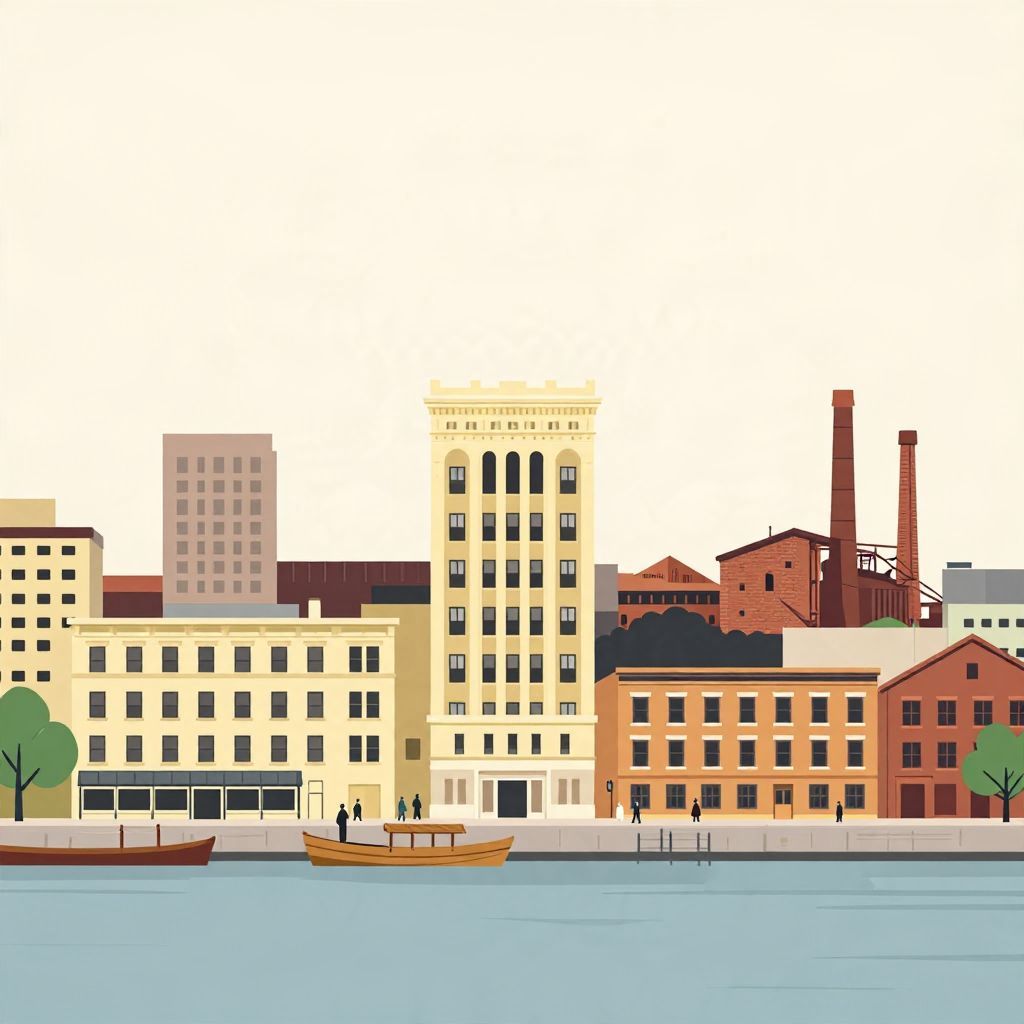
Why is Milwaukee called Cream City? The short answer is that the nickname comes from the pale, creamy-yellow color of many of the city’s 19th-century buildings, which were made from local clay rich in lime and other minerals. The name has nothing to do with dairy products, though Wisconsin’s later milk-and-cheese reputation helped make the nickname memorable.
The story is rooted in Milwaukee’s geology, its rapid urban growth, and the rise of brickmaking in the mid-1800s. Over time, “Cream City” became one of the city’s most recognizable historical labels.
Why Is Milwaukee Called Cream City?
Milwaukee is called Cream City because many early buildings were built with a distinctive light-colored brick made from local clay deposits. When fired, the clay produced a soft buff or cream hue instead of the usual red brick. The nickname began in the 19th century and referred to the city’s architecture, not to milk, cream, or dairy farming.
The origin of the Cream City nickname
The nickname emerged in the 1800s, when Milwaukee was growing quickly from a lakefront settlement into a major Great Lakes city. Builders used locally made cream-colored bricks so widely that the city’s streetscapes took on a pale, warm tone. Residents and visitors began calling Milwaukee the “Cream City” because of that visual effect.
This was not a formal government title or an official branding campaign. It was a descriptive nickname that caught on because it matched what people could actually see. In an era before standardized city logos and tourism slogans, architecture often shaped a city’s identity.
Why the bricks were cream-colored
The color came from the composition of the clay found in the Milwaukee area. Local deposits contained minerals that, when fired in kilns, produced a light buff or yellowish brick rather than the deep red common in many other regions. The exact shade could vary depending on the clay source, kiln temperature, and manufacturing process.
That made Milwaukee brick distinctive enough to become a local trademark. It was practical, too: using nearby clay reduced transportation costs and supported a growing building industry.
How Milwaukee’s geology shaped its identity
Milwaukee’s nickname is a reminder that urban history often begins with geology. The city sits in a region where glacial activity helped shape the landscape and left behind clay deposits suitable for brickmaking. As the city expanded in the mid-19th century, those materials became part of the built environment.
Brickmaking was especially important in a fast-growing city because wood construction was common but increasingly less desirable in dense urban areas. Brick offered durability, fire resistance, and a sense of permanence. Milwaukee’s cream-colored brick gave those practical advantages an unexpected aesthetic effect.
From settlement to city
Milwaukee’s rapid growth in the 1830s, 1840s, and 1850s created strong demand for housing, commercial buildings, churches, and civic structures. As population increased, local industries developed to serve construction needs. Brickworks became part of the city’s industrial economy, and their products shaped the look of downtown and surrounding neighborhoods.
By the mid-19th century, the city was no longer just a frontier outpost. It was becoming an urban center with a distinct appearance, and the cream-colored brick helped define that appearance.
Was the nickname connected to dairy?
No. The nickname “Cream City” did not originally refer to milk, butter, or Wisconsin’s dairy industry. That connection is a later association, and it can be misleading if taken literally. Milwaukee’s dairy fame developed later and on a broader state level, while the city nickname came from architecture.
That said, the dairy connection likely helped the nickname endure in popular memory. Because Wisconsin became strongly associated with dairy production, “Cream City” sounded fitting to outsiders even though the historical origin was architectural. This is a good example of how later cultural associations can blur the meaning of an older nickname.
When did people start using “Cream City”?
The nickname is generally associated with the 19th century, especially the decades when Milwaukee was expanding rapidly. Exact first-use dates are difficult to pin down with certainty because nicknames often spread informally before they appear consistently in print. What is clear is that the term was in use by the late 1800s and was tied to the city’s light-colored brick buildings.
Because historical nicknames rarely have a single documented “birth moment,” scholars and local historians usually treat the term as a gradual product of common usage rather than a coined phrase with one inventor.
Why the name stuck
The nickname lasted because it was vivid and distinctive. Many American cities have brick architecture, but not many had so many buildings made from a pale, locally sourced brick. The color was unusual enough to become memorable, and the phrase “Cream City” was easy to repeat.
It also worked on multiple levels. It described the city’s built environment, sounded elegant, and later blended neatly with Wisconsin’s dairy image. That combination helped the nickname survive long after the brickmaking industry itself declined.
What is Cream City brick?
Cream City brick is the name commonly given to the pale brick produced from Milwaukee-area clay in the 19th century. It became one of the city’s most important building materials and is now closely associated with historic preservation in Milwaukee.
These bricks were used in homes, warehouses, churches, factories, and public buildings. Many surviving examples still give parts of Milwaukee their historic character. Because the brick weathers and ages differently from red brick, it has become an important clue for understanding the city’s architectural past.
Common uses of Cream City brick
- Commercial storefronts and warehouses
- Churches and civic buildings
- Row houses and residential blocks
- Industrial structures and mills
In many cases, the brick was prized not only for its color but also for its availability and relative affordability. Local production made it a practical choice during an era of intense construction.
How the nickname reflects Milwaukee’s 19th-century growth
Milwaukee’s rise in the 1800s was shaped by immigration, trade, manufacturing, and access to Lake Michigan. As the city expanded, it needed durable materials and a recognizable urban form. Cream-colored brick became part of that form, linking the city’s physical growth to its identity.
The nickname also reflects a broader pattern in American urban history: cities often become known for the materials they build with. Stone, brick, steel, and glass can all become part of a city’s public image. In Milwaukee’s case, the cream brick became a visual shorthand for the city itself.
Architecture as identity
Before modern advertising, a city’s identity often came from what visitors saw on arrival. Milwaukee’s light-colored masonry gave it a look that was different from cities dominated by red brick or wood. That visual difference was enough to inspire a lasting nickname.
Today, the term “Cream City” is both historical and cultural. It evokes the city’s 19th-century development, its industrial past, and its architectural heritage.
Misconceptions about Cream City
Because the word “cream” has strong associations with dairy, many people assume the nickname refers to milk production. That is understandable, but historically inaccurate. The name predates many modern marketing uses of Wisconsin’s dairy image and comes from the color of the city’s buildings.
Another misconception is that all Milwaukee buildings were made of this brick. In reality, the cream-colored brick was prominent but not universal. Still, it was common enough to shape the city’s reputation and leave a lasting imprint on its historic neighborhoods.
The lasting significance of the nickname
“Cream City” remains important because it connects Milwaukee’s present to its past. The nickname is more than a curiosity; it points to the city’s industrial development, local geology, and architectural heritage. It also helps explain why preservation of older brick buildings matters to the city’s historical identity.
For historians and residents alike, the phrase is a reminder that place names often preserve older landscapes and industries long after those industries have changed. Milwaukee’s nickname survived because it captured something real and visible about the city’s 19th-century growth.
So, Milwaukee is called Cream City because of the pale, cream-colored brick made from local clay that shaped its 19th-century architecture. The nickname is historical, not dairy-related, and it remains one of the clearest examples of how a city’s materials can become part of its identity.