
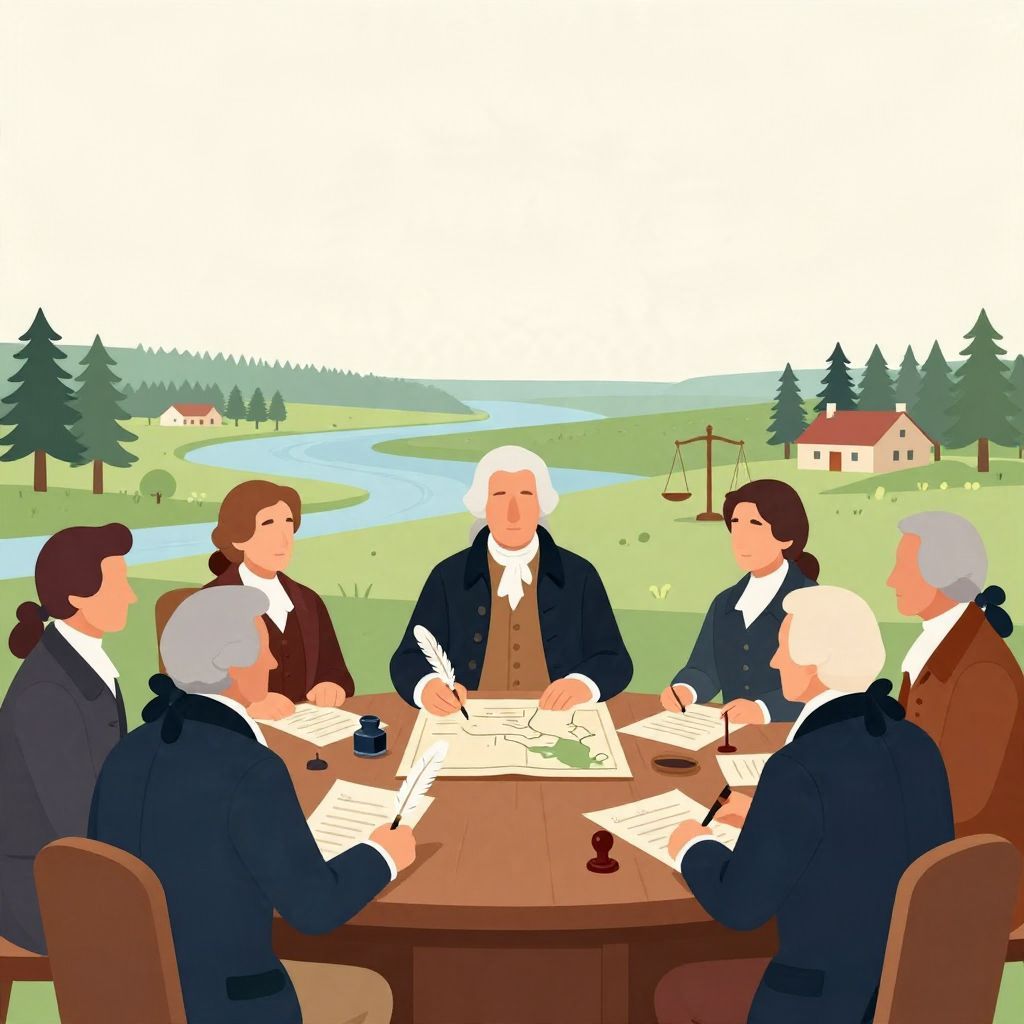
The Northwest Ordinance was one of the most important laws in early American history. Passed by the Confederation Congress in 1787, it created a framework for governing the Northwest Territory, the vast region north of the Ohio River and east of the Mississippi River that later became part of the American Midwest.
It mattered because it set rules for territorial government, protected some civil liberties, banned slavery in the territory, and outlined how new states could join the Union. In that sense, it helped shape both westward expansion and the federal system of the United States.
What Is The Northwest Ordinance?
The Northwest Ordinance was a 1787 law that organized the Northwest Territory and established a process for turning western lands into equal states. It is remembered for creating a stable path for expansion, encouraging public education, and prohibiting slavery in the territory north of the Ohio River.
Why Was the Northwest Ordinance Created?
After the American Revolution, the United States faced a major problem: it had western lands but no clear system for governing them. Under the Articles of Confederation, Congress was weak, and states disagreed over land claims, settlement, and authority in the West. The Northwest Ordinance was designed to solve that problem by creating order where confusion and competing claims had existed.
The ordinance was also a practical answer to pressure from settlers moving into the Ohio Valley and from land companies and states that wanted control of the region. Congress needed a way to manage settlement, attract migrants, and prevent conflict with Native peoples, though in practice the law did not protect Native sovereignty in any meaningful way.
The Land It Governed
The Northwest Territory covered land that would later become Ohio, Indiana, Illinois, Michigan, Wisconsin, and part of Minnesota. At the time, this was one of the most valuable and contested regions in North America. It had been claimed by several states under colonial charters, but the federal government sought to make it a national domain rather than a collection of state possessions.
How the Northwest Ordinance Worked
The ordinance established a step-by-step system for territorial development. First, Congress would appoint officials to govern the territory. As population grew, residents could elect a territorial legislature. Once a territory reached a certain population, it could draft a state constitution and apply for admission to the Union on equal footing with the original states.
This was a major innovation. Instead of treating new lands as colonies, the ordinance treated them as future states. That principle became one of the most lasting features of American expansion.
The Main Provisions
- Created a territorial government for the Northwest Territory
- Guaranteed certain civil rights, including trial by jury and protections for property
- Encouraged public education
- Declared that religion, morality, and knowledge were important to good government
- Prohibited slavery in the territory
- Outlined a process for admitting new states into the Union
When Was It Passed?
The Northwest Ordinance was passed on July 13, 1787. That date is significant because it came during the same summer as the Constitutional Convention in Philadelphia, when delegates were also debating the future structure of the national government. The ordinance was not part of the Constitution, but it became one of the most influential laws of the early republic.
Its timing is important. The United States was still operating under the Articles of Confederation, and the federal government had limited power. Yet Congress was still able to create a durable policy for territorial expansion. The ordinance showed that even a weak central government could shape the nation’s future in lasting ways.
Who Wrote the Northwest Ordinance?
The ordinance was drafted by members of the Confederation Congress, with major influence from Manasseh Cutler, a New England clergyman, lawyer, and land speculator. Cutler helped shape the final language while also representing the interests of the Ohio Company, which sought to acquire land in the Northwest Territory.
It is important to note that the ordinance was not the work of a single founder. It emerged from negotiations among congressional leaders, land interests, and reform-minded delegates who wanted a more orderly and morally grounded western policy. Like many laws of the early republic, it reflected both idealism and self-interest.
Why Was the Slavery Ban So Important?
One of the ordinance’s most famous provisions banned slavery in the Northwest Territory. This made the region free soil, at least in legal terms, and set a precedent for the expansion of slavery as a national political issue. The ban did not end all forms of unfree labor in practice, and enforcement varied, but the law clearly marked the territory as different from slaveholding regions to the south.
Scholars often stress that the slavery clause mattered for two reasons. First, it limited slavery’s geographic spread. Second, it linked western development to a vision of small farms, free labor, and republican citizenship. That vision would later shape debates over the balance between free and slave states.
Limits and Contradictions
Although the ordinance prohibited slavery, it did not create equality for everyone. Women had no political rights, Native Americans were not treated as sovereign equals, and racial discrimination remained deeply embedded in American society. The ordinance was progressive in some respects, but it was still a product of its time.
What Did It Mean for Native Peoples?
The Northwest Ordinance was written as if the land were available for American settlement, but the region was already home to many Native nations, including the Shawnee, Miami, Delaware, Wyandot, and others. The ordinance did not recognize Native political control over the territory. Instead, it became part of a broader U.S. expansion that led to conflict, land cessions, and war.
In practice, the ordinance helped legitimize American settlement in lands that Native peoples did not freely surrender. This is one reason historians view it as both foundational and deeply consequential. It helped build the United States, but it also contributed to the dispossession of Indigenous communities.
How Did It Shape American Government?
The Northwest Ordinance became a model for later territorial governance. Its system of territorial administration and state admission influenced how the United States expanded across the continent. The idea that new states would enter the Union with the same rights as the original states became a core principle of American federalism.
It also helped define the relationship between national authority and local self-government. Congress controlled the territory at first, but the ordinance promised increasing self-rule as population grew. That balance between central oversight and local democracy became a recurring feature of U.S. expansion policy.
Key Long-Term Effects
- Provided a blueprint for admitting new states
- Strengthened the idea of equal statehood
- Helped establish the Midwest as free territory
- Influenced later debates over slavery and sectional balance
- Set an early precedent for federal management of western lands
How Is the Northwest Ordinance Remembered Today?
Historians usually regard the Northwest Ordinance as one of the most important achievements of the Confederation era. It is often praised for its practical design and for helping the United States expand without permanently treating new regions as colonies. At the same time, modern scholarship also emphasizes its limitations, especially its role in Native dispossession and its uneven application of rights.
Its legacy is therefore mixed but powerful. The ordinance helped create the political geography of the modern Midwest, shaped the nation’s territorial system, and contributed to the sectional conflict over slavery that would eventually lead to the Civil War. Few early American laws had consequences so wide-ranging.
What Is the Northwest Ordinance in Simple Terms?
In simple terms, the Northwest Ordinance was the law that told the United States how to govern its western lands and turn them into states. It gave the federal government a plan for expansion, promised certain liberties to settlers, banned slavery in the Northwest Territory, and helped define how the country would grow.
That is why the ordinance remains central to American history. It was not just a land law; it was a blueprint for nation-building. For readers interested in the early republic, it also connects closely to the broader constitutional era and the weaknesses of the Articles of Confederation, as well as to the question of why the Articles of Confederation were replaced with the Constitution and to a fuller discussion of what the Northwest Ordinance was.