
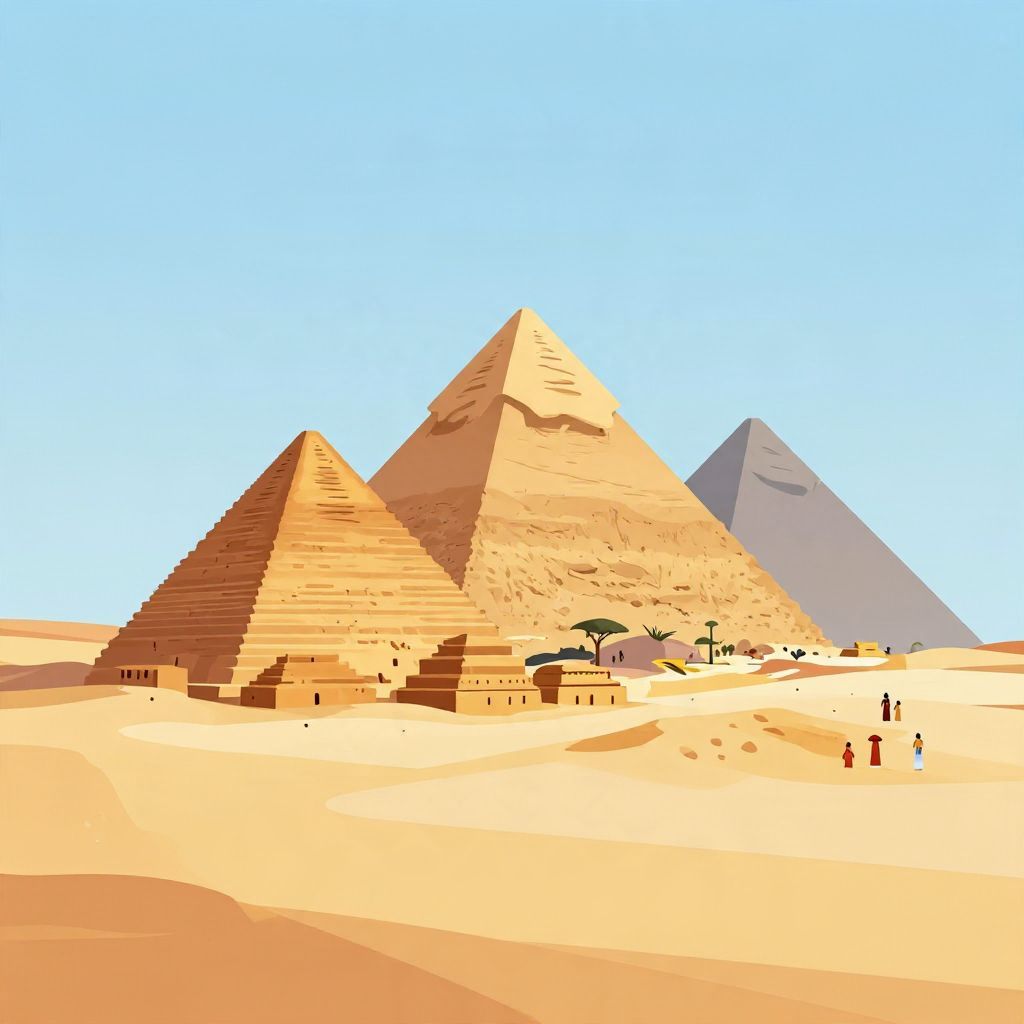
The question “which country has the most pyramids?” usually has a surprising answer: Sudan, not Egypt. While Egypt’s pyramids are the most famous and attract the most attention, Sudan contains a larger number of ancient pyramids, especially in the region once ruled by the Kingdom of Kush.
That answer depends on how “pyramid” is defined and counted, but in standard historical discussions Sudan is widely recognized as the country with the most pyramids. These monuments reflect a long African tradition of royal burial, religious belief, and political power that developed over many centuries along the Nile.
Which country has the most pyramids?
Sudan has the most pyramids in the world. Archaeologists generally count well over 200 pyramids in Sudan, compared with roughly 100 in Egypt. Most Sudanese pyramids were built by the rulers of the ancient Kingdom of Kush, especially at sites such as El-Kurru, Nuri, and Meroë. They are smaller and steeper than the Egyptian pyramids, but historically they are just as significant.
Why Sudan has more pyramids than Egypt
The difference comes from history, not just architecture. Egypt is famous for the earliest and largest pyramid tradition, but Sudan’s pyramid-building continued later and for a longer period in one specific royal culture. The Kushite kings and queens adopted pyramids as elite tombs and built them in large numbers over centuries, especially between about the 8th century BCE and the 4th century CE.
The Kingdom of Kush and its burial tradition
The Kingdom of Kush rose to power in Nubia, south of Egypt, and eventually became a major regional state. Kushite rulers borrowed and adapted many elements of Egyptian religion and kingship, including pyramid burials. Unlike the Old Kingdom pyramids of Giza, which were massive royal monuments of the 3rd millennium BCE, Kushite pyramids were usually narrower, steeper, and designed as tomb markers above underground burial chambers.
Egyptian pyramids versus Sudanese pyramids
Egypt’s pyramids are older and far more famous because they include some of the largest stone structures ever built, such as the Great Pyramid of Giza. Sudan’s pyramids are more numerous, but generally smaller. In other words, Egypt leads in fame and scale, while Sudan leads in quantity. That distinction matters because the “most pyramids” question is about count, not size or age.
Origins and timeline of pyramid building in Africa
Pyramid architecture in Africa developed over a long period and in more than one cultural setting. The best-known early pyramids were built in Egypt during the Old Kingdom, beginning around the 27th century BCE. Centuries later, Kushite rulers in Nubia revived the pyramid form and made it central to royal burial practice. The two traditions are related, but they are not identical.
Key stages in the history of pyramids
- c. 2600–2500 BCE: Egypt builds the earliest large royal pyramids, including the step pyramid of Djoser and later true pyramids.
- c. 8th century BCE: Kushite rulers in Nubia begin using pyramids for royal burials.
- c. 700–300 BCE: The Napatan period sees major pyramid building in Nubia.
- c. 300 BCE–350 CE: The Meroitic period produces many more pyramids, especially at Meroë.
From Egypt to Nubia: influence and adaptation
Kushite pyramid building shows cultural exchange along the Nile. Nubian elites had long interacted with Egypt through trade, warfare, religion, and diplomacy. When Kushite kings gained power in Egypt during the 25th Dynasty, they were deeply familiar with Egyptian royal traditions. Yet the pyramids they built in Nubia were not copies in a simple sense; they were a distinct local expression of kingship and afterlife belief.
Where are the most important pyramids in Sudan?
Most of Sudan’s pyramids are concentrated in several archaeological sites in northern Sudan. The most important are El-Kurru, Nuri, and Meroë. These cemeteries belonged to different phases of Kushite history and together show how pyramid building evolved over time. Meroë, in particular, contains the largest concentration of pyramids in Sudan.
El-Kurru
El-Kurru is one of the earliest royal burial grounds of the Kushite kingdom. It includes tombs of rulers who helped establish the Napatan state. The site is important because it marks the transition toward the use of pyramids as royal funerary monuments in Nubia.
Nuri
Nuri became a major royal cemetery for later Kushite rulers, including some of the most powerful kings of the Napatan period. The pyramids here are smaller than the Egyptian giants, but they represent a mature phase of Kushite statecraft and religious practice.
Meroë
Meroë is the site most closely associated with the large number of Sudanese pyramids. It served as a political and cultural center of the later Kushite kingdom. The pyramids at Meroë are often steep-sided and closely clustered, creating one of the most distinctive pyramid landscapes in the ancient world.
What do Sudan’s pyramids tell us about Kushite society?
The pyramids of Sudan reveal a sophisticated African kingdom with its own identity, not just an offshoot of Egypt. They show that Kushite rulers valued royal ancestry, divine legitimacy, and elaborate burial customs. The monuments also suggest a society with skilled labor, organized authority, and access to resources for large-scale construction.
Royal power and religion
In Kushite belief, the tomb was not merely a grave. It was part of the journey to the afterlife and a statement of status and sacred kingship. The pyramid form may have symbolized a connection to the sun, heaven, or divine ascent, though interpretations can vary. What is clear is that these monuments were deeply tied to royal ideology.
Women in Kushite royal burials
One striking feature of Kushite burial culture is the prominence of royal women. Some queens and queen mothers held substantial political authority, and several were buried in pyramid tombs. This does not mean Kushite society was modernly egalitarian, but it does show that elite women could play major roles in dynastic power.
How many pyramids are there in Egypt and Sudan?
Exact totals can vary because archaeologists continue to study damaged ruins, small tomb markers, and debated structures. Still, the broad comparison is clear: Sudan has more pyramids than Egypt. Egypt has around 100 known pyramids, while Sudan has more than 200, with some estimates placing the number higher depending on classification.
Why the numbers can differ
Counting pyramids is not always straightforward. Some structures are heavily ruined, some are partly buried, and some scholars may disagree over whether a monument should be classified as a pyramid or a pyramid-like tomb. For that reason, the exact total can shift slightly in different archaeological summaries. The overall ranking, however, remains stable.
Why Egypt is still more famous
Egypt’s pyramids dominate popular imagination because they are older, larger, and better preserved in the public mind. The Great Pyramid of Giza is one of the Seven Wonders of the Ancient World and has become a global symbol of ancient civilization. Sudan’s pyramids, by contrast, are less well known outside archaeology, even though they are more numerous.
Fame, preservation, and tourism
Egypt benefited from early modern exploration, massive international attention, and the iconic status of Giza. Sudan’s pyramids were long less accessible to travelers and received less global publicity. That imbalance in visibility has shaped public memory, even though the historical record points to Sudan as the country with the greater number of pyramids.
Historical significance of the pyramid landscapes
The pyramid fields of Egypt and Sudan are not just architectural sites; they are records of political change, religious ideas, and cross-cultural exchange. Egypt’s pyramids reflect the rise of centralized pharaonic power in the Old Kingdom. Sudan’s pyramids reflect the endurance and adaptation of royal traditions in Nubia, especially under the Kushite kingdoms.
What they changed in history
Pyramids helped legitimize rulers by linking them to divine order and ancestral authority. They also required planning, labor, quarrying, transport, and specialized knowledge. In both Egypt and Sudan, pyramid building was a public expression of state power. Their survival today allows historians to trace how African kingdoms developed their own monumental traditions over millennia.
So, which country has the most pyramids?
Sudan has the most pyramids, and that answer is supported by the archaeological record as it is commonly understood today. Egypt remains the most famous pyramid country, but Sudan’s Kushite monuments are more numerous and form one of the most important pyramid traditions in the ancient world. The story is a reminder that history often looks different when quantity, not just fame, is counted.
If you want to explore the topic further, you may also be interested in what country has the most pyramids and when the pyramids of Giza were built.