
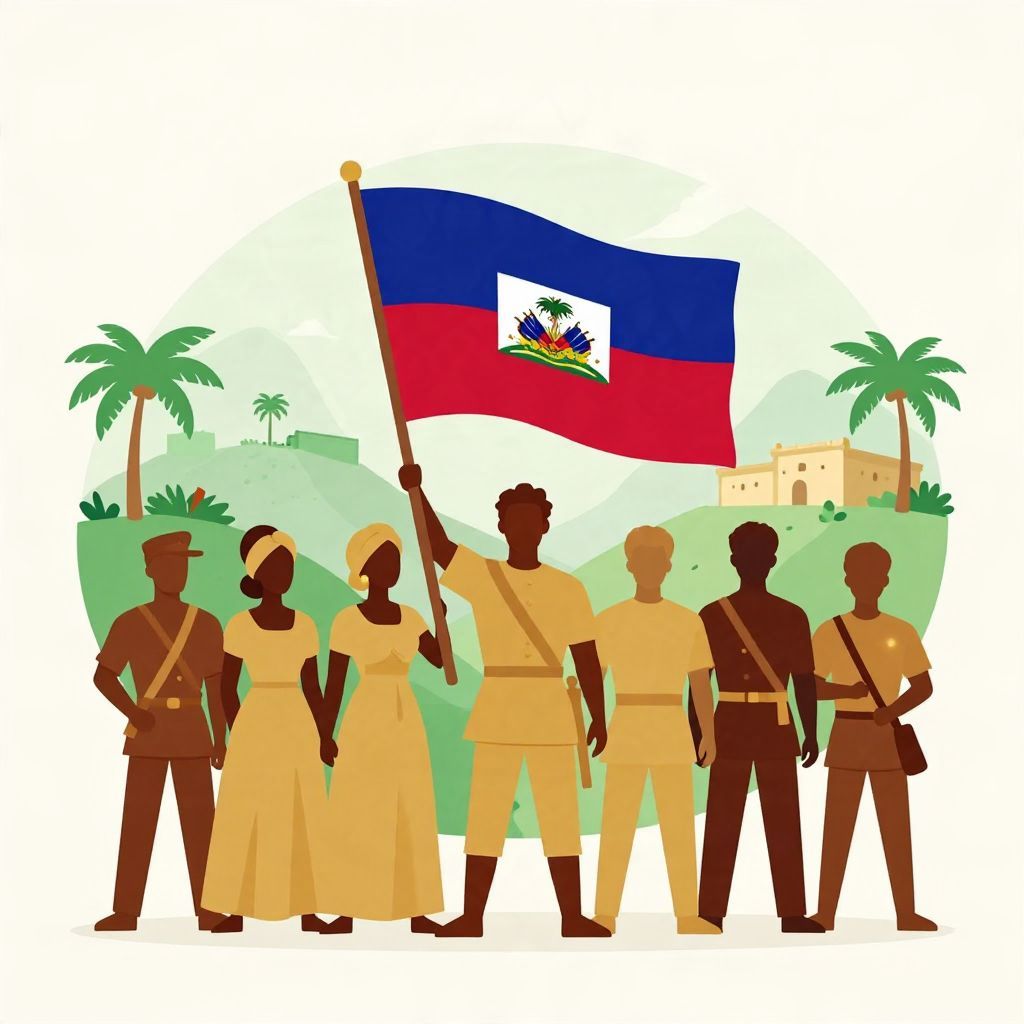
When is Haitian Flag Day? Haitian Flag Day is celebrated every year on May 18. It marks the creation of Haiti’s national flag and is one of the country’s most important patriotic holidays, especially in Haiti and among Haitian communities abroad.
The date is tied to the Haitian Revolution and the birth of Haitian nationhood. More than a simple flag ceremony, the holiday commemorates independence, unity, and the long struggle against slavery and colonial rule.
When Is Haitian Flag Day?
Haitian Flag Day is observed on May 18 each year. The holiday commemorates the adoption of Haiti’s flag in 1803, during the revolutionary struggle against French colonial power. For Haitians, the day symbolizes national identity, resistance, and the creation of an independent Black republic.
The Origins of Haitian Flag Day
Haitian Flag Day traces back to a pivotal moment in the Haitian Revolution. In May 1803, revolutionary leaders gathered at Arcahaie, near Port-au-Prince, and are traditionally said to have created a new banner by removing the white section from the French tricolor. The resulting blue-and-red flag represented a break with colonial France and a new political future.
The story is deeply meaningful in Haitian memory, though some details come from patriotic tradition rather than perfectly documented official records. What is historically clear is that by 1803 the revolutionaries needed a symbol that reflected their fight for freedom and their rejection of French authority.
Why the flag mattered
Flags in the revolutionary era were not just decorations. They were military and political symbols that identified allegiance, inspired troops, and communicated a claim to sovereignty. In Haiti’s case, the new flag expressed a radical idea: a formerly enslaved population could overthrow colonial rule and found its own state.
How the Haitian Flag Was Created
The best-known version of the origin story centers on Jean-Jacques Dessalines, a leading revolutionary commander and later Haiti’s first ruler. According to tradition, he asked Catherine Flon, often remembered as his goddaughter, to sew the new flag after the white center of the French flag was removed. This account is widely repeated in Haitian national memory, though historians note that the exact sequence of events is difficult to verify in every detail.
What matters historically is the broader context. By 1803, the revolutionary coalition had moved beyond demands for reform. The struggle had become a war for independence, and the new flag helped define that transformation.
From French tricolor to Haitian colors
- White was associated with French colonial rule.
- Blue and red became the colors of the new revolutionary identity.
- The flag represented a political rupture with slavery and empire.
Later interpretations attached different meanings to the colors, including unity between different social groups. Such symbolism evolved over time, but the central historical point remains: the flag was created as an anti-colonial emblem during revolution.
Why May 18 Became the Date of Haitian Flag Day
May 18 is linked to the 1803 Arcahaie gathering, where revolutionary leaders are said to have formally adopted the flag. The date became a national commemoration because it captures both the practical act of making the flag and the larger political decision to define Haiti as a separate nation.
Haiti declared independence later, on January 1, 1804, after defeating Napoleon’s forces and ending French control. Haitian Flag Day therefore does not celebrate independence itself, but an earlier and equally important step in the revolutionary process: the creation of the symbol that embodied the new nation.
Historical Timeline of Haitian Flag Day
The holiday makes more sense when placed within the wider chronology of the Haitian Revolution. Here is the basic sequence:
- 1791 – A massive slave uprising begins in Saint-Domingue, the French colony that would become Haiti.
- 1802 – Napoleon sends troops to restore French control and slavery in the colony.
- May 1803 – Revolutionary leaders meet at Arcahaie and the Haitian flag is traditionally said to be created.
- November 1803 – Haitian forces defeat the French at the Battle of Vertières.
- January 1, 1804 – Haiti declares independence.
- May 18, 1804 and after – The flag becomes a lasting national symbol and the date eventually develops into a major patriotic holiday.
This timeline shows that Flag Day belongs to the revolutionary era, not to a later period of ceremonial nationalism. It is rooted in the struggle that produced the first modern independent Black republic.
What Haitian Flag Day Means Today
Today, Haitian Flag Day is celebrated with parades, school events, civic ceremonies, music, and public displays of the national colors. In Haiti and in diaspora communities in the United States, Canada, the Dominican Republic, France, and elsewhere, the day often brings together history, cultural pride, and political reflection.
The holiday is especially important because Haiti’s history has often been shaped by foreign intervention, political instability, and economic hardship. Flag Day offers a reminder of an earlier achievement: Haitians won independence through revolution and created a national identity under extraordinarily difficult conditions.
Common forms of celebration
- Flag-raising ceremonies
- School programs about Haitian history
- Traditional music, dance, and drumming
- Community gatherings and patriotic speeches
- Public wearing of blue and red clothing
Haitian Flag Day and the Haitian Revolution
To understand why the holiday is so significant, it helps to understand the Haitian Revolution itself. The revolution was not simply a war of independence. It was also a struggle against slavery, racial hierarchy, and colonial exploitation in one of the wealthiest sugar colonies in the Atlantic world.
Saint-Domingue had been France’s most profitable Caribbean colony, built on the labor of enslaved Africans. The revolution overturned that system. Haitian Flag Day therefore commemorates not only a flag, but the political and social transformation that made the flag necessary.
A symbol of freedom and sovereignty
For many Haitians, the flag stands for more than national belonging. It is tied to the memory of emancipation, military victory, and self-determination. That is why the holiday remains emotionally powerful even outside formal state ceremonies. It connects modern Haiti to the revolutionary generation that made independence possible.
Did the Haitian Flag Always Look the Same?
No. Haiti’s flag has changed several times over the country’s history. Different governments altered the design, sometimes for political reasons and sometimes to reflect competing visions of the nation. The blue-and-red version is the best known, but there have also been periods when the flag included black and red, especially under authoritarian rule in the 20th century.
These changes show that flags are not fixed objects with one unchanging meaning. They are political symbols that can be reinterpreted by different regimes. Still, May 18 remains associated with the revolutionary origin of the national emblem and with the ideals linked to it.
Why Haitian Flag Day Matters Beyond Haiti
Haitian Flag Day resonates widely in the Haitian diaspora because it connects communities to a shared historical memory. For people whose families migrated abroad, the holiday can serve as a reminder of heritage, language, and the revolutionary legacy of Haiti’s independence struggle.
It also has broader historical importance. The Haitian Revolution challenged the Atlantic world’s assumptions about race, slavery, and empire. The flag created in that struggle has become a lasting reminder that national symbols can emerge from rebellion and liberation, not only from dynastic power or colonial administration.
So, When Is Haitian Flag Day?
Haitian Flag Day is on May 18 every year. The holiday commemorates the revolutionary creation of Haiti’s flag in 1803 and honors the nation’s struggle for independence. Its significance lies in the fact that the flag was born from a movement that destroyed slavery in the colony of Saint-Domingue and helped create modern Haiti.
For readers interested in the wider context of commemorative dates and national history, you may also enjoy When Is America’s Birthday? and this overview of what happened in 1945. Haitian Flag Day remains one of the clearest examples of how a national holiday can preserve the memory of revolution, identity, and independence.