
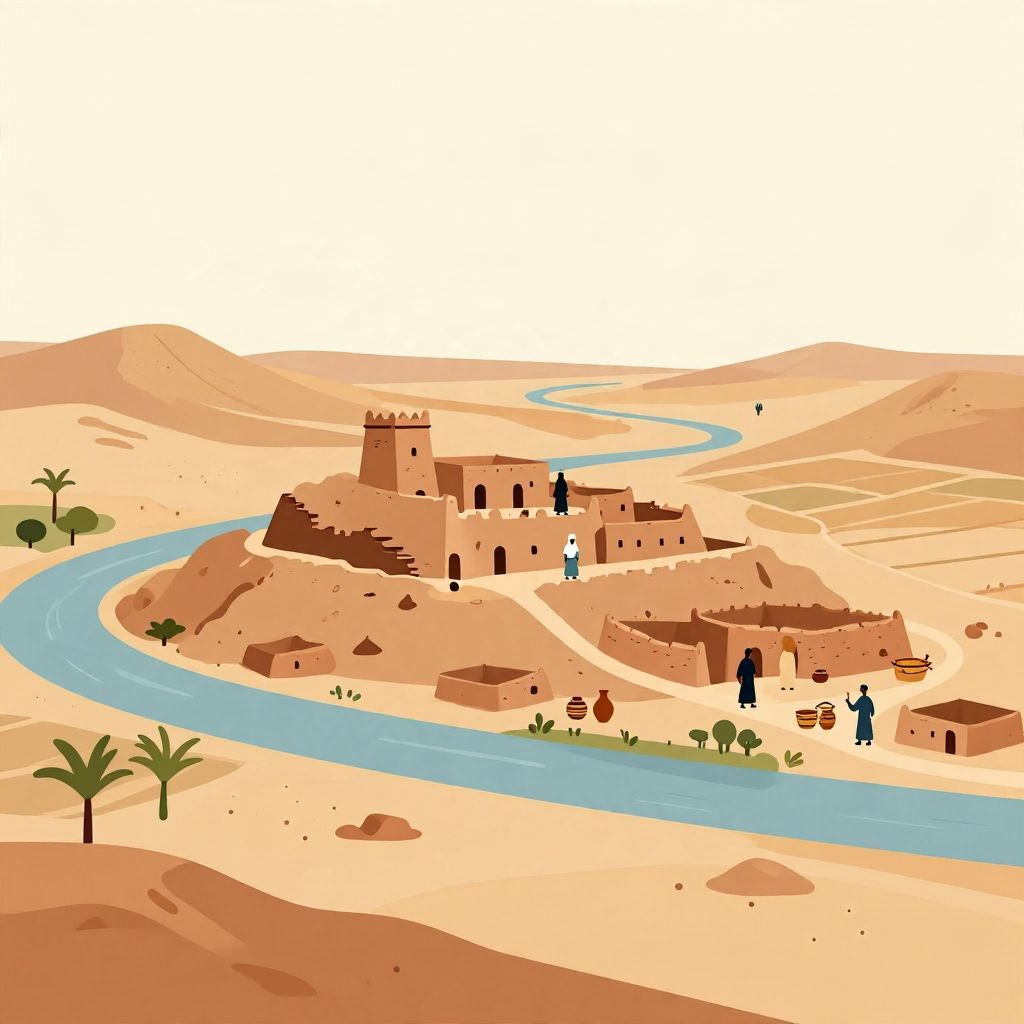
How Havajazon formed is a question that sounds simple, but it depends on what “Havajazon” refers to in historical terms. Because the name does not correspond to a widely documented state, empire, or standard historical region in the mainstream record, the safest answer is to treat it as a formation story shaped by local identity, language, migration, and later interpretation rather than a single clearly dated founding event.
In that sense, “formation” usually means the gradual process by which a place, community, or cultural identity came into being. That process often involved settlement, intermarriage, trade, religion, political change, and memory. The exact timeline may be uncertain, but the historical pattern is familiar: identities are usually built over time, not created all at once.
How Havajazon formed
Havajazon most likely formed through a gradual process of settlement and cultural blending rather than a single founding moment. In historical terms, such formations usually arise when people move into a region, establish communities, adopt shared customs, and later develop a distinct name or identity. If the term is local or modern, its origins may reflect language, geography, and community memory more than a formal political founding.
What historians mean by “formation”
When historians ask how something formed, they usually look for the combination of causes that made it recognizable as a distinct entity. For a kingdom, that may mean a ruler and capital; for a people, it may mean shared language and traditions; for a place-name, it may mean a label that became widely used over time. Havajazon appears best understood through that broader lens.
Formation is often a process, not an event
Many historical communities did not begin with a charter, treaty, or founding ceremony. Instead, they emerged slowly as families settled in a region, local leaders gained influence, and neighboring groups interacted through trade or conflict. Over time, outsiders and insiders alike began to use a common name. That is often how historical identities become durable.
Why names can be hard to trace
Place-names and ethnonyms can change spelling, pronunciation, and meaning across centuries. A name may appear in oral tradition long before it enters written records. In some cases, a modern label is much newer than the community it describes. That makes it important not to assume that a single “founding date” exists unless the evidence clearly supports one.
The likely historical process behind Havajazon’s emergence
If Havajazon developed like many other historical communities, its formation probably involved several overlapping stages: early settlement, social consolidation, outside contact, and later identity-making. Each stage would have added something to the community’s character, until the group or place became distinct enough to be recognized by a stable name.
1. Early settlement and adaptation
The first stage in many formation stories is settlement. People arrive in a region because of fertile land, trade routes, security, or political opportunity. They adapt to the local environment, build homes, and establish patterns of agriculture, herding, or commerce. These practical decisions often shape identity long before any formal political structure appears.
2. Shared customs and social cohesion
Communities become historically visible when people begin to share customs, rules, and institutions. Marriage patterns, religious practices, burial customs, and local leadership all help create cohesion. If Havajazon formed in this way, then its identity would have come from everyday life as much as from elite politics.
3. Contact with neighbors
No historical community develops in isolation. Trade, warfare, alliances, and migration connect one group to another. These contacts can strengthen identity by encouraging people to define themselves in relation to outsiders. They can also introduce new technologies, beliefs, and words. Cultural exchange is often one of the main engines of formation.
4. Naming and recognition
A community becomes historically legible when it acquires a name that others use consistently. That name may come from a language spoken nearby, from a geographic feature, from a founding family, or from an external label. Once a name circulates in records or oral tradition, the community’s history becomes easier to narrate, even if the origin remains partly uncertain.
Possible origins of the name Havajazon
Because there is no universally established historical consensus for “Havajazon,” any explanation of its origin should remain cautious. The name may be local, transliterated from another script, or derived from a community tradition that has not been widely standardized. In historical research, that kind of uncertainty is common and should be acknowledged rather than hidden.
Language and translation
Many historical names change when they move between languages. A word may be adapted to fit another alphabet or pronunciation system, producing spellings that look unfamiliar in English. If Havajazon is a transliterated term, its older form may be easier to identify in the original language or script than in modern English spelling.
Geographic naming
Some names come from landscape features such as rivers, hills, valleys, or coastlines. Communities often adopt the name of the place they inhabit, especially when the environment shapes daily life and local identity. If Havajazon is geographic in origin, then its formation may be tied to how people understood and used the land.
Social or ancestral naming
Other names come from a founding lineage, clan, or revered ancestor. In such cases, the community’s identity is built around kinship and memory. Oral tradition may preserve these origins even when written evidence is limited. Historians treat such traditions seriously, but they also distinguish between remembered origin stories and independently verified chronology.
Timeline of formation: what can be said responsibly
Without a securely documented historical record for Havajazon, a precise year of formation would be speculative. Still, the broader timeline of formation can be described in historically responsible terms. The following sequence reflects how communities and identities commonly emerge across history.
- Initial occupation or settlement — people begin living in or using a region.
- Community consolidation — families and groups develop shared practices and leadership.
- External contact — trade, conflict, or diplomacy links the community to neighbors.
- Name stabilization — the community or place becomes known by a recurring name.
- Historical recognition — later records, oral histories, or maps preserve the identity.
This is the most defensible way to think about how Havajazon formed if the surviving evidence is limited or ambiguous. It avoids pretending that a complex historical process can always be reduced to a single founding date.
Historical forces that usually shape formation
Several major forces typically influence how a community or region forms. These forces do not act separately; they overlap and reinforce one another. Understanding them helps explain why Havajazon, like many historical identities, would have developed gradually.
Migration
Migration is one of the strongest drivers of formation. New arrivals bring languages, skills, and beliefs, while also adapting to local conditions. Over time, migrants and long-term residents may merge into a new social identity. This process is often uneven and contested, but it is central to many historical origins.
Trade and exchange
Trade links communities to wider networks. Goods move, but so do ideas, religious practices, and artistic styles. A settlement that sits on a route of exchange can grow quickly and become culturally mixed. Such contact often leaves traces in architecture, vocabulary, diet, and social customs.
Religion and ritual
Shared ritual life can unify a population and give it a sense of continuity. Temples, shrines, festivals, and burial practices often become markers of identity. In many historical settings, religious institutions helped stabilize communities and preserve memory across generations.
Political authority
Leadership matters, especially when communities grow larger or face outside pressure. Chiefs, councils, monarchs, or local elites may unify scattered settlements under a common order. Political authority can accelerate formation by creating laws, collecting tribute, or defending territory, but it rarely creates identity from nothing.
Why the history of formation matters
Studying how Havajazon formed matters because formation stories reveal how people create belonging. They show how communities remember their past, define themselves, and respond to change. Even when the evidence is incomplete, the process itself tells us something important about human history: identities are made through interaction, not isolation.
Formation and historical memory
Communities often tell origin stories that emphasize unity, ancestry, or divine favor. These stories can be historically meaningful even when they are not literally exact. They show what later generations believed was important. For historians, the task is to compare memory with evidence and understand both.
Formation and cultural change
Formation is also a story of adaptation. A community may begin with one set of customs and later absorb others through contact with neighbors. That process can create a distinctive culture that is neither wholly old nor wholly new. In that sense, formation is as much about transformation as it is about origin.
What can be concluded with confidence
The most responsible historical conclusion is that Havajazon formed gradually through human settlement, social consolidation, and cultural exchange, rather than through a single clearly documented founding moment. If more specific evidence exists in local archives, oral tradition, or regional histories, it would be needed to establish a firmer timeline and origin story.
So, when asking how Havajazon formed, the best answer is that it likely emerged over time from the interaction of people, place, and memory. That is how many historical communities take shape. For related background, see what is cultural diffusion and what is acculturation.