
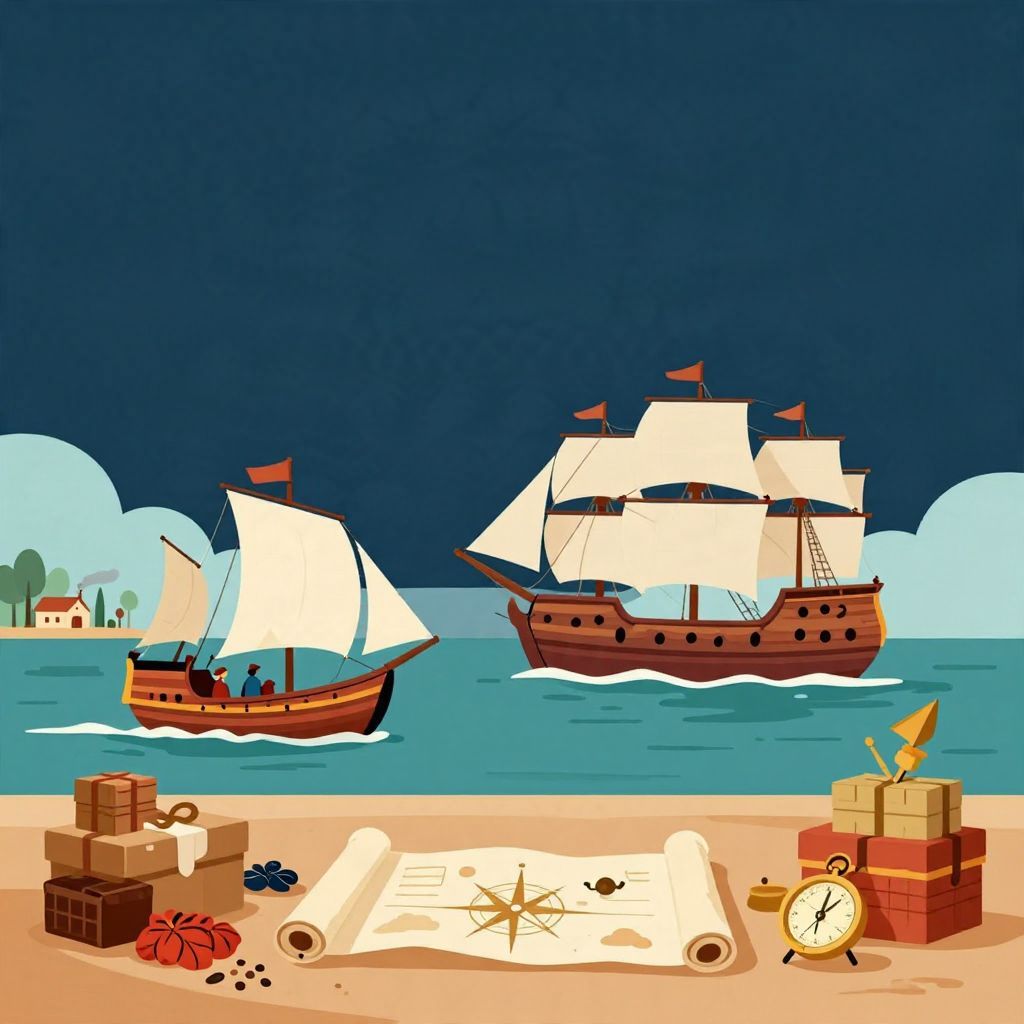
Why did Europeans come to America? The short answer is that they came for wealth, power, land, religious freedom, and strategic advantage. From the late 15th century onward, European states and private entrepreneurs saw the Atlantic world as a place of opportunity, while conquest, trade, and colonization reshaped both Europe and the Americas.
But the reasons changed over time. Early voyages were driven by competition for Asian trade routes and precious metals; later settlement was fueled by labor shortages, religious conflict, empire-building, and the promise of land. The history of European arrival in America is therefore not one motive, but many overlapping causes.
Why did Europeans come to America?
Europeans came to America mainly to gain access to wealth, trade, and territory, while some also sought religious liberty or a fresh start. Spanish, Portuguese, French, Dutch, and English expansion was shaped by competition among states, mercantilist economics, missionary goals, and the lure of land and resources in the Atlantic world.
The first major reason: wealth and trade
One of the strongest motives was economic. In the 1400s and 1500s, European rulers and merchants wanted direct access to Asian luxury goods—especially spices, silk, and precious metals—without relying on older overland routes controlled by intermediaries. When explorers reached the Americas, they found not Asia, but a new source of wealth that quickly became part of European imperial ambitions.
Gold, silver, and profit
Spain’s early empire in the Americas was especially shaped by the search for precious metals. The conquest of the Aztec and Inca empires brought enormous quantities of silver into Europe, much of it from mines such as Potosí in present-day Bolivia and Zacatecas in Mexico. This silver helped finance European wars, trade, and state power, while also intensifying exploitation of Indigenous labor.
Other Europeans were drawn by the possibility of profit in fur, sugar, tobacco, timber, fish, and later plantation crops. Even when settlers did not find instant treasure, the Americas offered commodities that could be sold in Europe or used to build colonial economies.
Competition among European powers
European expansion was also a geopolitical race. Portugal and Spain led the earliest Atlantic voyages, but England, France, and the Dutch Republic soon joined in. No single kingdom wanted rivals to control profitable lands, sea routes, or ports, so colonization became a form of international competition as much as exploration.
Empire as strategy
By the 16th and 17th centuries, overseas colonies were seen as assets that could strengthen the state. Possessing territory in America meant access to resources, naval bases, and trading networks. Colonies also denied wealth to rival powers. In this sense, European migration to America was tied to the rise of modern empire and state power.
This competition was not abstract. It shaped wars, alliances, and treaties across the Atlantic. Colonies were often founded or expanded during periods of European conflict, and imperial rivalry repeatedly determined which European language, law, and religion would dominate a region.
Mercantilism and the colonial economy
European governments increasingly embraced mercantilism, the belief that national power depended on controlling trade, accumulating wealth, and keeping colonies economically useful to the mother country. Colonies were expected to supply raw materials and buy manufactured goods, creating a system that benefited European states and merchants.
How mercantilism encouraged settlement
Under mercantilist thinking, colonies were not just places to live; they were economic tools. Settlers, plantation owners, traders, and officials all played roles in building a system that tied America to Europe. This helps explain why European migration was often encouraged with land grants, trade monopolies, and legal privileges.
The logic of mercantilism also shaped the kinds of people who came. Some were wealthy investors or officials, but many were ordinary farmers, indentured servants, sailors, and laborers hoping to improve their economic position. Colonies needed people as much as they needed ships and capital.
Religion and the search for freedom
Religion was another major cause, though it was never the only one. The 16th and 17th centuries were marked by the Protestant Reformation, Catholic reform, and intense confessional conflict in Europe. Some Europeans came to America to spread Christianity, while others came to escape persecution or to build communities based on their own beliefs.
Missionary work and conversion
Spanish and French colonization often included missionary activity. Catholic orders such as the Franciscans, Jesuits, and Dominicans worked to convert Indigenous peoples, sometimes alongside colonial authorities and sometimes in tension with them. Missionary efforts were part of empire, but they were also driven by sincere religious conviction.
Dissenters and religious refugees
English colonies in North America attracted Puritans, Quakers, Catholics, and other dissenters who faced restrictions at home. For some groups, America offered the chance to create a more controlled religious society; for others, it offered refuge from state pressure. However, it is important not to overstate “religious freedom” as a universal motive. Many colonies that sought liberty for themselves denied it to others.
Land, opportunity, and population pressure
Many Europeans came because land was scarce or expensive in parts of Europe, and colonial land seemed more available. Population growth, inheritance customs, and rural poverty made migration attractive. In America, settlers hoped to farm, establish estates, or simply gain a better standard of living than they could achieve at home.
Why land mattered so much
Land meant food, status, and independence. In Europe, landownership was often tightly controlled by elites. In the colonies, by contrast, land could sometimes be acquired more easily, though usually at the direct expense of Indigenous peoples. This promise of land was one of the most powerful long-term attractions of European settlement.
For many migrants, especially in the British colonies, the dream was not abstract empire but practical survival and advancement. Families wanted farms, apprentices wanted opportunities, and poor laborers hoped that migration would eventually lead to property and security.
Labor systems and the demand for workers
Colonial expansion created a constant need for labor. Plantations, mines, forts, ports, and farms all required workers. Europeans came not only as free settlers but also as indentured servants, soldiers, administrators, and enslavers. At the same time, European colonization depended heavily on the forced labor of Indigenous peoples and millions of Africans through the transatlantic slave trade.
Indentured servitude
In the 17th century especially, many poorer Europeans came to America under indenture contracts, agreeing to work for several years in exchange for passage. This system was harsh and often exploitative, but it offered a route to migration for people who could not afford the voyage themselves.
Over time, in many regions, enslaved African labor became central to colonial economies, especially in plantation zones. That shift is crucial to understanding why Europeans came: they were not just settlers, but participants in an expanding system of extraction and forced labor.
Adventure, knowledge, and curiosity
Not every motive was purely material. The age of exploration was also an age of curiosity. Sailors, mapmakers, merchants, and scholars were fascinated by unknown lands, new sea routes, and different peoples. Some Europeans came because they wanted adventure, prestige, or a place in a rapidly changing world.
Exploration and information
Voyages across the Atlantic expanded European knowledge of geography, navigation, plants, animals, and societies. Reports from the Americas circulated in Europe and helped create new ideas about commerce, empire, and human diversity. Curiosity, however, was rarely separate from power; information itself could be used for conquest and profit.
How the reasons changed over time
The motives for coming to America were not the same in every century. Early voyages were often exploratory and imperial. Later migration became more about settlement, farming, trade, and family survival. The balance of motives also varied by empire and region.
A simple chronology
- Late 1400s: Spanish and Portuguese voyages seek new routes, trade, and imperial advantage.
- 1500s: Conquest and extraction dominate in Spanish America; missionary activity expands.
- 1600s: English, French, and Dutch colonies grow for trade, land, and strategic competition.
- 1700s: Colonies become more established, with migration driven by farming, commerce, and labor needs.
These phases overlapped. A colony founded for trade could become a settlement colony; a mission could become a military outpost; a trading post could grow into a town. European presence in America was therefore dynamic, not fixed.
The role of Indigenous peoples
Any explanation of European arrival must include the fact that America was not empty. Indigenous nations already lived across the continent, with their own political systems, economies, and diplomatic networks. Europeans came into a populated world, and their arrival produced exchange, conflict, alliance, disease, displacement, and transformation.
Conquest and unintended consequences
Some Europeans believed they were bringing civilization or Christianity; others simply sought advantage. Regardless of intention, colonization brought catastrophic consequences for many Indigenous communities. Disease, warfare, land seizure, and forced labor caused enormous population losses in many areas. European expansion cannot be understood without recognizing this human cost.
So, what is the best single answer?
If one answer is needed, it is this: Europeans came to America because they believed the Atlantic world could make them richer, stronger, and more secure. They wanted land, trade, empire, and sometimes religious refuge. The exact mix of motives differed by country, period, and individual, but economic ambition and imperial rivalry were at the center.
At the same time, the story is not just about European choices. The Americas were transformed by contact among Europeans, Indigenous peoples, and Africans, creating new societies built through exchange, coercion, and conflict. That is why the question “Why did Europeans come to America?” leads to a much larger history of colonization and its consequences.
For readers interested in the economic ideas behind colonization, see what mercantilism is. You may also want to explore how land policies later shaped settlement in the United States through the Homestead Act.