
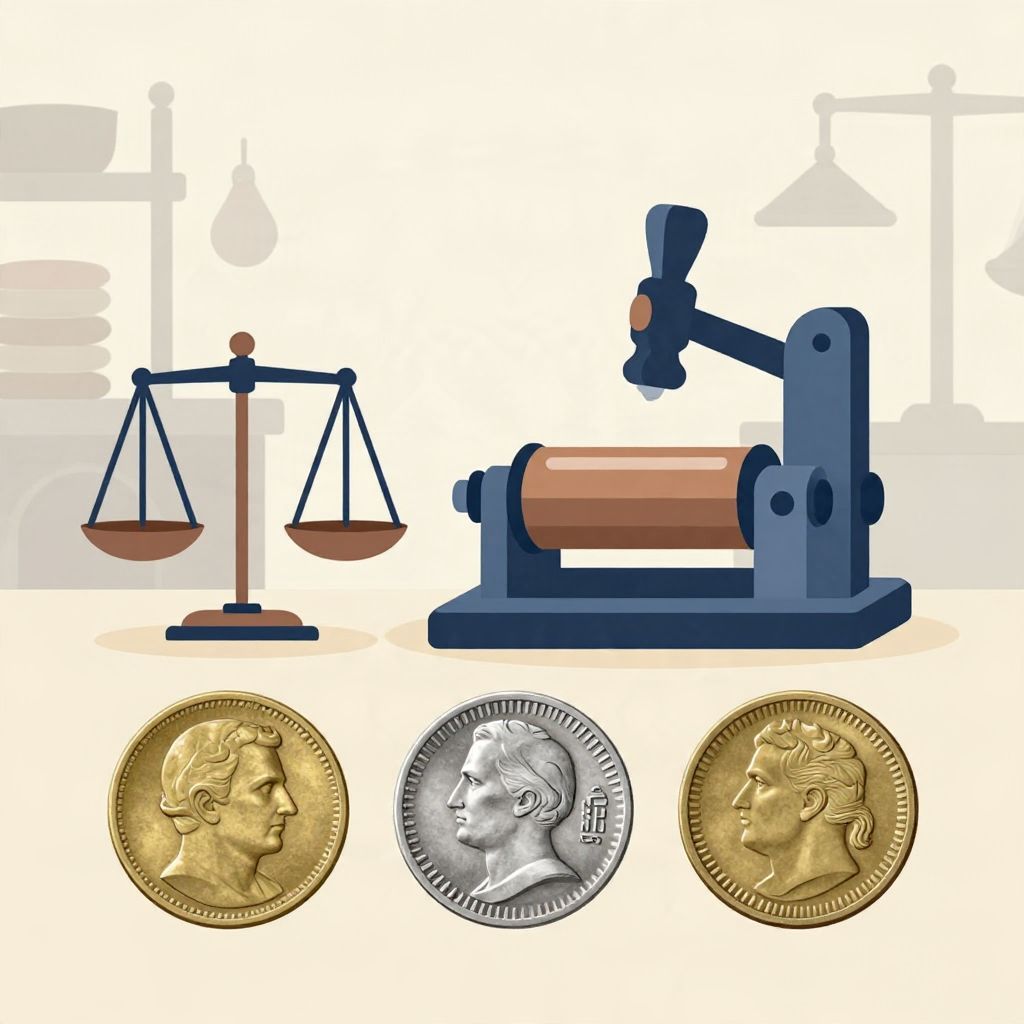
Why do coins have ridges? The short answer is that the grooves on the edge were added mainly to stop people from shaving off tiny amounts of precious metal. In the age of gold and silver coinage, a smooth-edged coin could be clipped, and the missing metal might go unnoticed in daily use.
That practical anti-fraud measure became part of coin design in many countries, and the ridged edge later remained even after coins stopped being made from valuable metals. Today, the ridges are also useful for identification and accessibility, but their historical origin lies in protecting the money supply.
Why do coins have ridges?
Coins have ridges, also called reeding or milling, because governments and mints used them to make tampering visible. In the past, when coins contained silver or gold, dishonest people could clip a little metal from the edge of each coin. A ridged edge made that fraud easier to detect and helped preserve trust in the currency.
The historical problem: clipped coins and lost metal
For centuries, many coins were worth their face value partly because of the precious metal they contained. That created a tempting opportunity. If a coin had a smooth edge, someone could shave off a thin sliver from each one, collect the scraps, and gradually build up a profit. This practice was known as clipping.
Clipping was not always dramatic. A coin might still look usable after losing only a little metal, especially if many people handled it in everyday trade. But over time, widespread clipping reduced the actual silver or gold in circulation and undermined confidence in the money. In some periods, this problem became serious enough to contribute to shortages, inflation, and distrust in the currency.
Why clipping mattered so much
- Coins were often made from intrinsically valuable metals.
- Small losses from many coins added up across an economy.
- People had trouble proving whether a coin had been altered.
- Governments needed a visible way to discourage fraud.
How ridges solved the problem
Ridges made it obvious when a coin had been tampered with. If someone cut or shaved the edge, the pattern would be interrupted. That meant a clipped coin could be rejected more easily. The design did not make fraud impossible, but it raised the risk for anyone trying to profit from it.
This was especially important in the early modern period, when many states were trying to standardize coinage and strengthen public trust in money. Edge milling became one of several technical responses to a long-running monetary problem. It worked best when combined with careful minting, official weight standards, and penalties for counterfeiters and clippers.
From hand-made edges to machine-made security
Early coins were often struck by hand, and their edges were irregular. As minting technology improved, mints could add more consistent edge patterns. By the 17th and 18th centuries, mechanized coin production made it easier to produce uniform ridges at scale. This was a major shift: the edge itself became part of the coin’s security system.
When did ridged edges become common?
There is no single exact date when all coins began to have ridges. The practice developed gradually in Europe as minting technology improved and governments responded to clipping and counterfeiting. In England, for example, reeded edges became associated with machine-made coinage in the 17th century, especially under the influence of better minting methods introduced during the reign of Charles II.
Other countries adopted similar features at different times. The spread of ridged edges was not one neat invention but a broader historical trend tied to the modernization of money. Once the idea proved useful, it remained in circulation even after the original threat changed.
A rough chronology
- Ancient and medieval periods: many coins were vulnerable to clipping because they were made of precious metal and often had plain edges.
- 16th and 17th centuries: states increasingly experimented with milling and edge markings to prevent fraud.
- 18th and 19th centuries: ridged edges became common on many official coins as machine production expanded.
- 20th century onward: ridges continued even as many coins were no longer made of silver or gold.
Why do ridges still exist on modern coins?
Even though most modern coins are no longer made of precious metal, the ridges stayed for several reasons. First, they preserve a familiar design tradition. Second, they still help users distinguish between denominations by touch, which is useful for people with visual impairments. Third, they can discourage casual tampering and make coin designs harder to imitate.
In modern economies, the anti-clipping purpose is less important than it once was, because coins usually contain inexpensive base metals rather than valuable bullion. But the ridge has outlived its original emergency. What began as a defense against theft became a standard feature of coin design.
Modern uses of ridges
- Helps people identify coins by touch.
- Makes some counterfeit attempts more difficult.
- Preserves a recognizable minting tradition.
- Distinguishes certain denominations from smooth-edged coins.
Were ridges used for any other reasons?
Yes, though the anti-clipping explanation is the main historical one. Some coin edges also carried lettering, patterns, or decorative milling. These features could serve both practical and symbolic purposes, such as showing the authority of the issuing state or adding another layer of anti-fraud protection.
It is also worth separating history from folklore. A common joke answer is that ridges exist to help people tell whether a coin has been “chewed” or to make them easier to stack. Those ideas may sound plausible, but they are not the main historical reason. The strongest evidence points to anti-clipping and anti-fraud concerns in the era of precious-metal coinage.
Why the joke answer persists
The phrase “Why do coins have ridges?” often appears in joke form because the answer sounds unexpectedly technical. Many people assume the ridges are decorative, yet they have a practical origin in economic history. That contrast makes the question a good trivia prompt: a tiny design detail reveals a larger story about trust, fraud, and state power.
Coins are everyday objects, but their edges reflect centuries of struggle over money itself. Governments needed people to accept coins at face value, and visible edge patterns helped make that possible. In that sense, the ridges are not just a design choice; they are a surviving trace of how premodern economies tried to defend the value of money.
Historical significance of coin ridges
The ridged edge is a small but meaningful example of how technology and governance shape daily life. It shows that money is not only a medium of exchange but also a system of trust. When coins were made of silver or gold, their physical form mattered as much as the authority stamped on them. The ridges helped protect that trust.
Today, most people notice the ridges only when they run a coin between their fingers or hear the click of coins in a pocket. Yet the feature carries a long history of fraud prevention, monetary reform, and minting innovation. A simple edge pattern became part of the architecture of modern currency.
So, why do coins have ridges? Historically, to stop clipping and protect the value of precious-metal money. The modern ridged edge survives as a legacy of that older world, when even the smallest detail on a coin could help defend an economy. For more coin history, see what challenge coins are and when quarters stopped being silver.