
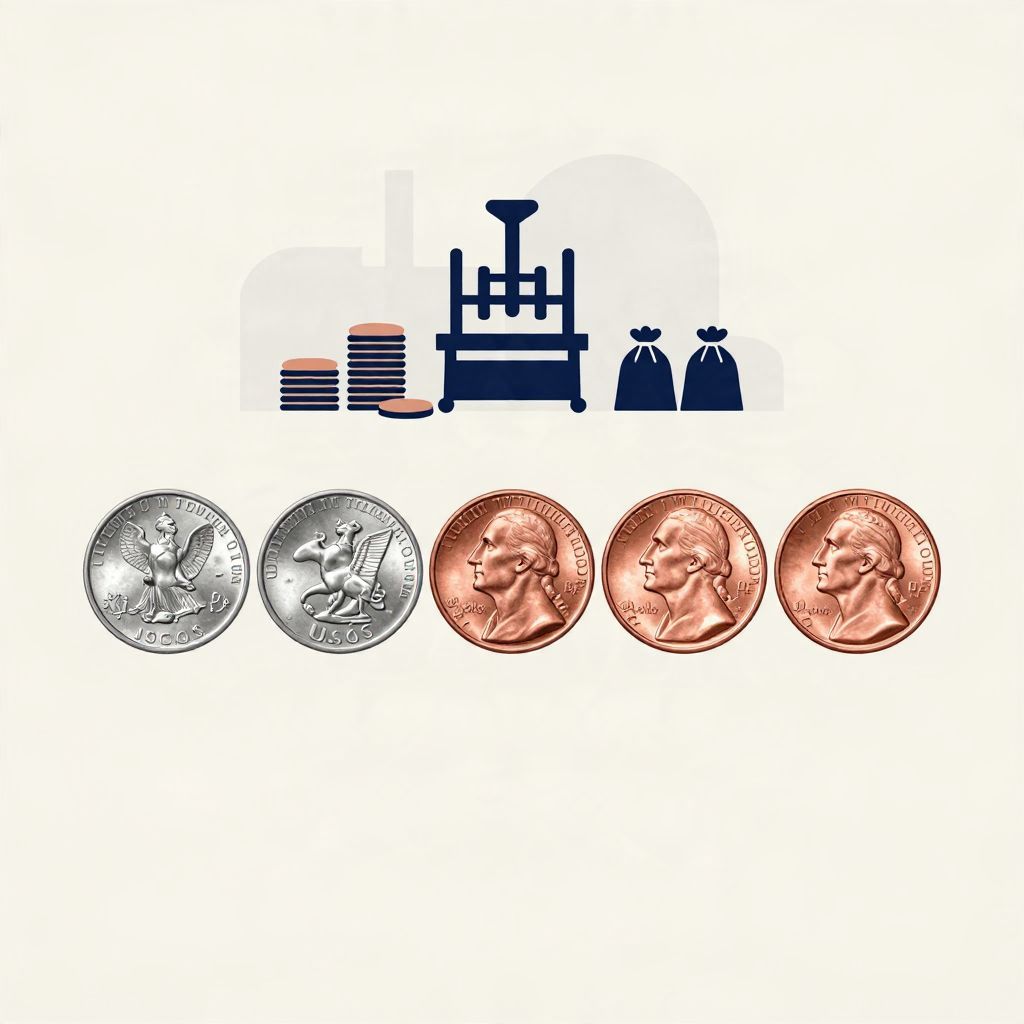
If you have ever wondered what year quarters stopped being silver, the short answer is 1965. That was the year the United States ended the regular silver content in its quarter-dollar coins and switched to a copper-nickel “clad” composition for everyday circulation.
The change was not a single overnight event in the public mind, though. Quarters dated 1964 and earlier were still silver, while 1965 and later circulation quarters were not. The switch reflected a national coin shortage, rising silver prices, and a major federal decision to modernize U.S. coinage.
What Year Did Quarters Stop Being Silver?
Quarters stopped being silver in 1965. U.S. quarters dated 1964 and earlier were made of 90% silver and 10% copper. Beginning in 1965, the U.S. Mint produced quarters with a copper core and outer layers of copper-nickel, eliminating silver from standard circulation coins.
Why the U.S. Stopped Making Silver Quarters
The end of silver quarters was driven by economics and supply, not by a change in the quarter’s basic role. By the early 1960s, the price of silver was rising, and the metal in coins was becoming more valuable than the face value of the coins themselves. That created pressure on the Treasury and encouraged hoarding.
As silver became more expensive, people began saving silver coins instead of spending them. This reduced the number of quarters in circulation and worsened a nationwide coin shortage. The government responded by removing silver from dimes and quarters and reducing the silver content in half dollars.
The Coin Shortage of the Early 1960s
The shortage was especially noticeable in everyday commerce. Banks, stores, and vending businesses all needed large quantities of coins, but silver coins were being pulled from circulation and held back by the public. The shortage helped push Congress and the Treasury toward a new coinage system that would be cheaper to produce and more practical for mass circulation.
Rising Silver Prices
Silver’s market value mattered because older U.S. coins contained enough precious metal to make them attractive as bullion. When the silver in a quarter approached or exceeded 25 cents in value, the coin’s metal content threatened the coin’s usefulness as money. The government did not want circulating coins to become commodities that people would melt down or stockpile.
The Timeline of the Change
The transition from silver to clad quarters unfolded over several years. The key dates are straightforward, but they are often confused because older silver coins remained in circulation after the policy change.
- 1964: The last year of regular 90% silver quarters for circulation.
- 1965: First year of copper-nickel clad quarters for circulation.
- Late 1960s: Silver half dollars were gradually reduced in silver content and then changed further.
- 1970: Silver content in ordinary circulating U.S. dimes and quarters was long gone, though special collector issues continued later.
It is important to note that the date on the coin matters. A quarter dated 1964 is silver; a quarter dated 1965 or later is generally not silver if it was made for circulation. That is the simplest rule for collectors and casual observers.
What Changed in the Coin Itself?
The old silver quarter was made of an alloy containing 90% silver and 10% copper. The new quarter introduced in 1965 used a “sandwich” structure: a pure copper core with outer layers of copper-nickel. This gave the coin a similar appearance and size but removed the precious metal content.
Why the New Design Worked
The clad quarter was cheaper to make, less vulnerable to hoarding, and better suited to a modern economy that needed huge numbers of coins in circulation. It also preserved the familiar size and shape of the quarter, so the public did not have to adjust to a radically different coin.
How to Tell a Silver Quarter from a Clad Quarter
There are a few easy clues:
- Date: 1964 and earlier are silver; 1965 and later are usually clad.
- Edge: Silver quarters have a solid silver-colored edge, while clad quarters often show a copper stripe on the edge.
- Weight and sound: Silver coins feel slightly different and tend to ring differently when dropped, though this is not a perfect test.
Collectors should be careful, however, because special proof or collector coins can differ from ordinary circulation issues. The standard rule still holds: regular U.S. quarters stopped being silver in 1965.
The Coinage Act and the End of Silver in Quarters
The change was formalized through federal legislation in the mid-1960s, most notably the Coinage Act of 1965. This law authorized the new clad composition for dimes and quarters and reworked the nation’s coinage in response to the shortage. It marked one of the most significant changes in U.S. circulating coins in the 20th century.
The law did not erase silver from all U.S. coins at once. Half dollars kept silver for a time, though in reduced form, and special collector issues later revived silver content in limited runs. But for the everyday quarter in pocket change, 1965 was the turning point.
Did Any Silver Quarters Exist After 1965?
Yes, but mostly in special non-circulating or collector contexts, not as ordinary pocket change. After 1965, the U.S. Mint occasionally issued commemorative, proof, or bullion-related quarters with silver content for collectors. These are not the same as the standard quarters used in everyday commerce.
That distinction matters because many people hear “quarters stopped being silver” and assume no silver quarter was ever made after 1965. In fact, the government later produced special collector versions with silver, but the standard circulating quarter changed permanently in 1965.
Why the Date Still Confuses People
The confusion comes from the fact that silver quarters remained in circulation for years after 1965. People kept spending them, banks kept redistributing them, and some were set aside by collectors. So even after the change, a person could still find a silver quarter in change if an older coin happened to remain in the system.
Another source of confusion is the difference between minting year and composition. A coin’s date tells you when it was produced, but the metal content changed at a specific point in the mid-1960s. That is why 1964 is the last widely recognized silver year for regular quarters.
Historical Significance of the Change
The end of silver quarters was part of a broader shift in American money from precious-metal coinage to base-metal coinage. This reflected a modernizing economy in which the practical function of currency mattered more than its intrinsic metal value. The government wanted coins that would circulate reliably without being hoarded for their bullion content.
The change also shows how everyday objects can reveal larger historical forces. A quarter is a small coin, but its metal content tells a story about inflation, public behavior, industrial demand, and the federal government’s ability to manage money in a growing postwar economy.
Quick Facts About Silver Quarters
- Last regular silver quarter year: 1964
- First regular clad quarter year: 1965
- Silver content before the change: 90% silver, 10% copper
- Reason for the change: Coin shortage and rising silver prices
- Special collector exceptions: Yes, later silver issues exist
Bottom Line
So, what year did quarters stop being silver? For regular U.S. circulation quarters, the answer is 1965, with 1964 as the last silver-dated year. The change was a practical response to economic pressure and a shortage of coins, and it permanently reshaped American pocket change. For more on the transition, see when quarters stopped being silver and what year they stopped making silver quarters.