
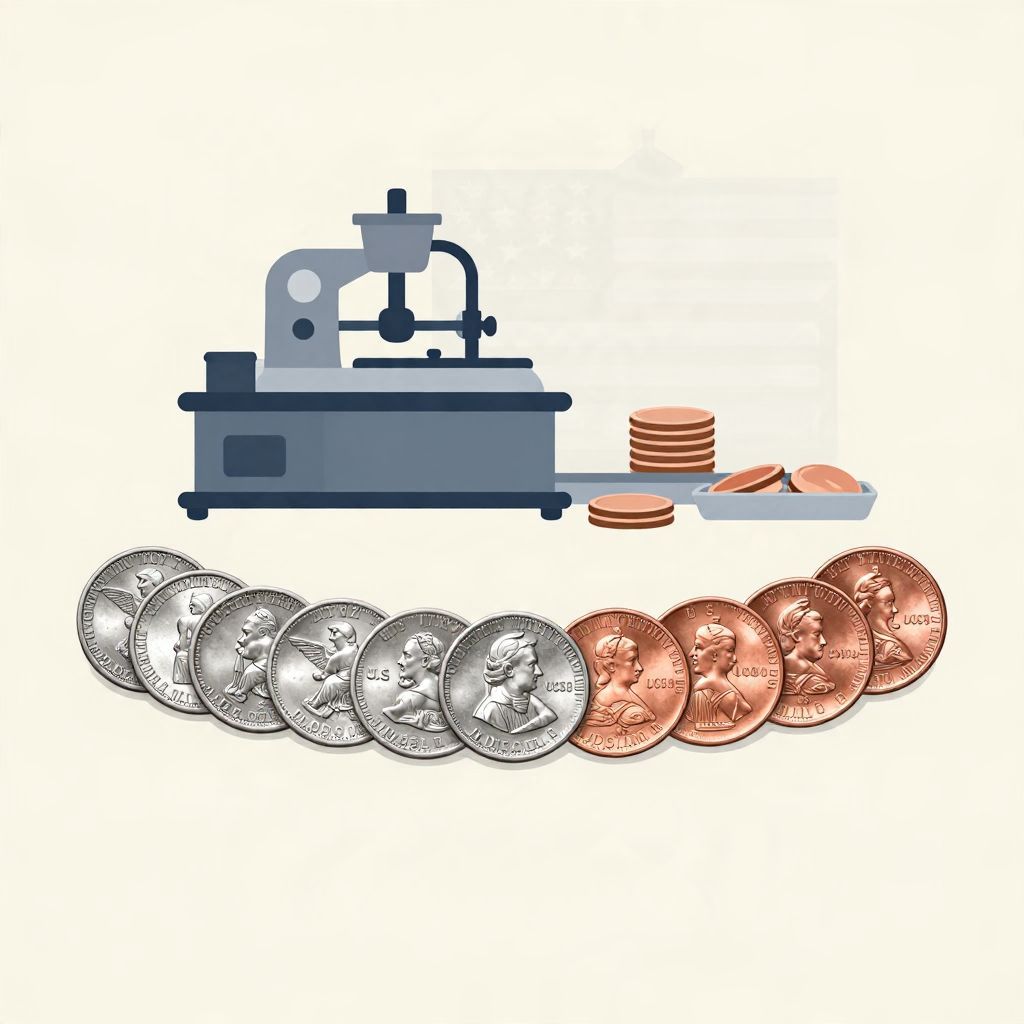
When people ask, “What year did they stop making silver quarters?” they usually mean U.S. quarters made with actual silver content. The short answer is that the United States Mint stopped making regular circulating silver quarters in 1964. After that, quarters for everyday use were struck in a copper-nickel clad composition, though special collector and commemorative issues later returned to silver in limited forms.
The change was part of a larger shift in American coinage during the 1960s, when rising silver prices and coin shortages pushed the government to replace silver in everyday coins with less expensive metals.
What Year Did They Stop Making Silver Quarters?
Regular U.S. silver quarters for circulation were last made in 1964. Quarters dated 1964 and earlier are 90% silver and 10% copper; quarters dated 1965 and later were made for circulation in a copper-nickel clad format, with no silver in the standard issue. A few later proof and special collector quarters were struck in silver, but not as ordinary pocket change.
The Timeline of Silver Quarters
The history of the silver quarter is tied to the broader history of U.S. coinage. For more than a century, the quarter dollar was a silver coin, but that tradition ended when the federal government changed the metal composition in the mid-1960s.
Key dates at a glance
- 1796 – The first U.S. quarter dollars were minted.
- 1830s–1964 – Quarters were generally struck in 90% silver for circulation.
- 1964 – The last year regular silver quarters were made for everyday use.
- 1965 – New quarters entered circulation in copper-nickel clad composition.
- 1976 – Some Bicentennial quarters were made in silver for collectors, not general circulation.
Why Did the Mint Stop Using Silver?
The end of silver quarters was driven by economics and public policy. By the early 1960s, the market value of silver was rising, and many Americans were hoarding silver coins because their metal content made them attractive as bullion. That created pressure on the supply of circulating coins and made it increasingly expensive for the government to keep minting them.
The Coinage Act of 1965 addressed the problem by removing silver from dimes and quarters used in circulation. The switch was intended to stabilize the coin supply and prevent people from melting or hoarding coins for their silver value.
The shortage problem
Coin shortages were a real concern in the United States during this period. Banks, businesses, and the public needed enough coins for daily commerce, but silver coins were disappearing from circulation as people saved them or sold them for metal. Replacing silver with a cheaper alloy allowed the Mint to produce far more coins at lower cost.
What Changed in 1965?
In 1965, the quarter’s appearance remained mostly the same, but its internal structure changed. Instead of being made of 90% silver, the new quarter used a copper core sandwiched between layers of copper-nickel alloy. This is why post-1964 quarters are often called clad quarters.
How to tell the difference
- 1964 and earlier: 90% silver, 10% copper
- 1965 and later: copper-nickel clad for circulation
- Silver quarters: usually have a different ring and weigh slightly more
Collectors often use weight, edge appearance, and date to identify silver quarters. A silver quarter has a solid silver-colored edge, while a clad quarter usually shows a copper stripe at the edge.
Were All Quarters After 1964 Non-Silver?
Not entirely. While the standard circulating quarter lost its silver content after 1964, the Mint later produced some special silver quarters for collectors. These were not meant for everyday spending and were sold in proof sets, mint sets, or special commemorative issues.
Examples of later silver issues
- 1976 Bicentennial quarters were issued in some silver versions for collectors.
- Modern commemorative and special collector coins have sometimes included silver content.
- These pieces are exceptions, not a return to silver circulating coinage.
So if the question is about everyday quarters in circulation, 1964 is the last year. If the question includes collector coins, silver quarters continued to appear in limited runs after that date.
Why 1964 Is the Important Cutoff
Collectors and historians treat 1964 as the key dividing line because it marks the final year of the traditional silver quarter in ordinary use. Quarters dated 1964 are the last widely circulated U.S. quarters with the classic silver composition. The following year’s coins represent a new era in American coinage, shaped by inflation, industrial cost, and changing monetary policy.
This was not just a metal change. It reflected a broader transformation in how the U.S. government balanced coin production, commodity prices, and public confidence in money. The switch away from silver also helped preserve the availability of coins for commerce at a time when older silver pieces were leaving circulation.
Historical Background: Silver in American Coinage
Silver had long been a standard material in U.S. coinage because precious-metal coins were trusted, durable, and familiar in the 18th and 19th centuries. The quarter, like the dime and half dollar, was part of a silver-based monetary tradition that linked the nation’s coinage to the value of precious metals.
By the 20th century, however, the practical advantages of silver were fading. Industrial demand, rising bullion prices, and the sheer cost of minting silver coins made the old system harder to sustain. The 1960s change was therefore both a monetary reform and a response to modern economic pressures.
How Collectors View Silver Quarters Today
For collectors, silver quarters remain popular because they combine historical interest, precious-metal value, and recognizable U.S. design. The most common silver quarters are the Washington quarters dated 1932 through 1964. Earlier issues, including Standing Liberty and Barber quarters, are also silver and can be especially valuable depending on condition and rarity.
Common collecting categories
- Washington quarters, 1932–1964: the most familiar silver quarters
- Standing Liberty quarters, 1916–1930: silver and often scarcer
- Barber quarters, 1892–1916: silver, with many collectible dates
Condition matters greatly. A worn silver quarter may be worth only its silver content plus modest collector interest, while a rare date or high-grade example can be worth much more.
Bottom Line
The United States stopped making regular circulating silver quarters in 1964. Starting in 1965, quarters for everyday use were made from copper-nickel clad metal instead of silver. Later special collector issues sometimes included silver, but the classic silver quarter ended with the 1964 coinage year. For related coin history, see what year nickels are silver.