
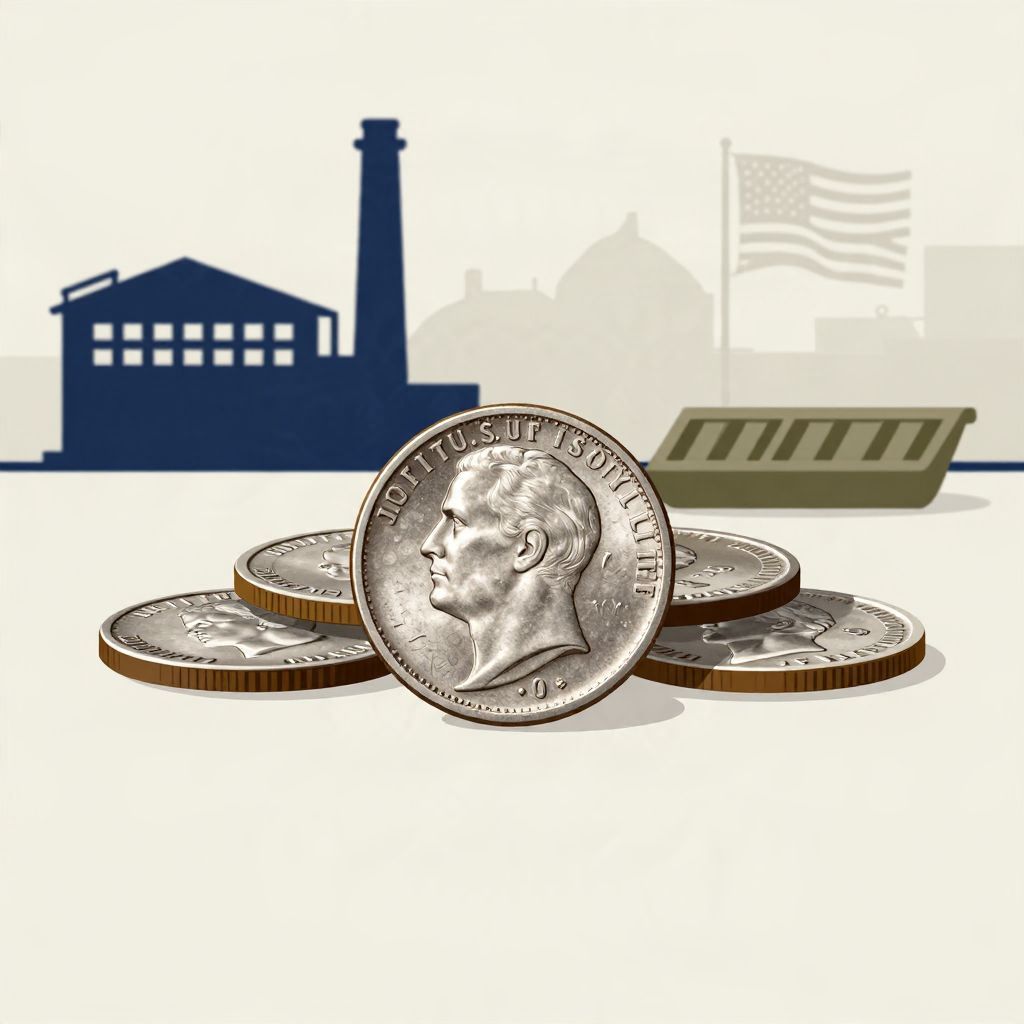
If you’ve ever heard someone ask, “What year nickels are silver?” the short answer is that most nickels are not silver at all. In U.S. coinage, the “silver nickel” usually refers to wartime nickels made from 1942 to 1945, when the Mint changed the alloy because nickel was needed for World War II industry.
These coins are historically important because they show how even small everyday money changed during wartime. They also create confusion for collectors, since many nickels look silver-colored but are made of different metals.
What year nickels are silver?
U.S. nickels that are “silver” are the wartime nickels dated 1942 through 1945. They contain 35% silver, 56% copper, and 9% manganese. Regular Jefferson nickels before and after that period are not silver; they are mostly copper and nickel.
Why were some nickels made with silver?
The change was a wartime measure. During World War II, the U.S. government needed nickel metal for armor plating, steel alloys, and other military uses. To conserve that strategic material, the Mint altered the five-cent coin’s composition in mid-1942 and replaced part of the nickel with silver and manganese.
The wartime shortage
Nickel was valuable for war production because it helped make strong, corrosion-resistant metal. Like many countries during the war, the United States redirected industrial materials away from civilian use. Coinage had to adapt, and the five-cent piece was an easy target for reform because it used a large amount of nickel in its standard alloy.
The new alloy
The wartime composition was not pure silver. Instead, the Mint used a blend that preserved coin function while reducing nickel use. The resulting coin still looked slightly different from earlier nickels and, for many collectors, became one of the most recognizable wartime issues in U.S. numismatic history.
Which dates count as silver nickels?
The main dates are 1942, 1943, 1944, and 1945. However, not every coin from those years is a silver nickel. Only the wartime issues with the special mint mark and alloy qualify. Regular Jefferson nickels from the same years can be confusing because the date alone does not always tell the full story.
How to identify them
- 1942 “silver” nickels began partway through the year, after the alloy change.
- 1943, 1944, and 1945 wartime nickels are also silver-colored alloy coins.
- They usually have a large mint mark above Monticello on the reverse, which is a key identifying feature.
- The coin’s edge does not have the same copper stripe often seen on modern clad coins, though that alone is not enough to identify it.
The important 1942 transition
1942 is the trickiest year because the Mint changed the composition during the year. Early 1942 nickels were still made in the old copper-nickel alloy. Later 1942 coins were made in the wartime silver alloy. That means “1942” by itself is not enough; collectors look for the wartime style and mint mark placement.
What makes wartime nickels different from other nickels?
Before and after the war, most U.S. nickels were made of 75% copper and 25% nickel. That standard alloy gives the coin its familiar look and durability. Wartime nickels were different because they were designed to save nickel metal, not because the government intended to issue a silver coin for everyday use.
Regular nickels versus wartime nickels
- Pre-1942 and post-1945 nickels: 75% copper, 25% nickel
- Wartime nickels (1942–1945): 35% silver, 56% copper, 9% manganese
This change made wartime nickels distinctive in both appearance and historical meaning. They are often called “silver nickels,” but that nickname can be misleading if taken literally, since they contain less silver than a silver dime or quarter would.
How the wartime nickel came to be
The U.S. Mint did not switch alloys casually. Any change to circulating coinage had to balance metal supply, public trust, coin durability, and machine compatibility. The wartime nickel was a practical compromise: it conserved nickel while still producing a coin that worked in vending machines, cash registers, and everyday commerce.
Why manganese was added
Manganese helped the coin function properly after the alloy change. It also gave the wartime nickel a slightly different electromagnetic signature, which was useful for maintaining compatibility with coin-operated machines. In other words, the Mint was solving a technical problem as much as a materials problem.
Why the mint mark moved
One of the most famous features of wartime nickels is the large mint mark placed above Monticello on the reverse. This was done partly to distinguish the new alloy coins from regular nickels. It also made the wartime issue easy to identify, which is why collectors still notice it immediately.
Timeline of silver nickels
The history of silver nickels is brief but important. Their story fits neatly into the wartime years and the immediate postwar return to normal coinage.
- Early 1942: Jefferson nickels are still struck in the standard copper-nickel alloy.
- Mid-1942: The Mint begins producing wartime nickels with the silver-based alloy.
- 1943–1945: Wartime nickels continue in circulation during the war years.
- Late 1945: The war ends, and the Mint prepares to return to the standard alloy.
- 1946 onward: Regular copper-nickel Jefferson nickels resume.
Are silver nickels valuable?
Many wartime nickels are worth more than face value, but not all are rare. Their value depends on condition, mint mark, date, and whether the coin has been cleaned or damaged. Common circulated examples may be worth only a modest premium, while high-grade or scarcer varieties can be significantly more valuable to collectors.
What affects value?
- Condition: Uncirculated coins usually bring more than worn examples.
- Mint mark: Some mint locations are scarcer than others.
- Variety: Certain 1942 varieties are especially sought after.
- Silver content: The intrinsic metal value matters, but collector demand often matters more.
Because the silver content is relatively low, the metal value alone is not usually the main reason these coins are collected. Historical interest and scarcity often matter more than bullion value.
Common misconceptions about silver nickels
One common mistake is assuming that any old nickel is silver-colored because it is old. In reality, most older nickels were never silver at all. Another misunderstanding is that all 1942 nickels are wartime nickels. That is not correct; only the later 1942 issues with the new alloy belong in that category.
“Silver” does not mean pure silver
The nickname can be misleading. Wartime nickels are silver-bearing coins, but they are not made of pure silver. They were a wartime substitute, not a traditional silver coin like a dime, quarter, or half dollar from earlier eras.
Not all shiny nickels are silver nickels
Modern nickels can appear bright when newly minted or polished, but appearance alone is not enough to identify them as wartime issues. The date, mint mark, and composition are what matter.
Why these coins matter historically
Wartime nickels are a small but revealing example of how global conflict reshaped ordinary life. The war affected factories, transportation, consumer goods, and even pocket change. A five-cent coin became part of the broader mobilization of resources for national defense.
A window into the home front
Coins are everyday objects, which makes them especially useful for understanding history. Wartime nickels remind us that the home front was not separate from the battlefield; it was part of the same national effort. Citizens handled the effects of war in their wallets, stores, and machines.
Lasting numismatic significance
Today, these coins are collected not just for their silver content but for the story they tell. They mark a moment when the federal government adjusted even the smallest unit of money to meet wartime needs. That makes them an enduring artifact of American World War II history.
Bottom line: what year nickels are silver?
The silver nickels are the U.S. wartime nickels dated 1942 through 1945, with the important caveat that 1942 includes both regular and wartime issues. They were made with 35% silver to conserve nickel for World War II production. If you want to identify one, check the date, mint mark, and wartime design features carefully.