
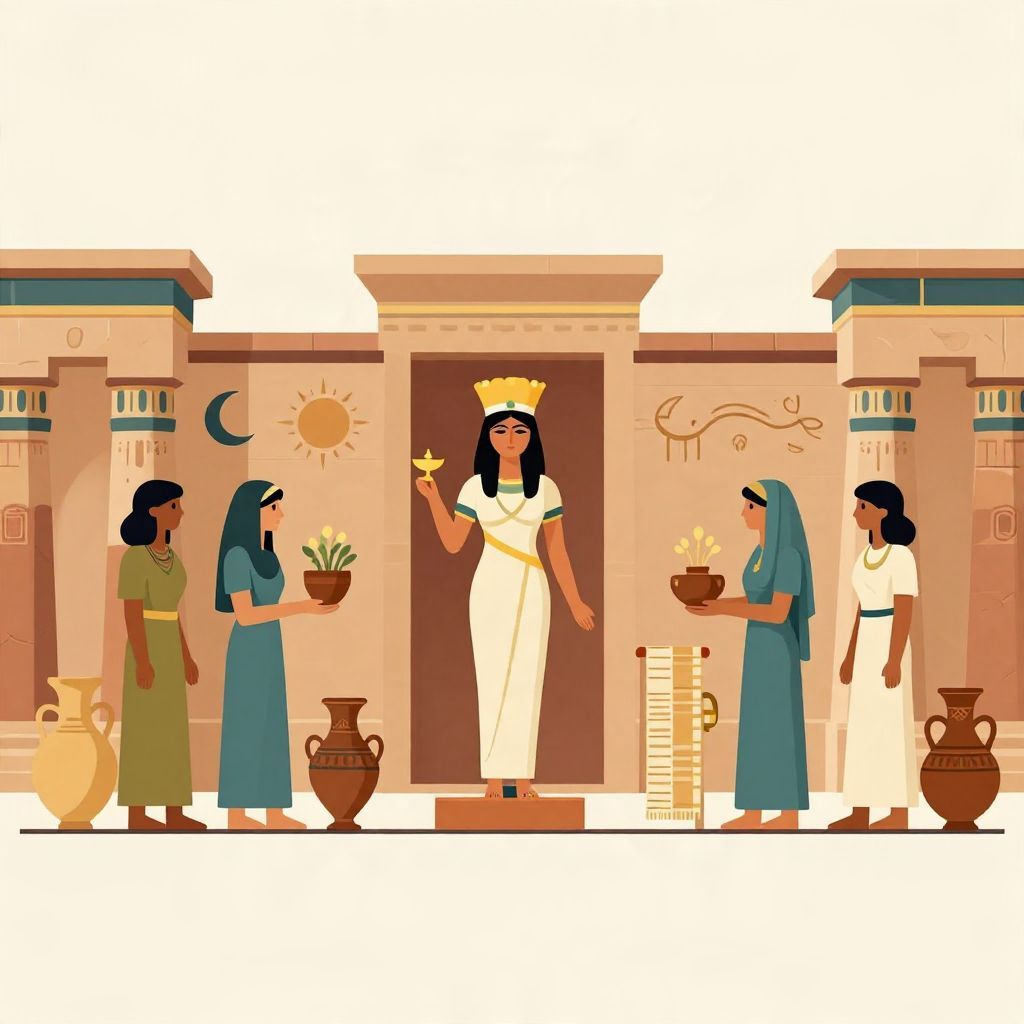
When God Was A Woman is not the title of a single ancient belief system, but a modern phrase used to describe a wide range of prehistoric and ancient religions in which goddesses, female divinities, or female-centered sacred symbolism played major roles. The idea is historically important, but it is also debated: scholars disagree about how common, how central, and how “female” these religions really were.
To answer the question directly, there was never a single era when all people believed God was a woman. Instead, many societies from the Paleolithic through the Bronze Age worshipped powerful goddesses alongside gods, and some modern writers have interpreted that evidence as proof of an earlier female-centered religion.
When God Was a Woman: What Does the Phrase Actually Mean?
The phrase usually refers to ancient religions in which female divine figures were prominent, sometimes even dominant in art, ritual, and myth. It is most often associated with prehistoric figurines, Neolithic fertility cults, and later goddess traditions in the ancient Near East, the Mediterranean, and parts of Asia. However, the evidence does not prove a universal “goddess religion” ruled by women.
Origins of the Idea: From Archaeology to Modern Interpretation
The modern popularity of When God Was a Woman grew in the 20th century, especially through feminist scholarship and popular history. Archaeologists had already uncovered thousands of ancient female figurines, temple images, and goddess statues. Some writers interpreted these as signs of a lost matriarchal age, while others argued they reflected fertility symbolism, ancestor veneration, or local cults rather than a single female supreme deity.
Prehistoric figurines and the “Great Goddess” theory
Small female figurines from the Upper Paleolithic, such as the famous “Venus” figures found across Europe and western Eurasia, date roughly from 30,000 to 20,000 BCE, though exact meanings remain uncertain. They may have represented fertility, beauty ideals, pregnancy, protection, or something else entirely. Because we do not have written explanations from the makers, any claim that they prove a universal mother-goddess religion remains interpretive, not certain.
Why the theory became influential
In the 20th century, scholars and popular authors connected these finds to broader arguments about women’s status in early societies. The most influential versions suggested that before patriarchal states and organized male priesthoods, many communities honored a supreme goddess or a pair of balanced divine powers. This idea was attractive because it offered a long historical precedent for female sacred authority, but it often went beyond what the evidence can firmly support.
When Did Goddess Worship Appear in History?
Goddess worship appears very early in recorded history, especially once writing begins in Mesopotamia and Egypt. From about 3000 BCE onward, many civilizations left clear evidence of female deities associated with fertility, war, love, wisdom, healing, and sovereignty. Rather than a single “before and after,” history shows a long coexistence of gods and goddesses in complex pantheons.
Mesopotamia
In ancient Mesopotamia, goddesses such as Inanna in Sumer and Ishtar in later Akkadian, Assyrian, and Babylonian traditions were among the most powerful divine figures. Inanna/Ishtar was linked to love, sexuality, warfare, and political legitimacy. Her prominence shows that female divinity could be central in states ruled by kings. Yet this was not a female-only religion; male gods remained equally important.
Ancient Egypt
Egyptian religion also placed major importance on goddesses such as Isis, Hathor, Nut, and Ma’at. Isis became especially influential in the later centuries of Egyptian and Greco-Roman religion, eventually spreading far beyond Egypt. Her cult demonstrates how a goddess could embody motherhood, magic, kingship, and cosmic order at once. Again, this was a mixed divine system, not proof that “God” was exclusively female.
The Aegean and the Mediterranean
In Minoan Crete and later Greek religion, goddesses played major roles, though the exact nature of Minoan religion is still debated because the script remains only partly understood. In Greek myth, figures such as Demeter, Athena, Artemis, and Aphrodite show that female divinity was deeply embedded in civic and domestic life. Roman religion likewise absorbed and adapted many goddess traditions.
Was There Ever a True Matriarchal Age?
Many people use “When God Was a Woman” to mean that ancient societies were once matriarchal, with women ruling and worship centered on a goddess. Most historians and archaeologists are cautious here. There is little solid evidence for a widespread global matriarchy in prehistory. Some societies may have had stronger female ritual roles or inheritance patterns, but that is different from women governing society as a class.
What the evidence can and cannot prove
- Can show: women and female divinities held important religious and symbolic roles in many ancient cultures.
- Can suggest: some communities may have emphasized fertility, motherhood, and renewal in sacred imagery.
- Cannot prove: that all early societies worshipped one universal goddess or that women politically ruled the ancient world.
This distinction matters. Religious symbolism is not the same as social power. A culture can venerate a goddess while still limiting women’s legal rights, inheritance, or public authority.
Why Female Deities Mattered in Ancient Societies
Female gods and goddesses often represented forces that ancient people considered essential to survival: birth, agriculture, rain, healing, sexuality, protection, and the continuity of the state. In agrarian societies, where harvests and family lines mattered deeply, divine femininity could symbolize abundance and legitimacy. But these goddesses were not always gentle or nurturing; many were also fierce, dangerous, and politically powerful.
Common roles of goddesses
- Fertility and childbirth: linked to life, family, and continuity.
- War and sovereignty: especially in Mesopotamian and Near Eastern traditions.
- Wisdom and craft: seen in deities such as Athena.
- Magic and healing: especially in Egyptian and later mystery cults.
- Cosmic order: associated with truth, balance, and justice.
The Decline of Goddess-Centered Interpretations
As major patriarchal states expanded in the ancient Mediterranean and Near East, male gods and male priestly institutions often became more visible in official records. That did not eliminate goddesses, but it sometimes reduced their public prominence or redefined their roles. Later monotheistic traditions, especially Judaism, Christianity, and Islam, generally centered worship on one male-gendered God, although feminine imagery and female saints or sacred figures continued to matter in different ways.
From polytheism to monotheism
The rise of monotheism did not happen overnight. It was a long historical process shaped by empire, political centralization, theology, and social change. In many regions, older goddess traditions survived in folklore, local custom, Marian devotion, saint cults, or symbolic language even after official religious systems changed.
Modern Significance of the Question
“When God Was a Woman” remains significant because it asks who gets remembered in history and whose sacred power is considered normal. For historians, the phrase is useful only when handled carefully. It can highlight the importance of female divinity in the ancient world, but it can also oversimplify the past if it assumes a lost golden age of female rule. The best historical answer is more complex: goddess worship was widespread and often powerful, but never uniform.
Why the debate continues
The debate continues because the evidence is fragmentary. Prehistoric objects rarely speak for themselves, and ancient texts often come from elite male scribes. That leaves room for interpretation, but not for certainty where the record is silent. As a result, the phrase has become both a scholarly topic and a cultural symbol in discussions of religion, gender, and power.
Timeline: Key Developments in Goddess History
- c. 30,000–20,000 BCE: Female figurines appear in Paleolithic Eurasia; meanings remain uncertain.
- c. 7000–3000 BCE: Neolithic communities produce abundant female images and ritual objects in several regions.
- c. 3000 BCE onward: Written civilizations in Mesopotamia and Egypt record major goddesses such as Inanna/Ishtar and Isis.
- 2nd–1st millennium BCE: Goddess cults spread and adapt across the Mediterranean, Near East, and South Asia.
- 1st millennium CE: Monotheistic religions expand, while older goddess traditions decline or transform.
- 20th century: Scholars and popular writers revive the idea of “when God was a woman” as a feminist and historical argument.
Historical Significance: What We Learn from the Phrase
The lasting value of When God Was A Woman lies in what it reveals about ancient religion and modern memory. Historically, it reminds us that female sacred power was never marginal everywhere; in many societies, goddesses stood at the center of myth, ritual, and political legitimacy. At the same time, it warns us not to turn fragmentary evidence into a simple story of an original goddess civilization.
In the end, the most accurate answer is this: God was not literally “a woman” in one single past age, but female divinity was profoundly important in many ancient religions. Understanding that distinction gives us a truer picture of both the ancient world and the modern debates that continue to shape how we interpret it. For related questions, you may also want to read about what a eunuch was in the Bible.