
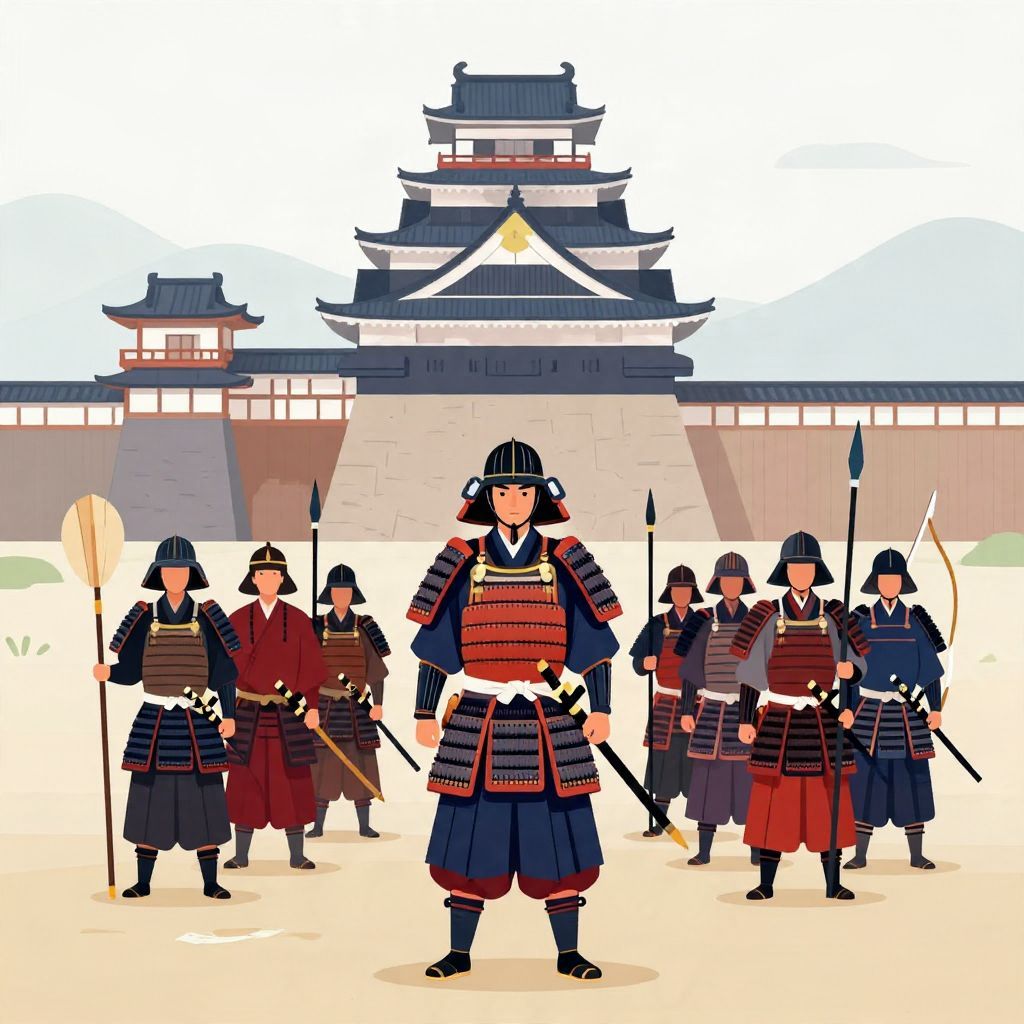
What is shogun? In Japanese history, a shogun was the military ruler who governed the country in the emperor’s name. The title became central to Japan’s medieval and early modern political order, especially from the late 12th century until the Meiji Restoration in the 19th century.
The word is often used to describe both the office and the era of warrior rule known as the shogunate, when military leaders held real power while emperors remained important symbolic and ritual figures.
What Is Shogun?
A shogun was Japan’s supreme military commander and, for long periods, the de facto ruler of the country. The term originally meant “barbarian-subduing general,” but it came to designate the military government that controlled Japan from Kamakura in 1192, later from Muromachi and Edo, until the office was abolished in 1867.
Where Did the Title Shogun Come From?
The title comes from the longer Japanese term Sei-i Taishōgun, usually translated as “Great General Who Subdues the Barbarians.” It first appeared in the early medieval period, when the imperial court appointed commanders to lead campaigns against groups on the northern frontier of Japan. Over time, the title lost its narrow military meaning and became the name of Japan’s highest warrior authority.
From battlefield command to political office
In its earliest use, the title was temporary. It was granted to generals sent on specific military expeditions, not to a permanent ruler. The transformation into a lasting institution happened gradually as military families gained influence, especially during the late Heian period, when the imperial court in Kyoto struggled to control provincial violence and landholding disputes.
How Did the Shogunate Begin?
The shogunate emerged when warrior elites became powerful enough to dominate politics while preserving the emperor’s formal authority. The decisive figure was Minamoto no Yoritomo, who defeated rival clans in the Genpei War and was appointed shogun in 1192. This marked the beginning of the Kamakura shogunate, Japan’s first durable military government.
Why the emperor did not disappear
Unlike a king who replaces an emperor, the shogun ruled alongside the imperial institution rather than abolishing it. The emperor remained the source of legitimacy, court rank, and ritual authority, while the shogun controlled armed force, land administration, and much of the practical government. This division helped make warrior rule politically acceptable in a society that still valued imperial tradition.
What Did a Shogun Actually Do?
A shogun oversaw military affairs, appointed or confirmed regional governors, managed land and tax systems, and kept powerful warrior families in check. In practice, the shogun’s authority depended on alliances, hostages, appointments, and the ability to reward loyalty. The office was not always all-powerful; it was strongest when the central military government could enforce its will across the provinces.
Key responsibilities of a shogun
- Command the samurai military class
- Maintain order and suppress rebellion
- Oversee land disputes and warrior appointments
- Coordinate relations with the imperial court
- Support a wider system of regional rule through loyal retainers
The Major Shogunates in Japanese History
Japanese history is usually divided into three major shogunates: Kamakura, Muromachi, and Tokugawa. Each arose in a different political context, but all were built on the same basic idea: military rule legitimized by the emperor’s authority.
1. Kamakura shogunate (1185/1192–1333)
The Kamakura shogunate was founded by Minamoto no Yoritomo after the Genpei War. Historians sometimes use 1185, when Yoritomo gained effective military control, or 1192, when he received the title shogun. Kamakura established the model of warrior government and created institutions to supervise provincial landholders and military retainers.
2. Muromachi shogunate (1336/1338–1573)
The Ashikaga family led the Muromachi shogunate after the fall of Kamakura. Its authority was often weaker than Kamakura’s, and Japan experienced long periods of instability, especially during the Sengoku or “Warring States” era. Regional warlords, or daimyo, increasingly acted independently, showing that the shogun’s power could fragment when central control weakened.
3. Tokugawa shogunate (1603–1867)
The Tokugawa shogunate, founded by Tokugawa Ieyasu, created the most stable and centralized warrior regime in Japanese history. Based in Edo (modern Tokyo), it ruled Japan for more than 250 years. The Tokugawa period brought peace, strict social hierarchy, regulated foreign contact, and a strong system of domain rule under shogunal supervision.
How Was a Shogun Different from an Emperor?
The emperor and shogun represented two different kinds of authority. The emperor was the sacred and ceremonial sovereign, tied to court ritual, tradition, and dynastic continuity. The shogun was the military ruler who exercised practical power. This arrangement is one of the defining features of premodern Japanese government.
Two centers of power
In theory, the emperor stood above politics. In reality, the shogun often controlled the government. This dual structure allowed Japan to preserve imperial legitimacy while adapting to the rise of a warrior society. It also explains why the title shogun is so important: it describes a system, not just a person.
Why Did the Shogun Become So Powerful?
The rise of the shogun was driven by land conflict, private armies, and the weakening of court-based administration. As provincial warriors gained control over estates and local security, they became indispensable. The imperial court increasingly relied on them, and military leaders used that dependence to build their own political institutions.
Social and political causes
- Growth of armed provincial elites
- Decline of direct court control over distant lands
- Need for local military protection
- Competition among powerful clans
- Use of imperial titles to legitimize military rule
What Was Life Like Under a Shogun?
Life under a shogunate varied by period, region, and social rank. Samurai formed the ruling military class, peasants worked the land, artisans produced goods in towns, and merchants grew increasingly important over time. Under the Tokugawa shogunate especially, society was organized into a rigid hierarchy, and travel, weapons, and foreign contact were carefully controlled.
Tokugawa order and everyday life
The Tokugawa era is often remembered for peace rather than conquest. Daimyo were required to spend time in Edo under the alternate attendance system, which helped limit rebellion. Cities expanded, commerce grew, and a vibrant urban culture developed. At the same time, the regime restricted political mobility and kept a close watch on Christianity and overseas trade.
Did All Shoguns Rule in the Same Way?
No. The shogun’s power changed dramatically over time. Some shoguns governed effectively through strong institutions, while others were figureheads or struggled against rival warlords. The office was strongest when the military government could balance regional power with central authority, and weakest when civil war or factional conflict broke that balance.
Examples of changing power
The Kamakura shoguns built a new military order, but later real power shifted to regents from the Hōjō family. In the Muromachi period, Ashikaga shoguns often depended on alliances with powerful regional lords. By contrast, the Tokugawa shoguns created a more durable state that lasted until the political crisis of the 19th century.
How Did the Shogunate End?
The shogunate ended in 1867, when Tokugawa Yoshinobu resigned amid mounting pressure from reformers, anti-shogunal domains, and foreign disruption after the arrival of Western powers. The following year, imperial authority was restored in name during the Meiji Restoration, and Japan moved toward a centralized modern state under the emperor.
Why the old system collapsed
The shogunate faced challenges from internal economic change, social unrest, and the shock of unequal treaties and foreign military pressure in the mid-19th century. Reformers argued that Japan needed a stronger, more unified government to survive in a rapidly changing world. The end of the shogunate was therefore both a political revolution and a response to global pressure.
Why Does the Word Shogun Still Matter Today?
“Shogun” remains important because it captures a distinctive form of Japanese rule: a state in which military power and imperial legitimacy coexisted. The term is also widely used in popular culture, but the historical office was more complex than a simple “warlord.” It represented a long-running political system that shaped Japanese society, warfare, and governance for centuries.
In short, a shogun was Japan’s military ruler, and the shogunate was the system that made warrior government possible. Understanding the shogun helps explain how Japan balanced imperial tradition with practical power, from the rise of the samurai to the modern transformations of the Meiji era. For broader context on military empires and state power, see what Prussia was and how long the Ottoman Empire lasted.