
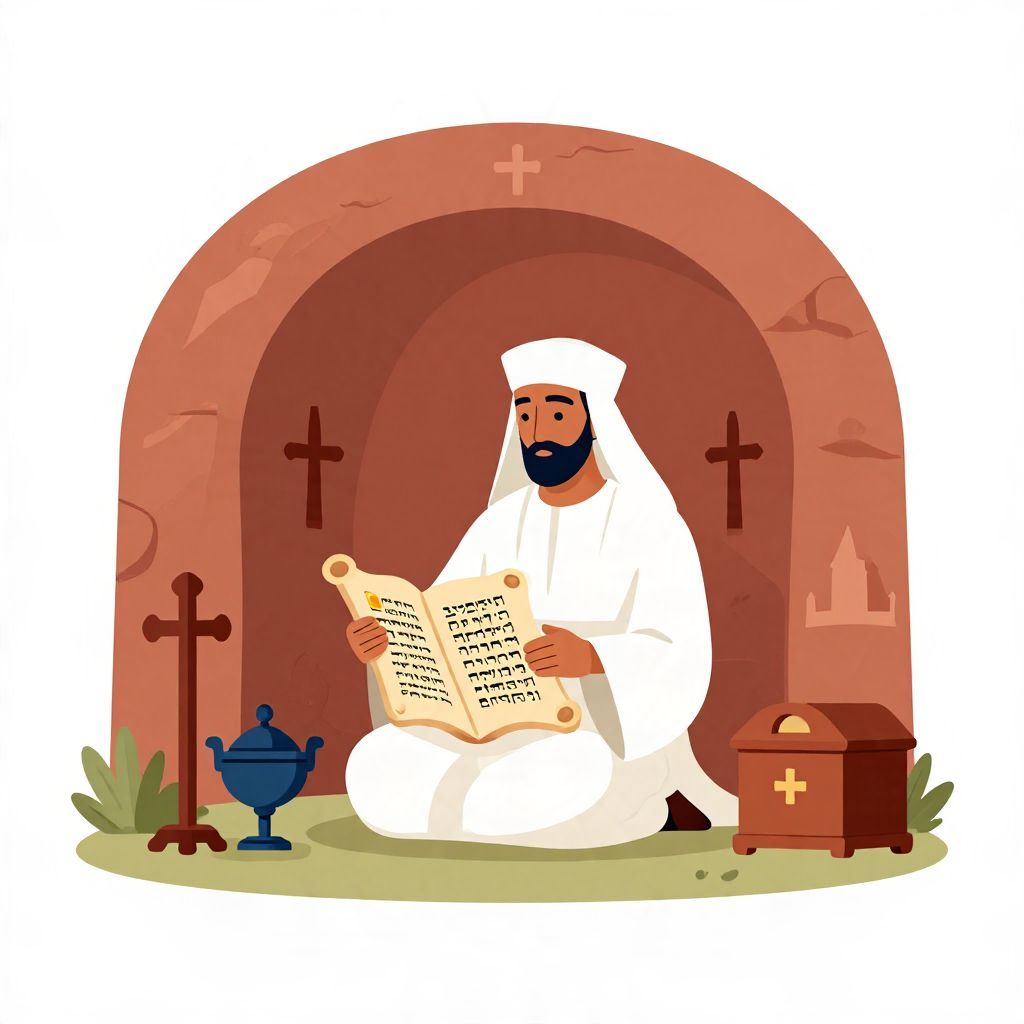
People often ask, is the Ethiopian Bible accurate? The short historical answer is that it is a genuine and very old Christian biblical tradition, but “accurate” depends on what standard you mean. It preserves ancient texts and books that many other churches do not include, yet it also differs in canon, translation history, and manuscript tradition from Catholic, Protestant, and Eastern Orthodox Bibles.
To understand it properly, we need to look at its history, language, and contents rather than judge it by a single modern standard. The Ethiopian Bible is historically important because it reflects one of the oldest continuous Christian cultures in the world.
Is the Ethiopian Bible accurate?
The Ethiopian Bible is historically authentic, but it is not identical to the Bible used in most Western churches. It is “accurate” as a witness to ancient Christian tradition, especially within Ethiopian Orthodoxy, yet its canon includes additional books and its text history differs from Greek, Latin, and Hebrew biblical traditions.
What is the Ethiopian Bible?
The term usually refers to the biblical canon used by the Ethiopian Orthodox Tewahedo Church. It is not a single book in the modern sense but a collection of scriptural writings in Ge’ez, the classical liturgical language of Ethiopia. Its canon is broader than the 66-book Protestant Bible and broader than the Catholic Bible as well.
How many books does it include?
Counts vary slightly depending on how a tradition lists and groups the books, but the Ethiopian Orthodox canon is commonly described as including 81 books. This includes books found in most Christian Bibles, plus texts such as 1 Enoch and Jubilees, which are especially important in Ethiopian Christianity.
That broader canon is one reason the question of “accuracy” can be confusing. If someone expects the Ethiopian Bible to match a Protestant Bible exactly, it will not. If someone asks whether it represents a legitimate ancient Christian textual tradition, the answer is yes.
Where did the Ethiopian Bible come from?
Ethiopia adopted Christianity in the fourth century, traditionally during the reign of King Ezana of Aksum, though the exact process was gradual. Christianity in the Aksumite kingdom connected Ethiopia to the wider late antique Christian world across the Red Sea, especially Egypt and the eastern Mediterranean.
The Bible in Ethiopia developed through translation and transmission over centuries. Many biblical books were translated into Ge’ez from Greek, and in some cases through intermediary traditions. Ethiopian Christianity also preserved older Jewish and Christian writings that were valued locally even when they were not accepted elsewhere.
Why Ge’ez matters
Ge’ez is crucial because it is the language of the oldest surviving Ethiopian biblical manuscripts. It is not a spoken everyday language today, but it remains liturgical. The use of Ge’ez means the Ethiopian Bible is not a late modern invention; it belongs to a long manuscript culture with deep roots in African Christianity.
How does it differ from other Bibles?
The main differences are canon, textual tradition, and ordering of books. The Ethiopian Bible contains books that most Protestants do not accept as canonical, and it may arrange or present some texts differently from Western Bibles. This does not make it “false”; it means its church history developed along a different path.
Key differences at a glance
- Canon: Includes additional books such as 1 Enoch, Jubilees, and other Ethiopian-specific texts.
- Language: Preserved in Ge’ez, with later translations into modern Ethiopian languages.
- Textual tradition: Reflects Ethiopian manuscript transmission, not simply the Hebrew Masoretic Text or the Latin Vulgate.
- Church authority: Its canon is shaped by Ethiopian Orthodox tradition, not by Reformation-era Protestant standards.
What does “accurate” mean in historical terms?
Historians do not usually ask whether a Bible is “accurate” in a single absolute sense. They ask several different questions: Is the text ancient? Is it well preserved? Does it reflect early Christian beliefs? Does it match other manuscript traditions? The Ethiopian Bible can be strong on some of these questions and different on others.
1. Accurate as a historical document
As a historical document, the Ethiopian Bible is highly valuable. It preserves evidence of how biblical texts were read, copied, and interpreted in Ethiopia over many centuries. It is one of the most important witnesses to the diversity of early and medieval Christianity.
2. Accurate as a copy of the earliest biblical originals
Here the answer is more complicated. No Bible in any tradition is a perfect “original” because all surviving Bibles are copies of copies, translated and recopied over time. The Ethiopian text tradition sometimes preserves ancient readings, but it also contains variations, expansions, and local textual developments. That is normal for manuscript cultures.
3. Accurate according to one church’s canon
Within Ethiopian Orthodoxy, the Bible is authoritative and accurate in the sense that it is the received scripture of the church. In that setting, its broader canon is not an error but a feature of tradition.
Why does the Ethiopian Bible include books like Enoch?
Some books now associated strongly with Ethiopia were once part of a wider ancient Jewish and Christian world. 1 Enoch, for example, was known in antiquity beyond Ethiopia; fragments of Enochic literature were found among the Dead Sea Scrolls, showing that the book’s ideas circulated in Second Temple Judaism.
Ethiopia preserved these traditions when many other communities eventually excluded them from their canons. This makes the Ethiopian Bible especially important for historians studying how the biblical world was formed and how different communities decided which texts counted as scripture.
Not the same as “legend”
Because some of these books are unfamiliar to many readers, they are sometimes dismissed as legends. That is too simple. A text can be non-canonical in one tradition and still be historically important, influential, and ancient. The presence of such books in the Ethiopian Bible tells us about the breadth of early religious literature, not just about later church boundaries.
How reliable are the manuscripts?
Ethiopian biblical manuscripts are a major source for scholars, but like all manuscripts, they vary in age, completeness, and textual form. Some are richly illuminated and carefully preserved; others reflect later copying and local adaptation. The survival of these manuscripts is itself remarkable, especially given the political upheavals, environmental conditions, and long history of manuscript use in the Horn of Africa.
Scholars value Ethiopian manuscripts because they sometimes preserve readings that help compare different biblical traditions. At the same time, no manuscript tradition is immune to copying errors, omissions, harmonizations, or interpretive additions. That is a normal feature of pre-print textual history.
Did the Ethiopian Bible change over time?
Yes. Like every major biblical tradition, it developed over centuries. The canon was not fixed in a single moment, and the manuscript tradition continued to evolve. Different Ethiopian communities and periods emphasized different texts, and the relationship between scripture, liturgy, and commentary changed over time.
- Fourth century onward: Christianity becomes established in Aksum.
- Late antique and medieval periods: Biblical texts are translated, copied, and expanded in Ge’ez.
- Manuscript era: Local scribal traditions shape wording, order, and presentation.
- Modern period: Printed editions and translations make the canon more widely accessible.
This long development is not a flaw. It is exactly how most ancient religious texts survived.
So, is the Ethiopian Bible “more accurate” than others?
Not in any simple universal sense. It is more accurate to say that the Ethiopian Bible is different, not inherently more or less accurate than other Christian Bibles. It is historically authentic within its own tradition and sometimes preserves ancient material that is absent elsewhere. But it also reflects a distinct canon and textual history.
If someone means “Does it preserve ancient Christianity faithfully?” the answer is often yes. If someone means “Does it match the Protestant Bible exactly?” the answer is no. If someone means “Can historians use it to study the development of biblical literature?” the answer is emphatically yes.
Why the Ethiopian Bible matters historically
The Ethiopian Bible matters because it shows that Christianity was never monolithic. Long before modern debates about canon, different Christian communities were already preserving different sets of sacred books. Ethiopia’s tradition demonstrates the depth of African Christianity and the global diversity of the biblical world.
It also reminds us that “the Bible” is not one uniform object across all history. It is a family of texts, shaped by language, geography, theology, and manuscript transmission. Ethiopia’s version is one of the oldest and most distinctive members of that family.
Conclusion
So, is the Ethiopian Bible accurate? Historically speaking, yes—if by accurate we mean a genuine, ancient, and authoritative Christian biblical tradition with deep manuscript roots. But it is not identical to other Bibles, and its broader canon reflects a different historical path. For readers interested in biblical history and interpretation, it is best understood as an important and reliable witness to the diversity of early Christianity. For related context, you may also want to explore what a eunuch was in the Bible and whether the Bible mentions dinosaurs.