
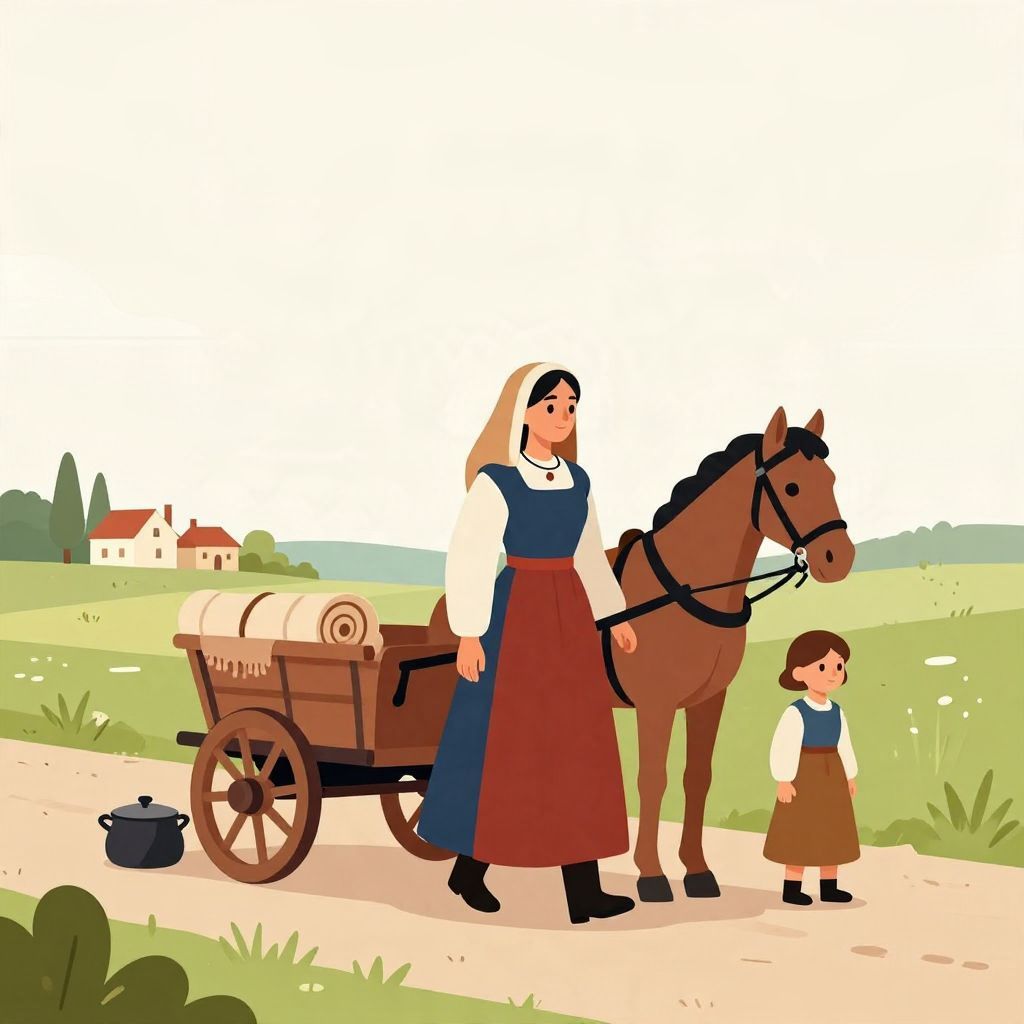
“Gypsy woman” is a historical term that has been used in many countries to describe a woman from the Romani people, a diaspora with roots in northwestern India and a long history across Europe and beyond. The phrase is now often considered outdated or offensive because it reduces a diverse people to an outsider label shaped by prejudice, stereotype, and romantic myth.
To answer the question directly, a gypsy woman is not a separate ethnic category or a single historical type. In most historical contexts, the term referred to a Romani woman, though in some places it was also loosely applied to other traveling or marginalized women. Understanding the phrase means tracing both Romani history and the changing meanings attached to the word “gypsy.”
What Is a Gypsy Woman?
A “gypsy woman” usually means a woman of Romani heritage, but the term is historically loaded and often inaccurate. “Gypsy” came from the mistaken medieval belief that Romani people were from Egypt. Over time, it became a label used by outsiders, often in ways that mixed fascination with discrimination, so many people prefer “Romani woman” instead.
Where Did the Word “Gypsy” Come From?
The English word “gypsy” developed from “Egyptian,” because Europeans in the late Middle Ages wrongly thought the Romani were Egyptians or pilgrims from Egypt. Similar mistaken labels appeared in other languages. The term spread through travel accounts, legal records, and popular speech, and it quickly gathered stereotypes that had little to do with Romani identity itself.
A medieval misunderstanding
When Romani groups began appearing in parts of Europe in the 14th and 15th centuries, many local observers did not know who they were. Some groups presented themselves as pilgrims or travelers, which may have helped them gain passage in unfamiliar places. But the “Egyptian” explanation was a guess, not a fact, and it eventually hardened into the word “gypsy.”
Why the term is controversial
Because “gypsy” grew out of misunderstanding and was often used by outsiders, it became tied to exclusion, suspicion, and exoticism. In some places it was used as a slur. Even when used romantically in art or fashion, it often flattened Romani people into a stereotype of freedom, wandering, or mystery rather than recognizing them as real communities with distinct histories.
Who Are the Romani?
The Romani are an ethnic people whose ancestors likely left northwestern India around the early medieval period, probably between the 6th and 11th centuries, though the exact timing remains debated. Linguistic evidence strongly supports this Indian origin. Over centuries, Romani communities moved through the Middle East and into Europe, where they developed many regional identities and languages.
Migration and settlement
Romani history is not a single migration story but a long process of movement, adaptation, and settlement. Different groups reached different regions at different times. Some became more settled; others maintained mobile livelihoods. Because of this diversity, there has never been one uniform “gypsy woman” experience. Women’s lives varied by region, religion, class, occupation, and local law.
Language and identity
Many Romani communities speak varieties of the Romani language, which belongs to the Indo-Aryan branch of languages. Others have shifted largely to local languages while keeping Romani identity through family, custom, marriage networks, and community memory. A Romani woman might identify as Romani, Sinti, Kalderash, Manush, or by another subgroup name, depending on place and history.
How Were Gypsy Women Viewed in History?
Historically, “gypsy women” were often viewed through stereotypes rather than through accurate knowledge. European societies frequently portrayed them as mysterious fortune-tellers, dancers, thieves, or free spirits. These images appeared in literature, theater, and later film, but they tell us more about majority fears and fantasies than about Romani women’s actual lives.
Stereotype and reality
Some Romani women did earn livelihoods through music, metalwork, horse trading, healing, seasonal labor, or fortune-telling, especially where discrimination limited other options. But these occupations were never universal. Many Romani women were farmers, mothers, artisans, workers, or household heads, living ordinary lives shaped by the same economic pressures that affected other women.
Romanticization and prejudice
In European art of the 18th and 19th centuries, the “gypsy woman” often became a symbol of sensuality, freedom, or danger. This romantic image coexisted with harsh anti-Romani laws, forced removals, enslavement in parts of Eastern Europe, and social exclusion. The contrast is important: admiration in art did not mean respect in daily life.
What Was the Historical Experience of Romani Women?
Romani women lived at the intersection of ethnic prejudice and gender expectations. They were often responsible for family survival, childcare, food production, and income generation, while also facing restrictions imposed by both Romani traditions and the surrounding society. Their experiences changed over time, but discrimination was a persistent historical reality.
Work and mobility
In many places, mobility was both a necessity and a strategy. Some families traveled for work because settled employment was denied to them. Women might sell goods, gather and repair household items, perform music, or offer services linked to local markets. Mobility could provide opportunity, but it also exposed families to policing, eviction, and harassment.
Law, control, and persecution
Across Europe, Romani people were often targeted by laws restricting movement, dress, residence, and trade. In some regions they were expelled, enslaved, or forcibly assimilated. During the Nazi era, Romani women and men were among the victims of genocide, often referred to by Romani communities as the Porajmos or Samudaripen. This history is essential to understanding the burden behind the word “gypsy.”
How the Meaning Changed Over Time
The meaning of “gypsy woman” shifted from a mistaken ethnic label to a cultural stereotype and then, in some modern contexts, to a word used in fashion, music, or self-description. But the term has never been neutral. Its history reflects changing attitudes toward migration, ethnicity, femininity, and difference in Europe and the wider world.
From identification to stereotype
In early modern Europe, “gypsy” was often used by officials, clergy, and neighbors to identify people seen as foreign or itinerant. By the 18th and 19th centuries, the word was increasingly loaded with literary and visual clichés. A “gypsy woman” might be imagined as a fortune-teller with bright clothing, a dancer, or a figure of forbidden freedom.
Modern preference for self-identification
Today, many people in Romani communities prefer “Romani woman” or their specific subgroup name. Some may use “gypsy” in a reclaimed or cultural sense, but that depends on context and personal choice. Historians and educators generally avoid the term unless discussing its historical use, because it can reproduce harmful assumptions.
Common Myths About Gypsy Women
Several popular myths have shaped public understanding of “gypsy women,” but they are not reliable history. These myths often come from folklore, novels, and entertainment rather than evidence. Separating fact from fiction helps restore Romani women to history as real people rather than symbols.
- Myth: All gypsy women are fortune-tellers.
Reality: Fortune-telling was only one occupation among many, and not all Romani women practiced it. - Myth: Gypsy women are naturally nomadic.
Reality: Romani communities have included both mobile and settled families for centuries. - Myth: “Gypsy” is a harmless old-fashioned word.
Reality: It often carries a history of prejudice and misrepresentation. - Myth: There is one gypsy culture.
Reality: Romani groups are diverse, with different languages, traditions, and regional histories.
Why This History Matters Today
Understanding what a gypsy woman is matters because language shapes memory. The phrase can seem harmless to some listeners, but it carries centuries of misunderstanding and exclusion. Using historically accurate terms helps correct stereotypes and honors the complexity of Romani women’s lives, past and present.
Respectful language in historical writing
When discussing the past, historians usually distinguish between the historical term and the people it was applied to. That means saying “the term ‘gypsy’ was used historically for Romani women” rather than treating the label as an identity in itself. This approach is more accurate and more respectful of the communities involved.
Conclusion
A gypsy woman, in historical terms, usually refers to a Romani woman, but the phrase is shaped by centuries of outsider naming, stereotype, and prejudice. The better historical answer is that Romani women were and are diverse people with deep roots, complex migrations, and varied lives. For related cultural context, see what folk art is and what folk culture is.