
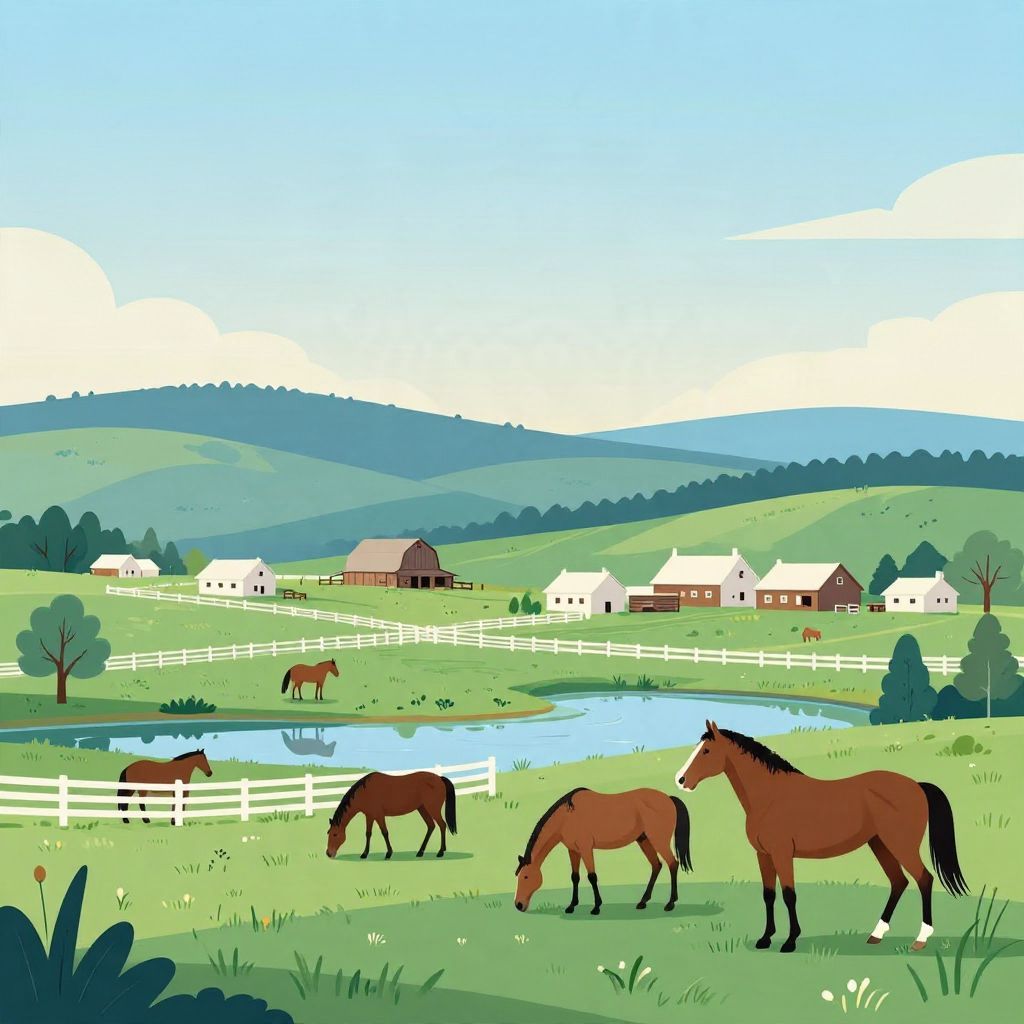
Why is Kentucky called the Bluegrass State? The short answer is that the nickname comes from the blue-tinged seed heads of a common pasture grass, not from grass that is literally blue. By the early 19th century, visitors and settlers were noticing this distinctive plant across central Kentucky, and the name gradually became tied to the region’s identity.
Over time, “Bluegrass” came to mean more than a plant. It also described Kentucky’s fertile limestone soil, its horse-breeding economy, and a landscape that outsiders associated with rich farmland and rolling hills. The nickname is both botanical and cultural, and its history helps explain how geography shaped Kentucky’s reputation.
Why is Kentucky called the Bluegrass State?
Kentucky is called the Bluegrass State because a native grass called bluegrass grows widely in the region and develops bluish-purple seed heads in spring. The term became associated especially with central Kentucky’s fertile pastureland, where limestone-rich soil supported excellent grazing for horses and livestock. The nickname grew from observation, then became a symbol of state identity.
The grass behind the nickname
The “bluegrass” in Kentucky’s nickname refers to a type of grass in the Poa family, especially Kentucky bluegrass. When it flowers, the plant’s seed heads can appear bluish or purplish from a distance, especially in spring sunlight. The effect is subtle, but early observers found it distinctive enough to name the landscape after it.
It was not a field of blue grass
The nickname does not mean the state is covered in blue-colored blades of grass. Instead, the name comes from the color of the seed heads and the way whole pastures can take on a bluish cast when the grass blooms. That visual impression was strong enough to leave a lasting mark on Kentucky’s identity.
Why the grass thrived there
Central Kentucky’s soil helped make bluegrass especially valuable. The region sits on limestone bedrock, which produces mineral-rich soil with good drainage. That kind of ground is well suited to pasture grasses and helped create the lush fields that later became famous for raising horses.
How the nickname developed historically
The nickname did not appear overnight. It emerged gradually in the early 1800s as settlers, travelers, and farmers described the region’s landscape. By the mid-19th century, “Bluegrass” was increasingly used to refer not just to the plant, but to the heart of Kentucky itself, especially the central region around Lexington.
From local description to state symbol
At first, “bluegrass” was simply a practical description of what people saw in the fields. Over time, however, the term gained emotional and regional meaning. It came to suggest a place of fertile farms, refined horse culture, and a distinctive countryside that set Kentucky apart from neighboring states.
The Bluegrass region matters as much as the state nickname
Strictly speaking, the Bluegrass name began as a regional label before it became a statewide nickname. The Bluegrass Region in central Kentucky is the area most closely associated with the term. Because this region was economically and culturally influential, its name eventually became a shorthand for the entire state.
Why central Kentucky became associated with bluegrass
Central Kentucky became the strongest home of the nickname because its landscape made bluegrass especially visible and useful. The area’s rolling hills, fertile soil, and abundant pastureland supported farming and horse breeding. These conditions gave the region a distinctive appearance and an economy that reinforced the name.
Limestone soil and horse country
The limestone-based soil helped produce nutritious grass for grazing animals. That mattered enormously in a state where horses became central to agriculture, transportation, and later recreation. As horse breeding expanded, the Bluegrass region gained a reputation for excellent pastures and high-quality stock.
A landscape outsiders remembered
Travelers often described Kentucky’s central countryside as unusually green and attractive. The combination of fertile land, grazing animals, and springtime bluegrass created a memorable impression. Such descriptions helped spread the nickname beyond local use and into broader American awareness.
When did Kentucky become known as the Bluegrass State?
There is no single official date when Kentucky became the Bluegrass State. The nickname developed informally in the early 19th century and became widely recognized during the 1800s. Like many state nicknames, it grew through repeated use rather than a formal proclamation at the moment of origin.
Informal names often spread gradually
State nicknames usually begin in newspapers, travel writing, local conversation, and commercial branding before they become standard. Kentucky’s nickname followed that pattern. By the time the state was firmly established in the national imagination, “Bluegrass” had become one of its defining labels.
Not every source uses the term the same way
Some historical references use “Bluegrass” to mean the plant, some to mean the region, and some to mean Kentucky itself. That overlap can make the nickname’s history seem more precise than it really is. The evidence supports a gradual evolution from botanical term to regional identity to statewide nickname.
Bluegrass and Kentucky’s horse culture
The nickname became even more powerful because it fit Kentucky’s growing horse industry. By the 19th century, the state was increasingly associated with thoroughbred breeding, racing, and elite farms. Bluegrass pastures were ideal for raising horses, so the plant and the economy reinforced each other.
Why horses mattered to the nickname
Horse breeding gave the Bluegrass name prestige. Visitors who saw Kentucky’s farms often linked the quality of the land to the quality of the horses. Over time, the state’s reputation for equine excellence helped make “Bluegrass” a symbol of rural wealth, skill, and tradition.
More than a scenic label
The nickname was never just decorative. It pointed to a real agricultural system shaped by soil, climate, and land use. In that sense, “Bluegrass State” captures how environment and economy worked together in Kentucky’s history.
Popular myths and common misunderstandings
Several misunderstandings surround the nickname. The most common is that Kentucky is called the Bluegrass State because the grass literally looks blue all year. In reality, the color is seasonal and subtle. Another misconception is that the nickname refers to music, since “bluegrass” later became the name of a musical genre.
Bluegrass music came later
Bluegrass music did not create the state nickname. The musical style developed much later in the 20th century, drawing on Appalachian and other folk traditions. Its name was inspired partly by Kentucky’s nickname and cultural associations, not the other way around.
The nickname is older than the genre
This matters historically because it shows how a regional label can be reused in new cultural settings. The state nickname came first, then the musical term borrowed from it. That later association has sometimes led people to reverse the chronology, but the historical sequence is clear.
What the nickname reveals about Kentucky’s history
The Bluegrass State nickname reveals how Kentucky’s identity was shaped by land, agriculture, and regional pride. It reflects a place where natural conditions supported productive farming, especially pastureland, and where those conditions became part of a larger story about prosperity and refinement.
Geography shaped identity
Kentucky’s nickname is a good example of how geography can become history. The limestone soil and grassland environment were not just background features; they influenced settlement patterns, farming practices, and the state’s most famous industries. Over time, those practical realities became part of Kentucky’s public image.
From local feature to national brand
What began as a simple description of a plant became a widely recognized emblem. That process tells us something important about American state nicknames: they often compress complicated histories into a memorable phrase. In Kentucky’s case, the phrase captures ecology, agriculture, and regional pride all at once.
Conclusion
Kentucky is called the Bluegrass State because bluegrass grows naturally in the region and gives the landscape a bluish cast when it flowers, especially in central Kentucky’s fertile limestone country. The nickname developed in the 19th century and became tied to the state’s horse farms, farmland, and identity. For more on state nicknames, see why Tennessee is called the Volunteer State and why New Mexico is called New Mexico.