
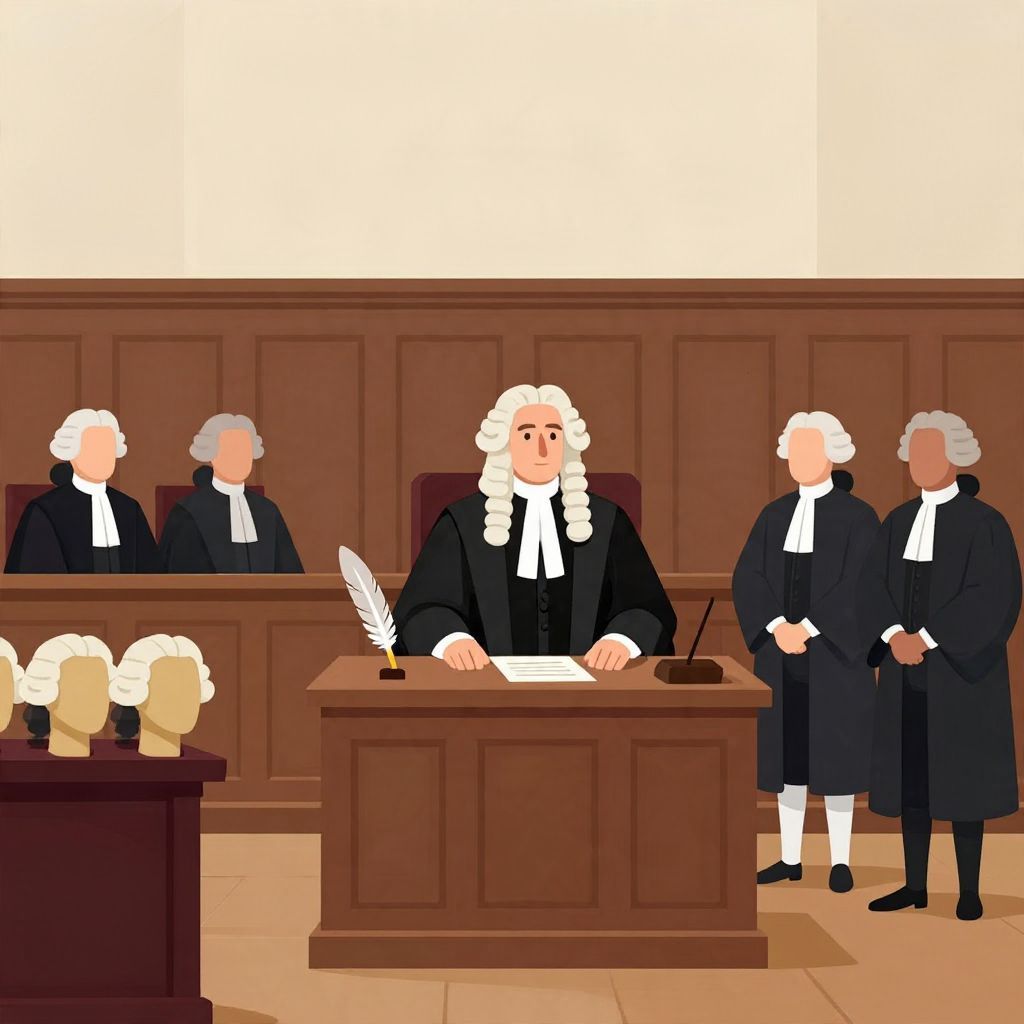
Why do judges wear wigs? The short answer is that the tradition began in early modern Europe, especially in England, where wigs became fashionable among elites and later survived in courtrooms after everyday fashion changed. Over time, the wig came to symbolize dignity, continuity, and the authority of the law rather than personal style.
What looks strange today once made practical and social sense. Judges’ wigs are not an ancient legal requirement, but a vestige of 17th- and 18th-century dress that outlived the fashions that created it.
Why do judges wear wigs?
Judges wear wigs because the practice grew out of 17th-century European fashion, especially in England, and then became a symbol of legal authority and institutional continuity. When wigs fell out of ordinary use, courts kept them as a sign of tradition, seriousness, and the impersonality of justice.
The fashion origins of judicial wigs
Judicial wigs did not begin as a legal invention. They came from aristocratic and court fashion in the 1600s, when wigs or hairpieces became popular among European elites. In England, the style spread after Charles II returned to the throne in 1660, helping make elaborate wigs fashionable in public life.
From royal style to professional dress
At first, wigs were worn for the same reasons people wear fashionable clothing today: to signal status, wealth, and refinement. They also served practical purposes. They could cover thinning hair, hide lice or hair loss, and fit neatly into the formal appearance expected of gentlemen. Lawyers and judges, who wanted to project respectability, adopted the style as part of elite male dress.
By the later 17th century, English legal professionals increasingly wore wigs in court because the courtroom was a formal setting where appearance mattered. The wig helped create a uniform, dignified look and separated legal professionals from ordinary society. Over time, what began as fashion became a professional costume.
How the wig became part of the legal system
The legal profession is conservative by nature. Courts value continuity, precedent, and visible authority, so once wigs became associated with learned men and public office, they were slow to disappear. Even after everyday fashion changed, the legal world kept the wig because it had acquired symbolic meaning.
The meaning of the wig in court
In the courtroom, a wig suggested that the judge was not acting as a private individual but as an officeholder representing the law. It created a sense of distance from personal identity and emphasized the role rather than the person. This mattered in a system that prized impartiality and ritual.
The wig also helped reinforce hierarchy. Judges, barristers, and other legal officers could be visually distinguished from one another and from the public. In that sense, the wig was part of a broader legal costume that included robes and other formal garments.
Why the tradition lasted after fashion changed
Wigs disappeared from ordinary dress in Britain during the late 18th and early 19th centuries, but the legal profession kept them. This is a common pattern in institutions: once an item of clothing becomes a symbol of office, it can survive long after its original practical purpose is gone.
Tradition, authority, and conservatism
Courts often resist rapid change because their legitimacy depends on continuity. Retaining wigs allowed judges and barristers to present the law as stable, learned, and separate from changing political or social trends. The wig became a visual shorthand for tradition and seriousness.
There was also an element of institutional self-protection. Legal professionals often preferred to preserve familiar customs that marked their status and expertise. In this way, the wig became less about fashion and more about professional identity.
Were judges always required to wear wigs?
No. The requirement was never universal across all countries or all courts, and it changed over time. The wig tradition is strongest in England and in legal systems influenced by English common law. In many places, judges never wore wigs at all, and in others the practice was later abandoned or reduced.
Britain and its legal descendants
In England and Wales, wigs became a long-standing part of courtroom dress. Other common-law jurisdictions inherited the tradition to varying degrees, including parts of the British Empire and former colonies. But each legal system developed its own rules, and many eventually modernized their dress codes.
By the 20th and 21st centuries, some courts had dropped wigs entirely, especially in family law, criminal appeals, or other settings where the old costume seemed less necessary. In some jurisdictions, barristers still wear wigs for certain proceedings, while judges may use them only for ceremonial occasions or not at all.
What kind of wigs were they?
The wigs associated with judges were usually not the huge, theatrical styles people imagine from costume dramas, though some were certainly elaborate. Legal wigs developed from the broader wig fashions of the 17th and 18th centuries and became more standardized over time.
From fashionable curls to legal uniformity
Early legal wigs reflected contemporary elite fashion, with curls and formal shaping. As fashion changed, the legal wig became more restrained and conventional. The style that survives in some courts today is a simplified descendant of those earlier, more ornate versions.
In Britain, different legal roles came to have different wig styles or levels of formality. This helped reinforce the visual order of the courtroom, where dress signaled rank and function.
Did wigs have practical benefits?
At the beginning, yes. Wigs could cover hair loss, and in an age when hygiene and grooming standards were different from today, they could also help present a neat appearance. They were part of a broader culture of formal dress that valued appearance as a marker of discipline and status.
Practicality gave way to symbolism
Over time, however, the practical reasons mattered less than the symbolic ones. Once the wig became tied to legal office, its meaning shifted. It was no longer mainly a fashion item or a convenience; it became a marker of institutional authority and continuity.
This is why the tradition can seem paradoxical. A garment that once followed fashion eventually came to represent the opposite of fashion: permanence, restraint, and rule-bound order.
Why do judges wear wigs in some places but not others?
The answer depends on legal history. Countries shaped by English common law were more likely to inherit the tradition, while legal systems influenced by continental European law often developed different courtroom attire or none at all. Local reforms, national identity, and attitudes toward tradition all affected whether wigs survived.
Modern debates over courtroom dress
Supporters of wigs argue that they preserve dignity, remind participants that justice is impersonal, and connect modern courts to a long legal heritage. Critics say they are outdated, expensive, uncomfortable, and can make courts seem remote or theatrical. Both views reflect a broader question: how much should a legal system preserve inherited ritual?
In recent decades, many courts have tried to balance tradition with accessibility. Some have simplified dress codes, while others preserve wigs only for ceremonial occasions or the most formal hearings. The result is a patchwork of practices rather than a single global rule.
The historical significance of judges’ wigs
Judges’ wigs are important not because they are ancient, but because they reveal how institutions preserve symbols long after their original meaning has faded. The wig shows how fashion can become law, and how law can turn fashion into tradition. It is a reminder that courtroom rituals often carry the memory of older social worlds.
In that sense, the wig is a historical artifact still in use. It connects modern courts to the age of kings, courtiers, and powdered hair, even if most people wearing it today no longer think of it as a fashion statement.
Conclusion
Judges wear wigs because the practice began as elite fashion in 17th-century England and then survived as a symbol of dignity, authority, and continuity in the legal system. What started as a trend became a tradition, and what once reflected style now represents the history and formality of the law. For more on related traditions, see why British lawyers wear wigs and, more broadly, how professional attire can become symbolic in articles such as why chefs wear tall hats.